The first city of the Americas — a history you can walk in an afternoon
July 2026 · 2 min read
Why this district exists
When the Columbus family needed a capital for Spain's new world, they built it here, on the west bank of the Ozama River, starting in 1496 under Bartholomew Columbus. Everything the empire would do in the hemisphere for the next three centuries was rehearsed in these few blocks first: the governing, the building, the trading — and the arguing about what any of it was allowed to cost the people already living here.
The walk, in five doors
- Fortaleza Ozama — begin at the river's mouth, where the Tower of Homage has watched arriving ships since the early 1500s. It is the oldest standing European fortress in the Americas.
- Calle Las Damas — walk north along the first paved street of the New World, laid for the court of Diego Columbus and named for its evening promenades of noblewomen.
- Alcázar de Colón — Diego's palace, 1510–1512, whose arcaded loggias look over Plaza de España. Inside is the viceregal museum; outside is the district's grandest civic space.
- Catedral Primada de América — the first cathedral of the Americas, its Gothic ribs and plateresque doorway carved in golden coral limestone through the early 1500s.
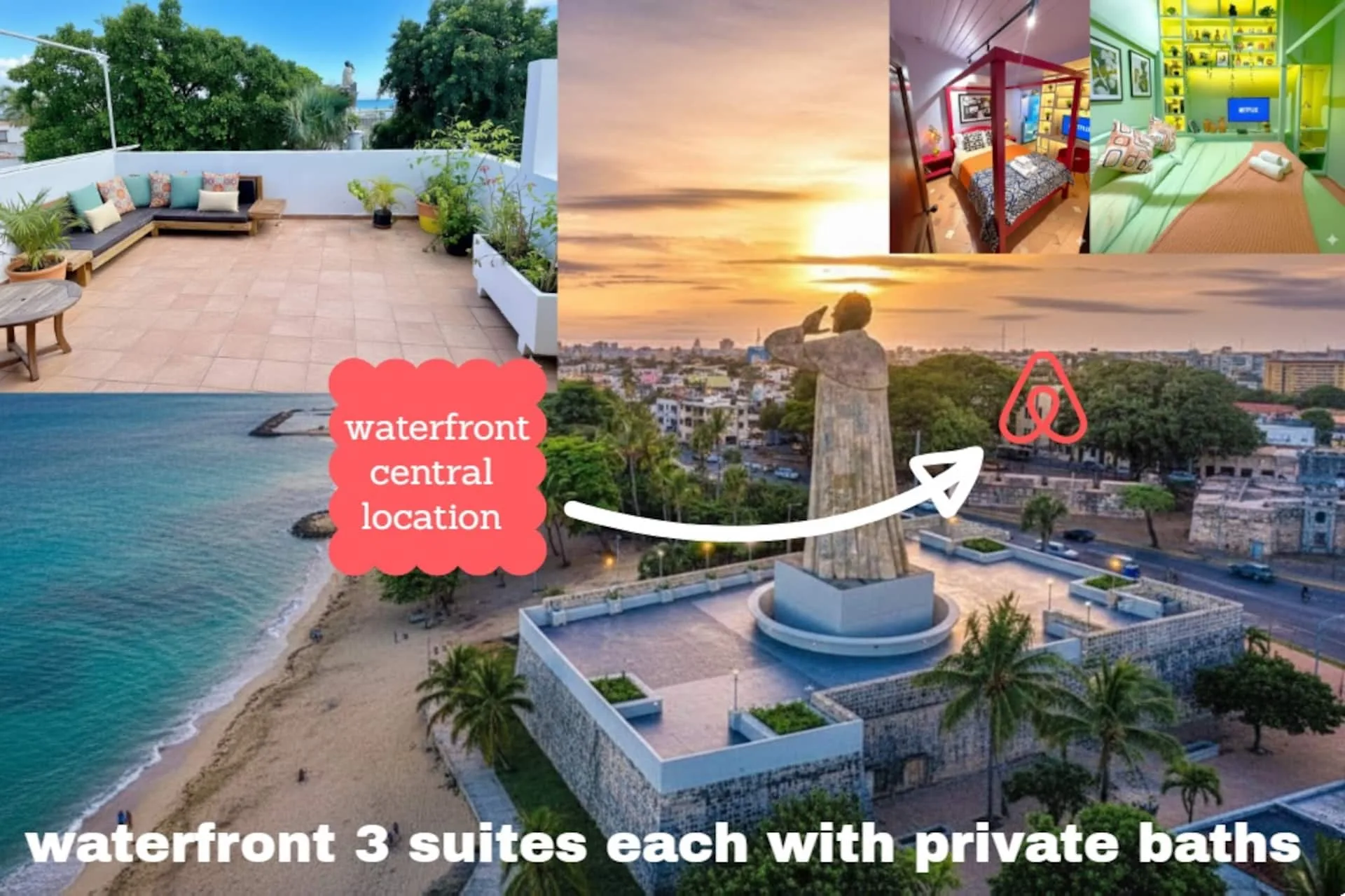
- The Montesinos monument — finish across the park from the Pallazzo, at the 15-meter statue facing the sea.
The sermon that ends the walk
In December 1511, the Dominican friar Antón de Montesinos climbed a pulpit in this city and asked the colonists a question that has not stopped echoing: by what right do you hold these people in such servitude? It was the first public defense of indigenous rights in the Americas, it scandalized the colony, and it set off the debates that produced the first laws restraining the treatment of native peoples. The statue — a gift from Mexico, inaugurated in 1982 — shows the friar mid-cry, hand raised, facing the sea the ships came from.
That statue is the view from the Pallazzo's terrace. The history walk ends where your morning coffee starts.