Sosúa Beach and Town: An Honest Guide
August 2026 · 20 min read
Sosúa beach is a small, sheltered crescent of golden sand on the north coast of the Dominican Republic, and it is one of the more genuinely interesting stops on that coast for reasons that have almost nothing to do with the sand. The bay is calm and good for snorkeling, which is the postcard. The story is stranger and better than the postcard, and the town's reputation is more complicated than either, so this guide covers all three honestly.
I write for a place to stay in the colonial heart of the capital, three and a half hours south, so take my north-coast enthusiasm with the appropriate grain of salt. But I like Sosúa, with caveats, and I think a lot of people either skip it for the wrong reasons or land in it expecting the wrong thing. The goal here is to tell you what the bay is actually like to swim in, what the town is like to walk around, the remarkable history hiding in plain sight, and how the whole north coast fits together if you want to use it as a base or a day trip rather than a package.
Where Sosúa actually is
Sosúa sits on the Amber Coast, the north-facing shoreline that was the Dominican Republic's original tourist strip long before Punta Cana existed. It is a small town, not a city, roughly twenty-five minutes east of Puerto Plata and its airport, and about fifteen minutes west of Cabarete. Those three names, Puerto Plata, Sosúa, and Cabarete, form a tight little chain along the coast road, and understanding how they relate to each other is most of what you need to plan a north-coast trip.
The airport is the key. Gregorio Luperón International (airport code POP) sits between Puerto Plata and Sosúa, which means Sosúa is one of the few good beaches in the country you can reach in well under half an hour from a plane. That proximity shaped the town. It filled early and fast with package tourists in the 1980s and 1990s, boomed, aged, and then settled into the slightly weathered, lived-in resort town it is today. It does not have the polish of a Punta Cana enclave and it never will. That is either a flaw or the entire appeal, depending on the traveler.
Geographically, the north coast is a different country from the calm turquoise east. It faces the open Atlantic, so the water is a deeper blue, the air moves more, and the hills behind the coast are green and steep rather than flat and scrubby. The same wind that keeps the north coast a few degrees cooler and fresher than the southeast is the wind that made Cabarete a world kitesurfing capital. Hold that thought, because it matters when you choose where to sleep.
The bay itself
Now the beach, because it is genuinely good and specific in a way most Dominican beaches are not.
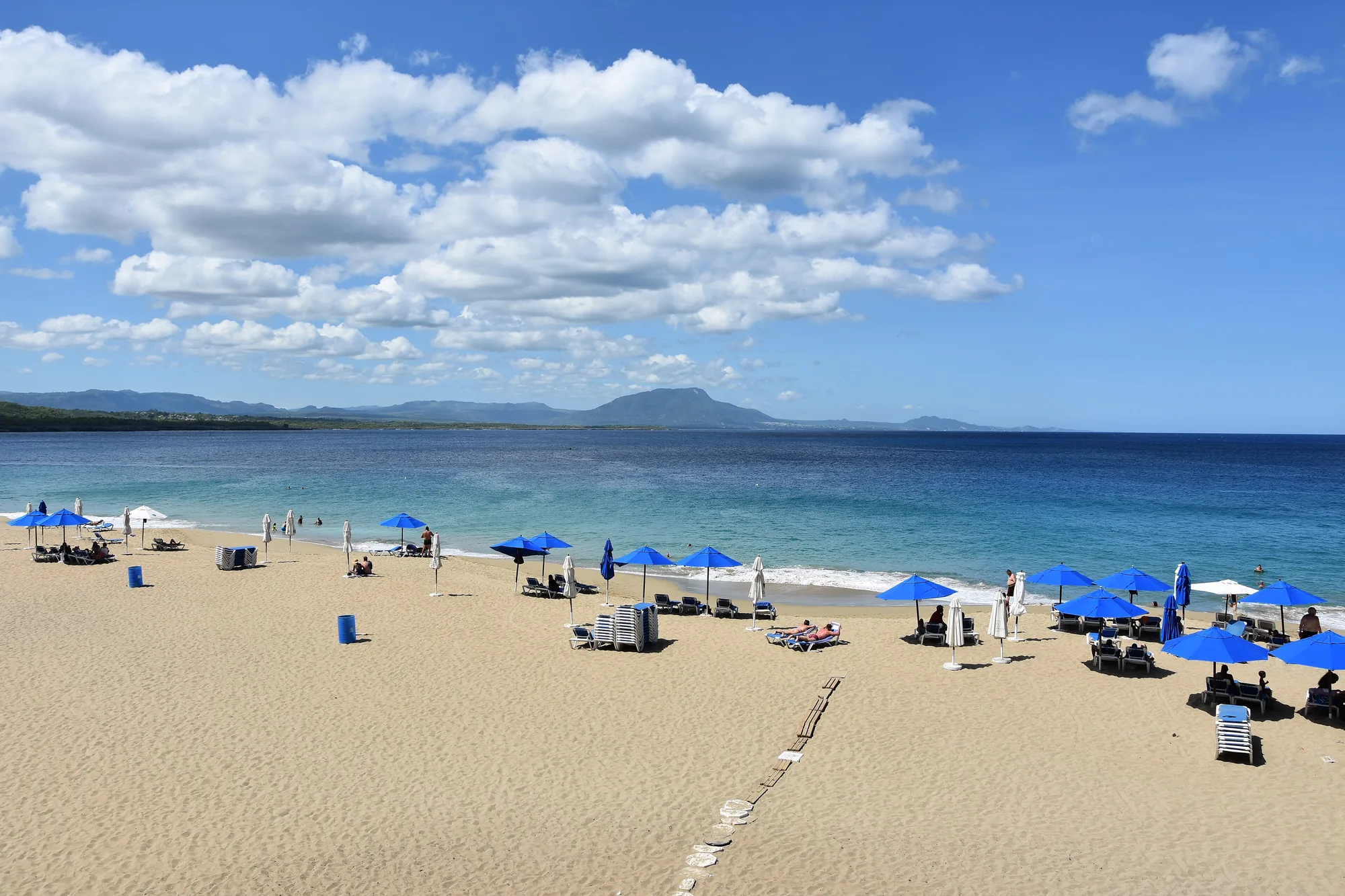
Sosúa's main beach, Playa Sosúa, sits inside a horseshoe bay protected by headlands on both sides. That shape does two things. It flattens the water, so this is a calm, gentle swim rather than a battle with Atlantic surf, and it holds a reef close enough to shore that you can snorkel straight off the sand without a boat. The sand itself is a warm golden color, coarser than the powder of the east coast, backed by low cliffs and a green fringe. It is not a huge beach. You can walk its length in a few minutes. But it is a properly pretty little bay, and on a calm morning the water is clear enough to see fish from the shallows.
The snorkeling is the real draw and the thing that sets Sosúa apart from most of the north coast. Swim out toward either headland, especially the eastern end, and you reach patches of reef in shallow, warm water. Expect sergeant majors, parrotfish, the odd ray, and coral that is worn but alive. It is not the Red Sea. It is, however, easy, boat-free, beginner-friendly snorkeling within wading distance of a beach bar, and that combination is rare. Bring your own mask if you have one. You can rent gear on the sand, but quality is a lottery and the fit is often poor.
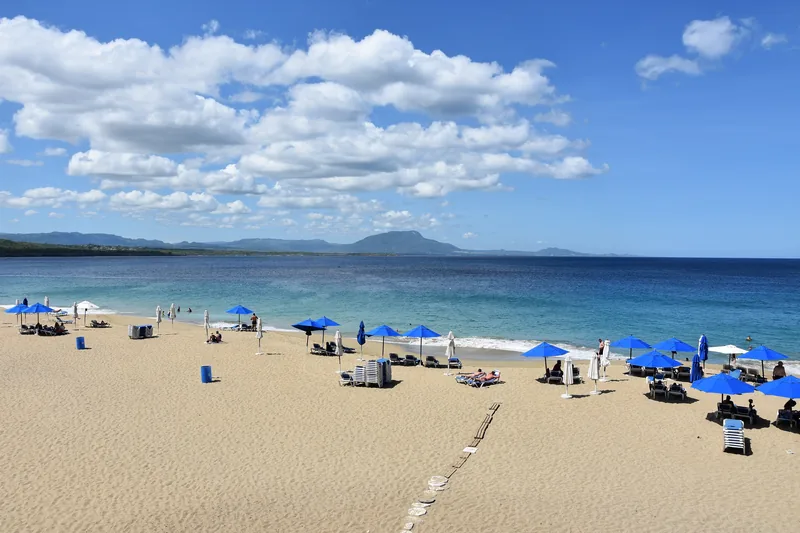
A few honest notes on the swim. The bay is calmest and clearest in the morning, before the wind picks up and before the day-boat traffic stirs the sand. By afternoon it can cloud up. After heavy rain the visibility drops and a little runoff comes down off the hills, so time your snorkel for a dry morning if you can. And the water quality here has had a genuinely troubled history, with sewage and runoff problems over the years that the town has worked to fix with real infrastructure spending. It is much improved, but this is not a pristine wilderness bay. It is a town beach, with all that implies. Swim in the mornings, use your judgment after storms, and you will be fine.
There is a second beach worth knowing. Playa Alicia (also called Playita) sits just to the west, below El Batey, a smaller and quieter cove reached down a set of stairs. It has less shade and no vendor scene, which for some people is the entire point. If the main beach feels too busy or too transactional on the day you visit, walk over to Alicia and you get a calmer, plainer version of the same water.
The vendor walkway, and what a day there is really like
Here is where the honesty starts to earn its keep.
The back of Sosúa beach is lined with a covered walkway of vendor stalls, bars, restaurants, and shops, a dense little market strip that runs behind the sand. This is a defining feature of the place and it splits people cleanly. Some travelers love it, the life, the color, the cold beer ten steps from the water, the fact that you never want for a lunch or a rum. Others find it relentless, because the vendors work hard and the sales pitches come often, whether you want a bracelet, a boat trip, a massage, a hair braid, or a painting.
The trick is to decide in advance what kind of day you want. A polite, friendly "no gracias" said with a smile works. Buy a drink from one bar and you effectively adopt a base for the day and the pressure eases. Do not expect the serene, empty-beach experience here, because that is not what Sosúa is. This is a working town beach with a market attached, energetic and a little chaotic, and it is at its best when you meet it on those terms rather than fighting them. If your ideal beach day is silence and space, Sosúa is not your beach and I would not pretend otherwise. The wilder options are in our ranked best beaches guide, and most of them are a long way from here.
Renting a lounger and umbrella will cost you a modest few dollars, usually waived if you eat and drink at the associated bar. Food along the strip is cheap and cheerful, fried fish, chicken, rice, and the occasional genuinely good ceviche. Do not expect fine dining on the sand. The better restaurants are up in the town, in El Batey.
The history nobody expects
This is the part of Sosúa that surprises everyone, and it is the reason to care about this town beyond the beach.
In 1938, at the Évian Conference, the world's nations met to discuss the growing refugee crisis of European Jews fleeing Nazi Germany, and almost every country present found a reason to keep its doors shut. The Dominican Republic, then under the dictator Rafael Trujillo, was the conspicuous exception. It offered to take in refugees, up to a large number, for reasons that were a tangled mix of the genuine and the cynical. Trujillo wanted to soften his international image after the 1937 massacre of Haitians on the border, and there is an ugly strand of racial "whitening" ideology in the offer that no honest account should skip. Whatever the motives, the practical result was that Jewish refugees were admitted, and in 1940 a group of them settled here, at Sosúa, on land that had been a failed United Fruit Company banana plantation.
They arrived with almost no farming experience and built a dairy and cattle cooperative from nothing. That cooperative, Productos Sosúa, became one of the most important food brands in the country and, remarkably, still exists as a Dominican meat and dairy name today. The settlers built a small wooden synagogue, raised families, intermarried with Dominicans, and slowly dispersed over the following decades as many moved on to the United States or Israel. But the fingerprints are still all over the town. Street names, family names, the cooperative, and a tiny, moving one-room museum next to the little synagogue in El Batey.
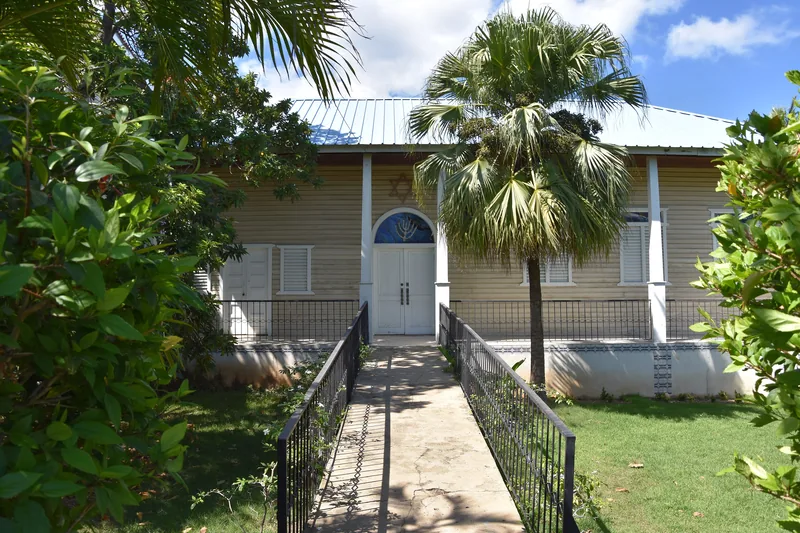
The Sosúa Jewish Museum is small, and you can see it properly in half an hour, but it is one of the most affecting stops on the entire north coast precisely because the story is so unexpected. Photographs of European families standing bewildered in the tropical heat, the ledgers of the cooperative, the objects they carried. If you take one thing off the beach in Sosúa, make it this. We tell the fuller story in the Sosúa Jewish Museum guide, including the moral complications of Trujillo's motives, which the town does not shy away from. Check current opening times before you go, as the museum keeps limited hours and sometimes closes around Jewish holidays.
Sosúa is the rare beach town where the most memorable thing you do all day happens a hundred meters from the sand, in a one-room museum about people who never wanted to be here and built a life anyway.
The mixed reputation, said plainly
You will read things about Sosúa. Some of it is dated, some of it is fair, and you deserve the honest version before you decide.
For a long stretch of the 1990s and 2000s, Sosúa carried a reputation as a center for sex tourism, concentrated in a specific nightlife strip in the town after dark. That reputation was earned, and remnants of it persist in a few bars in one part of El Batey late at night. It is real, and if you are traveling with kids or you simply do not want to be anywhere near that scene, you should know where it is so you can avoid it, which is easy to do. The good news is that it is geographically contained and almost entirely nocturnal. The beach by day, the museum, the restaurants, the snorkeling, and the residential expat neighborhoods have nothing to do with it.
The town has also worked, with real municipal effort, to clean up its image and its infrastructure over the last decade, and the daytime town in particular feels different now, quieter and more ordinary, than its old reputation suggests. A lot of retirees and remote workers live here perfectly happily. Families visit the beach without incident. The honest summary is this: Sosúa by day is a friendly, slightly worn, perfectly safe little beach town with a great bay and an extraordinary history. Sosúa in a couple of specific bars after midnight is a different and seedier thing. You control which Sosúa you experience almost entirely by where you go and when. Use normal traveler sense, the same you would in any part of the country, and you will have a good time.
One practical consequence: many families and couples who love the north coast actually choose to sleep in Cabarete or in the quieter residential parts of Sosúa and treat the main beach as a daytime visit. That is a sound instinct, and it leads neatly to the next town over.
Cabarete, fifteen minutes east
If Sosúa is the calm sheltered bay, Cabarete is the wind, and the two make a natural pair.
Cabarete sits about fifteen minutes east along the coast road, and it is one of the genuine watersports capitals of the Caribbean. The same steady Atlantic trade wind that Sosúa's headlands block, Cabarete's open bay catches full in the face, and the result is world-class conditions for kitesurfing and windsurfing. The wind here follows a reliable daily rhythm, building through late morning and blowing hardest in the afternoon, which is why you will see the bay empty at breakfast and thick with kites by three in the afternoon. There is a reason the world tour stops here.
Even if you never touch a board, Cabarete is worth the short hop. The town is essentially one long beach road of bars and restaurants with their feet in the sand, more international and more switched-on than Sosúa, popular with a younger, sportier, more expat crowd. Kite Beach, just west of the town center, is the kitesurfing epicenter. The main Cabarete Bay is better for windsurfing and beginners. There are reputable schools all along the strip that teach both from scratch, and a few days of lessons is a genuinely good use of a north-coast trip if you have ever wanted to learn.
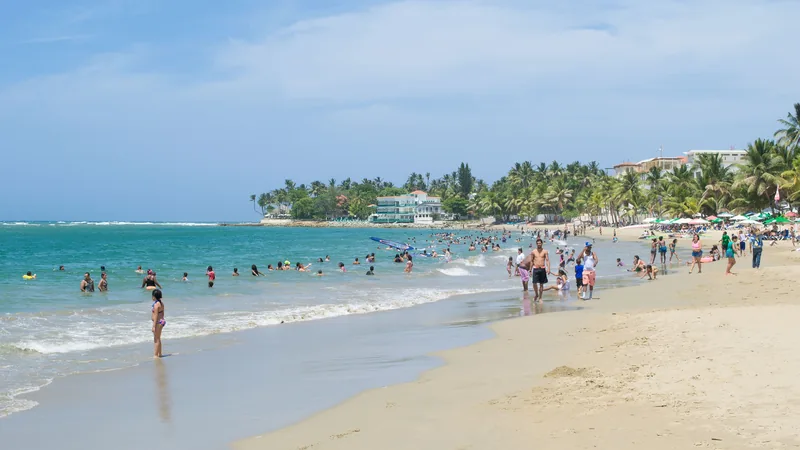
A few practical notes on the wind. It is seasonal as well as daily. The strongest, most reliable wind runs roughly from December through March and again around June to September, while spring and late autumn can be lighter. If wind is the whole reason you are coming, check the season. If you just want a good beach town with more life than Sosúa and don't care about kites, Cabarete is lovely year-round, and its sunset beach-bar scene is one of the nicest on the coast. There is also a quieter, wilder beach, Playa Encuentro, a little further west, which is the north coast's main surfing spot, with morning waves that suit learners.
For the full breakdown of the towns and how they connect, the Puerto Plata north coast hub guide maps the whole stretch.
Snorkeling, diving, and getting on the water
Beyond the beach snorkel, Sosúa is a real dive town, and this is under-appreciated.
The bay and the reefs just offshore make Sosúa one of the better and more affordable places in the country to learn to scuba dive or to get a few easy boat dives in. Several dive shops operate out of the town, the water is warm and mostly calm, and the sites range from shallow reefs suitable for a first-timer to a couple of wrecks and deeper walls for the certified. Prices are reasonable by Caribbean standards. If you have ever thought about getting your open-water certification, doing it here over a few days is a pleasant and cheap way to go about it. Check current prices and shop reviews before you commit, and choose an operator that inspects its gear properly.
For non-divers, the standard boat trip runs out to snorkel spots and around the headlands, often with lunch and rum included, sold hard from every third stall on the beach. These can be genuinely fun. They can also be crowded booze cruises. Ask what boat, how many people, and where exactly it goes before you hand over money, and prefer a morning departure when the water is clear.
If you want dry-land adventure to pair with the water, the north coast has one of the country's best, the waterfall jump at the 27 Charcos de Damajagua, inland from Puerto Plata, where you hike up a river canyon and then leap and slide back down through a chain of pools. It is roughly an hour from Sosúa and it is one of the best half-days in the country.
Where to base on the north coast
If you decide to spend real time on this coast rather than day-tripping it, here is how the three main bases compare, honestly.
Puerto Plata
The old port city, and the practical hub. It has the airport, the biggest range of services, the cable car up Mount Isabel de Torres, a genuinely handsome restored Victorian old town around the central park, and the historic San Felipe fort on the waterfront. What it does not have is a great town beach, though Playa Dorada and Costa Dorada resorts sit just east of it. Base here if you want a real working Dominican city with history and infrastructure, and treat the beaches as short drives out.
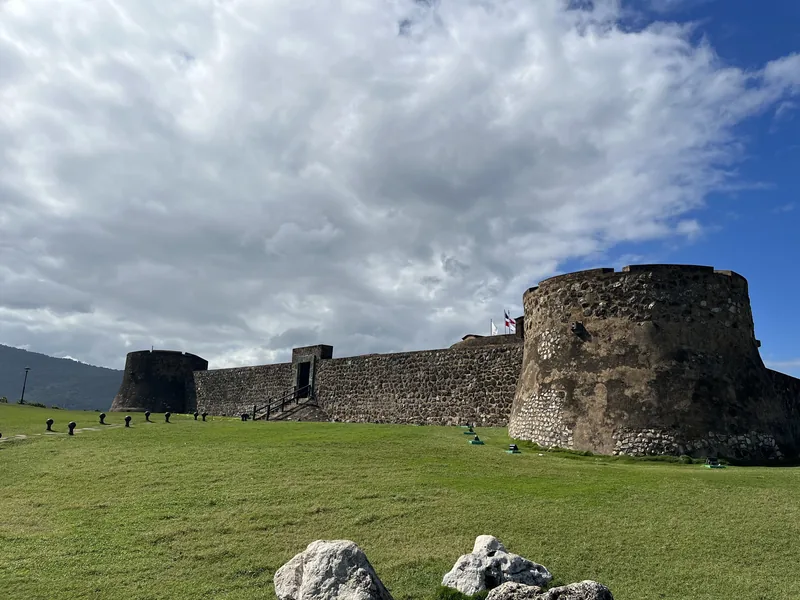
Sosúa
Base here if the sheltered snorkeling bay, the history, and a compact, walkable, slightly weathered beach town are what you want, and if you are comfortable steering around the nightlife strip. The residential El Batey side, up above Playa Alicia, is the pleasant part to stay, quieter and greener, with good small restaurants. It is the most central of the three for hopping between everything.
Cabarete
Base here if you want the most life, the youngest and most international scene, watersports on your doorstep, and beach bars at sunset. It is the least "Dominican" of the three in feel and the most geared to visitors, for better and worse. If anyone in your group wants to learn to kite or surf, this is the answer.
My honest read: for most travelers who want a north-coast beach base, Cabarete or the quiet side of Sosúa beat Puerto Plata for the actual holiday, while Puerto Plata wins on services and history. But none of them is really the base I would build a whole Dominican trip around, and I will explain why in the closing section, because it is the whole reason this site exists.
Getting to the north coast without a rental car
You do not need to rent a car to reach or enjoy this coast, and for a lot of people not renting one is the smarter call. Here are the realistic ways in.
Fly into Puerto Plata (POP). The simplest option if you are coming from abroad and the north coast is your main destination. From the airport, Sosúa is a fifteen-to-twenty-minute taxi and Cabarete about thirty minutes. Agree the fare before you get in, or use a ride app where available.
From Santo Domingo by coach. This is the classic no-car route and it works well. The main intercity bus lines, Caribe Tours chief among them, run comfortable, air-conditioned coaches from the capital up to Puerto Plata and Sosúa several times a day. The ride is roughly four hours and costs only a handful of dollars. From the Sosúa or Puerto Plata bus stop, a short taxi finishes the trip. It is cheap, safe, and genuinely pleasant, and it is how a lot of Dominicans travel between the two coasts. Book the earlier departures to keep your day flexible, and see our guide to getting around the country for the full mechanics.
By guagua for the last legs. For the short hops along the coast, Sosúa to Cabarete or Sosúa to Puerto Plata, the local guaguas, the shared minibuses that run the coast road constantly, are the cheapest way to move. You flag one down, squeeze in, pay a dollar or two, and hop out where you need. It is authentic, it is slow, and it is a fine way to shuttle between the towns without a car.
Ride apps and taxis for the rest. Within and between the towns, ride apps and local taxis cover the gaps. Distances are short, so fares are small. Between this and the coaches, a carless north-coast trip is entirely realistic.
If you are combining the coast with the capital, know that Santo Domingo has two airports and good coach links, and that the capital-to-coast journey is one of the most-traveled routes in the country. Our Santo Domingo airport guide covers arriving into the capital end of that trip.
What a Sosúa trip actually costs
Rough ranges, because prices move and you should always check current rates, but this gives you the shape of it.
- Coach, Santo Domingo to the north coast: a few dollars each way on Caribe Tours. One of the best travel bargains in the country.
- Beach day: a lounger and umbrella is a few dollars, often free with food and drink. A plate of fried fish, rice, and a beer on the strip runs cheap, well under a resort would charge.
- Snorkel gear rental: a few dollars, but bring your own if you can for fit and hygiene.
- A boat trip or snorkel cruise: a moderate per-person price, negotiable, so ask what is included.
- A learn-to-dive or open-water course: among the more affordable in the Caribbean, spread over a few days. Check current shop pricing.
- Kite or windsurf lessons in Cabarete: a real investment over several days if you want to get up and riding, but cheaper than most competing kite destinations.
The headline: the north coast is dramatically cheaper than the packaged east coast for the same or better beach time, precisely because you are paying local prices in a real town rather than resort prices behind a gate. That is the trade. You handle a little more of your own logistics, and you keep most of your money and see a real place.
When to go
The north coast has its own weather logic, distinct from the rest of the country.
The driest, most reliable beach months here run roughly from the winter through spring. The wettest stretch tends to come late in the year, and because these hills catch Atlantic moisture, the north coast sees more rain overall than the arid southwest. That green you enjoy is paid for in showers. Rain here tends to come in short bursts rather than all-day gray, so a wet-season trip is far from ruined, but if you want the best odds of clear snorkeling water, aim for the drier months.
For wind, remember the inverse relationship: the seasons that bring the strongest, most reliable kitesurfing wind to Cabarete are exactly the seasons the sheltered Sosúa bay stays calm and swimmable, because the headlands do their job. So the north coast in winter can hand you both at once, kites screaming across Cabarete Bay in the afternoon and a glassy snorkel in Sosúa in the morning, fifteen minutes apart. For the full national picture, see our guide to the best time to visit.
Hurricane season officially runs June through November, with the real risk concentrated in the late summer and early autumn. Direct hits on this coast are uncommon in any given year, but it is worth watching the forecast if you travel in that window.
The smarter way to see all of this
Here is the honest structural point, and it is the reason I would not tell most first-time visitors to build their entire trip around the north coast.
The north coast is wonderful, and Sosúa's bay and history are a real highlight of it. But it is one coast, three and a half hours from the capital, and if you plant yourself here for a week you see the north coast and nothing else, the same way a week behind a Punta Cana gate shows you the east and nothing else. The Dominican Republic is four different countries stitched together, and the mistake most people make is choosing one of them and calling it the whole. We laid the two extremes out directly in north coast versus the southwest, and the honest lesson is that no single coast is the whole story.
So the way I would actually plan it. Base yourself in the middle, in the capital, and treat the coasts as trips out rather than the whole holiday. From Santo Domingo you have the country's best airport connections, the coaches that reach the north coast in four hours, and a real, living, five-hundred-year-old city on your doorstep rather than a resort strip or a weathered beach town. You spend your days in the oldest cathedral, fort, and street in the Americas, and you take the beach when and where the beach is actually good, north coast for the snorkeling and the kites, Samaná for the wild sand, the southwest for the empty arcs. If a resort week is genuinely not your trip, we made that case at length.
That is where the penthouse comes in, and I will keep this brief. The Residence is a three-suite penthouse on the top floor of a 1760s colonial townhouse in the Zona Colonial, the old walled heart of Santo Domingo and the first city of the Americas. It sleeps six across three bedroom suites, with a covered hacienda-style gallery and a roof terrace looking out over the Caribbean and the Montesinos monument on the Malecón. It is the opposite of a resort in every way that matters. You are in a real, lived-in city on cobbled streets, five minutes from restaurants and rum and life that has nothing to do with a wristband, and Uber works well across the city, so you are not chained to a rental car for the capital itself.
Use it as a base, and Sosúa becomes what it should be, a great two-day trip up to the Amber Coast for the snorkeling, the wind, and the strangest and most moving little museum in the country, rather than the whole of a trip that had so much more in it. The penthouse takes bookings through Airbnb, and you can plan the rest of your route from the wider library of guides. Go to Sosúa. Just go knowing what it is, and knowing what else this country keeps down the road.