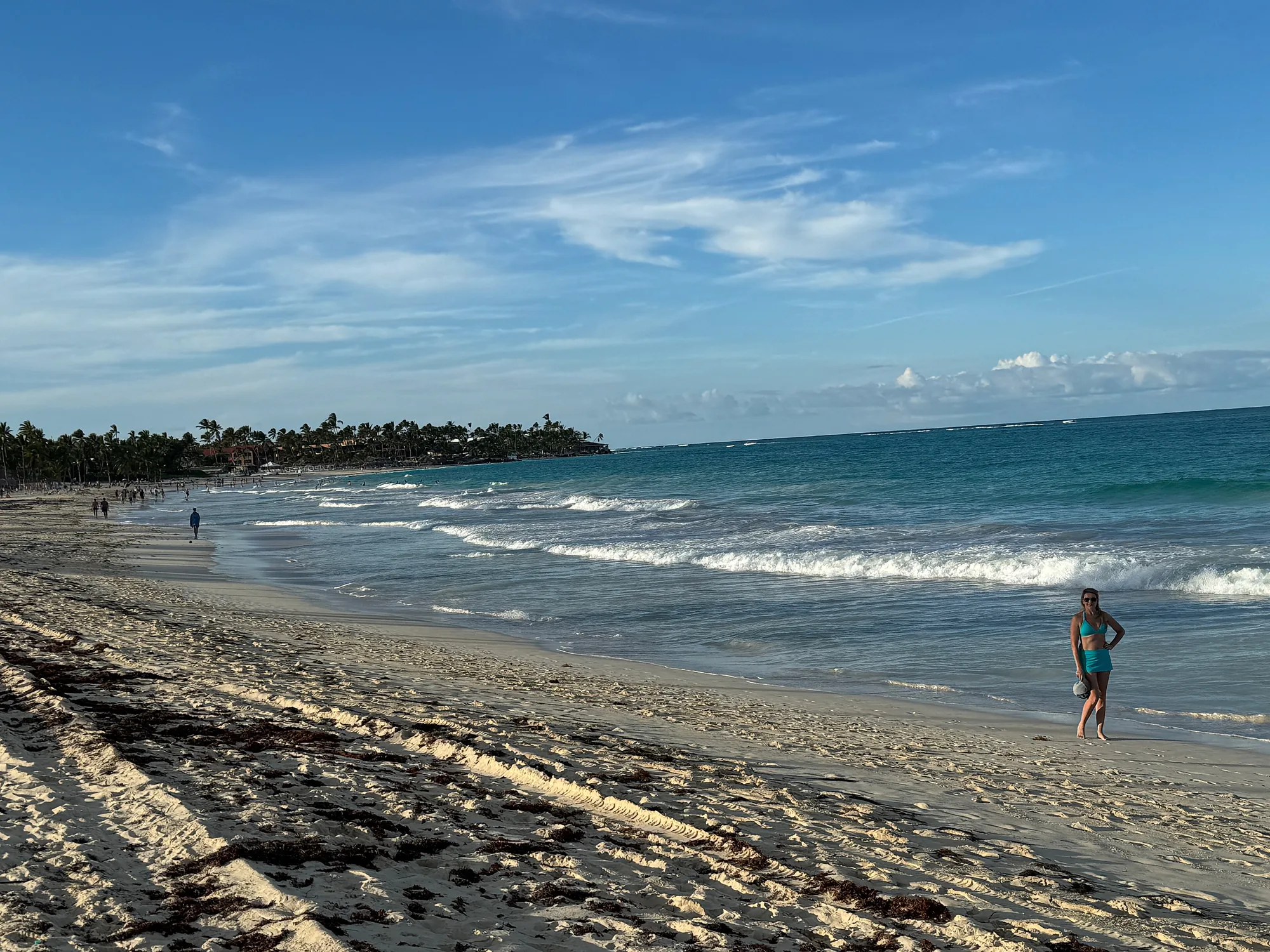
Boca Chica Beach and Juan Dolio: The Closest Beaches
August 2026 · 21 min read
Boca Chica beach is the closest real swim to the Zona Colonial, and on a hot afternoon that convenience is worth more than any postcard. You can be standing in warm, waist-deep water about 35 minutes after you lock the door of the penthouse. No flight, no three-hour drive, no rental car. Just east along the coast highway, past the airport, and you are in a shallow bay that stays warm and calm all day.
That is the whole pitch for the two beaches in this guide. Boca Chica and Juan Dolio are not the most beautiful beaches in the Dominican Republic. They are not close. They are the closest, which is a different and very useful thing. When you are basing yourself in Santo Domingo and you want salt water without turning it into a full expedition, these are the two names you need. This guide covers what each one is actually like, how to reach them without owning a car, what to order once you are there, and where they honestly sit against the far beaches people fly in for.
The two beaches, and why they are your easy option
Think of the coast east of Santo Domingo as a straight line of sand broken up by the airport and a couple of small towns. Boca Chica comes first, roughly 35 kilometers out, sitting behind a reef that turns its bay into a giant natural swimming pool. Juan Dolio is next, another 20 minutes or so past it, a longer and generally quieter strip of hotels, condos and beach that runs for a few kilometers.
Both are doable as a half-day. You leave after a late breakfast, spend the hot part of the afternoon in the water, eat fried fish with your feet in the sand, and you are back in the Zona Colonial in time for a shower and dinner. Neither requires an overnight, though Juan Dolio has enough hotels that you could turn it into one if you wanted a lazy resort day without leaving the province.
The reason to know both is that they serve slightly different moods. Boca Chica is lively, local, loud on weekends, and shallow enough that a nervous swimmer or a small kid can wade out a long way and never lose their footing. Juan Dolio is calmer, more spread out, better if you want to read a book without three vendors offering you sunglasses, oysters and a massage in the space of five minutes. On a Saturday, that difference is the whole decision.
These beaches are not close to being the best in the country. They are the closest to the capital, and on a weekday that is a genuinely good trade.
If you have a week and a car and a real appetite for the country's best coast, this guide will point you toward the far beaches at the end, and there is a whole separate piece on the best beaches in the Dominican Republic for that. But if you are basing yourself in the colonial city and want a swim this afternoon, keep reading. This is what easy looks like.
Boca Chica: the shallow bay that never really gets deep
Boca Chica is the one everyone means when they say "let's go to the beach" from Santo Domingo. It is a proper town wrapped around a proper bay, and the whole appeal comes down to the water.
The water
A long reef sits offshore and takes the punch out of the sea before it reaches you. Add a small mangrove islet in the middle of the bay and what you get is a wide sheet of water that stays calm, warm and shallow far past where you would expect the bottom to drop away. You can wade out for what feels like a hundred meters and still have the water at your chest. There is essentially no surf. On a calm day the bay looks like a pale green lagoon.
This is exactly the beach you want if you are traveling with kids, with someone who does not love swimming, or with grandparents who want to stand in the sea and cool off without being knocked around. It is also, honestly, a bit of a novelty for adults used to beaches with waves. You can walk out to the little island in the middle when the tide is right, though check the depth and current with locals before you set off, and do not assume it is a casual paddle.
The tradeoff is that a shallow, enclosed, heavily used bay is not crystal clear. On a busy weekend, with hundreds of people churning up the sand, the water near the shore goes a bit cloudy. Snorkeling here is modest at best. If you want clarity and coral, this is not that trip, and you should be thinking about Isla Saona or the far coasts instead. Boca Chica's water is for wading, floating and cooling off, and it is very good at that.
The scene
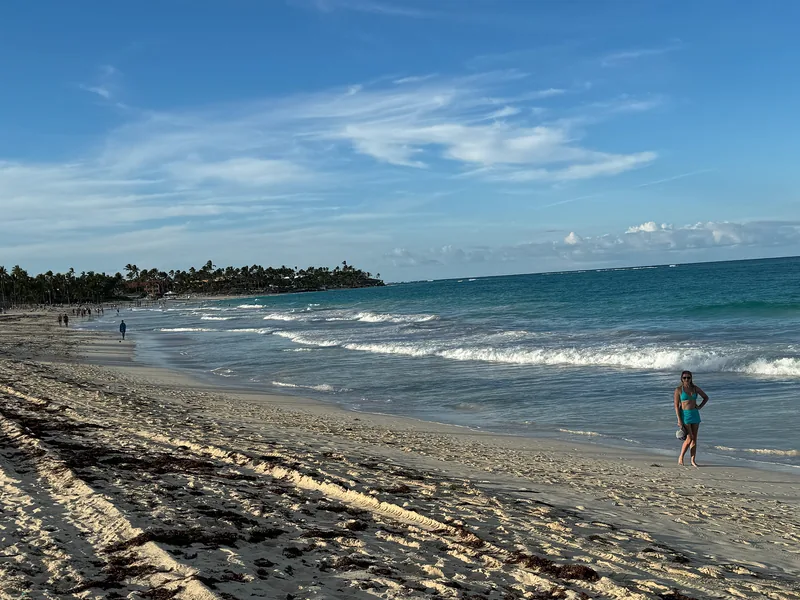
Boca Chica is a Dominican beach for Dominicans, first and foremost. On weekends and holidays it fills up with families from the capital who arrive with coolers, speakers and extended relatives, stake out a patch of shade, and stay all day. There is music, there is noise, there are vendors walking the sand with everything from fresh oysters to inflatable rings. It is social, it is a little chaotic, and it is a genuine slice of how the capital relaxes.
Rows of plastic tables and chairs line the beach under the trees and awnings, most of them attached to a bar or a fish shack. The unwritten rule is simple: sit at the chairs belonging to a place, buy some food and drinks from them, and the seating is effectively yours for the afternoon. You are rarely charged a separate chair fee if you are eating and drinking, though some spots ask for a small amount. Just ask before you settle in so there are no surprises.
Come on a weekday and the whole thing dials down by about seventy percent. Fewer people, calmer water, easier to find shade, and the vendors are less relentless because there are fewer targets. If your schedule is flexible, a Tuesday at Boca Chica is a much nicer beach than a Sunday at Boca Chica.
The food
This is where Boca Chica earns real affection. The classic order is pescado frito, a whole fried fish, usually served with tostones (twice-fried green plantain), a bit of salad and maybe rice. It arrives crisp and hot, you eat it with your hands, and it costs very little. Add a cold Presidente beer, order some yaniqueques (crisp fried dough discs sold up and down the sand) as a snack, and you have the full Boca Chica experience for the price of a couple of coffees back home.
Fresh oysters get hawked along the beach, shucked to order and served with lime and a hit of hot sauce. They are a local ritual and generally fine, but use your judgment: buy from a busy vendor with obvious turnover, not from someone whose tray has been sitting in the sun. If you are curious about the wider food culture, the Dominican food guide goes deep on what to try and why.
The town after dark
An honest note, because you would want a friend to tell you. Boca Chica's main strip, Calle Duarte, turns into a bar-and-nightlife zone after sunset, and parts of it have a well-known reputation for sex tourism and the low-grade hustle that comes with it. During the day, on the beach, with families everywhere, none of this is your problem. But it is the reason most visitors treat Boca Chica as a daytime beach and head back to the city for the evening rather than lingering in town at night. Go for the water and the fried fish, enjoy the afternoon, and Uber home before it gets late. That is the move.
Juan Dolio: longer, calmer, and a notch quieter
Keep going east another 20 minutes and you reach Juan Dolio, which is less a town and more a long coastal strip of hotels, condo towers, small resorts and beach. It feels different from Boca Chica the moment you arrive: more spread out, more relaxed, less of a scene.
What the beach is like
Juan Dolio's beach runs for several kilometers and changes character along its length. Some stretches are wide and sandy, some are narrower, and a few sections have rock and reef close to shore that make entry a bit awkward, so it pays to walk a little and pick your spot rather than plopping down at the first access point. The public beach areas are pleasant and, crucially, far calmer than Boca Chica. Fewer vendors, fewer speakers, more space between you and the next group.
The water is protected and generally gentle, though not quite as bathtub-shallow as Boca Chica's bay. It is the better choice if what you want is to actually relax: read, doze, swim a bit, eat lunch, repeat. It is the worse choice if you want the buzz and the crowd energy, which some people genuinely enjoy. Different beach, different day.
Because Juan Dolio grew up around hotels, there are more sit-down restaurants and beach bars with real menus here, and a handful of small all-inclusive resorts if you ever wanted to buy a day pass and use a pool and a buffet. You do not need to; the public beach and the independent restaurants are the point. But the option exists.
Guayacanes, the fishing village in between
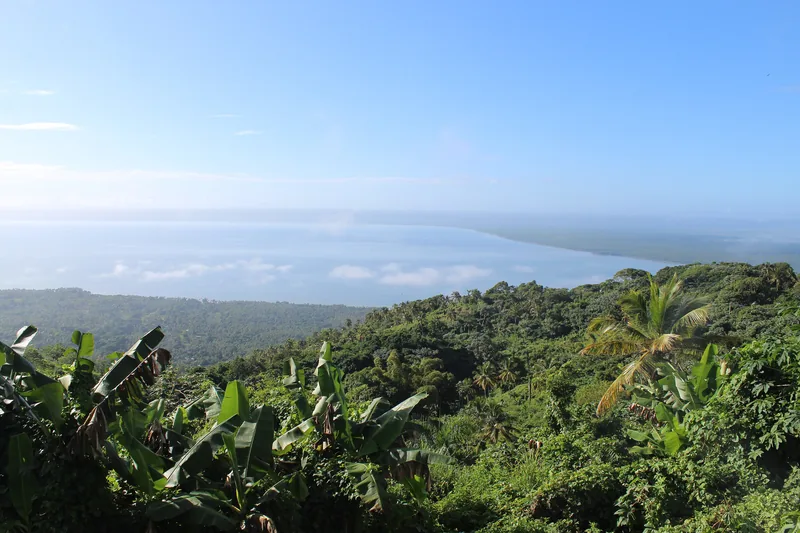
Tucked between Boca Chica and Juan Dolio is Guayacanes, a small fishing village with a local beach that a lot of people drive straight past. It is worth not driving past. The beach is unpretentious and used mostly by locals, and the fish shacks here serve some of the freshest, most honest seafood on this whole stretch of coast, often whatever the boats brought in that morning. If you want the fried-fish-on-the-sand experience with a fraction of the crowd, ask your driver to stop at Guayacanes instead. It is the kind of place that makes the difference between "we went to the beach" and "we found the good spot."
How to get there without a car
You do not need to rent a car for either of these. That is a big part of why they are the smart choice from Santo Domingo. Here is how each option actually works.
Uber and ride apps
Ride apps work well in Santo Domingo, and this is the easiest way by a distance. Order an Uber from the Zona Colonial neighborhood and you will be at Boca Chica in about 35 minutes, or Juan Dolio in roughly 45 to 55. As a rough guide, expect something in the region of RD$700 to RD$1,200 (very roughly US$12 to US$20) to Boca Chica, a bit more to Juan Dolio, though prices move with demand and time of day, so check the app for the live fare before you commit.
The one wrinkle is the return. There are plenty of drivers in the city, but fewer cruising around Boca Chica and Juan Dolio, so getting a ride back can take longer, and the fare can be higher. Two practical fixes: request your return ride a little before you actually want to leave, so you are not stranded waiting, or agree a round-trip and wait time with a local driver when you arrive. If the app shows no cars, walk toward the town center or a main road where drivers are more likely to be, and try again. For the bigger picture on ride apps, buses and getting around generally, the guide on getting around the Dominican Republic is the reference.
The guagua, if you want the local way
The cheapest option by far is the guagua, the informal public minibus. From near Parque Enriquillo in Santo Domingo, guaguas run east toward Boca Chica for a small fraction of an Uber fare, often around RD$100 or so. They leave when full, stop constantly, and get crowded, which is exactly the point if you want the authentic, elbow-to-elbow local experience and do not mind that it takes longer. Keep your bag on your lap, keep valuables minimal, and have small bills ready to pay the cobrador (the fare collector) on board. It is a fine adventure for a confident traveler and probably not the move if you are hauling three kids and a cooler.
A coach or an organized driver
For Juan Dolio, some of the long-distance coaches that run the Santo Domingo to Punta Cana corridor pass close by, and you can arrange to be dropped at the nearest junction, though you may need a short local ride to finish the trip to the sand. For most visitors this is more hassle than it is worth compared to a straightforward Uber.
The other clean option is to hire a driver for the day. Plenty of drivers in Santo Domingo will take you out, wait while you swim and eat, and bring you back for an agreed price. This removes the return-ride problem entirely and is worth it if you are a group splitting the cost, or if you want to string Boca Chica, Guayacanes and Juan Dolio together and choose your favorite. If you are weighing this against a wider itinerary, the roundup of day trips from Santo Domingo puts these beaches in context with the caves, the mountains and the rest.
Getting back, and one honest planning note
Whichever way you go out, plan the way back before you need it. The single most common Boca Chica frustration is standing on a hot road at 5 p.m. trying to summon a ride that will not come quickly. Beat it by leaving a little earlier than the crowd, by pre-booking a driver, or by simply building in patience. Bring a charged phone and a bit of cash either way.
What a beach day actually costs
One of the quiet joys of these beaches is how cheap a good day is. You are not paying resort prices for anything. A rough sketch of what a half-day for two might run, understanding that specific prices change and you should confirm as you order:
- Round-trip Uber from the Zona Colonial to Boca Chica: very roughly US$25 to US$40 total, more for Juan Dolio or at peak demand.
- A whole fried fish with tostones: a modest plate, often in the RD$500 to RD$900 range per person depending on the fish and the spot.
- A cold Presidente: typically RD$150 to RD$250.
- Yaniqueques and snacks from the sand: pocket change.
- Chairs and shade: usually included when you eat and drink, sometimes a small extra; always ask first.
Add it up and two people can have a full afternoon at the beach, fish lunch and beers included, for less than the cost of a single sit-down dinner in a tourist restaurant. Bring cash in small denominations. Not every vendor and shack takes cards, and small bills make paying and tipping easy. For the mechanics of money, cards and tipping, the money and SIM cards guide has you covered.
What to order once you are there
You could overthink this, but you should not. The beach menu is short and it is good. Here is the shortlist that will not steer you wrong:
- Pescado frito con tostones. The whole fried fish is the reason to be here. Ask what came in fresh and take that.
- Camarones or pulpo if you want shellfish, often served al ajillo (in garlic) or with a Creole sauce.
- Tostones or fried yuca as your starch. Both are excellent vehicles for hot sauce.
- Yaniqueques as a beach snack while you wait, crisp and salty and impossible to stop eating.
- Oysters from a busy vendor, if you like them and the turnover looks fast. Lime and hot sauce, standing up, the local way.
- Presidente, cold, or a fresh juice if you are keeping it dry.
Skip anything that has clearly been sitting out, trust the places with a crowd, and do not be shy about pointing at what someone nearby is eating and asking for the same. That is how you find the good plate.
When to go: weekday versus weekend, and the seasons
The single biggest lever on your experience is the day of the week. Boca Chica on a Sunday or a public holiday is a full-volume Dominican family beach: packed, loud, joyful, and not remotely peaceful. Boca Chica on a Tuesday is a calm, warm, shallow bay where you can actually stretch out. If you have any flexibility, go midweek. Juan Dolio is quieter across the board, but it too thins out on weekdays.
Time of day matters as well. Mornings are calmest and coolest, with the vendors just setting up and the water at its clearest. The middle of the afternoon is peak heat and peak crowd. Late afternoon is lovely, with the light going soft, but that is also when the return-ride crunch begins, so weigh the golden hour against the logistics.
As for seasons, the Dominican Republic is warm and swimmable year-round on this coast. The drier, calmer months run through the winter and into spring, while the late summer and autumn carry more heat, more humidity and the tail risk of a passing tropical system. None of that should stop a beach day; it just means you keep half an eye on the forecast in hurricane season. For the full breakdown, see the best time to visit the Dominican Republic.
Snorkeling, the reef, and managing expectations
People ask about snorkeling at Boca Chica because of the reef, and the honest answer is: it is there, but it is not the reason to come. The reef sits well offshore and takes a boat or a long, committed swim to reach, the near-shore water is often too stirred up for good visibility, and years of heavy use have taken their toll. You can rent a mask and paddle around, and you might spot a few fish, but if underwater clarity is what you are chasing, save your snorkel time for a proper reef trip elsewhere in the country. Set the expectation now and you will enjoy Boca Chica for what it actually is: a warm, easy, social swimming bay.
Honest expectations: how these compare to the far beaches
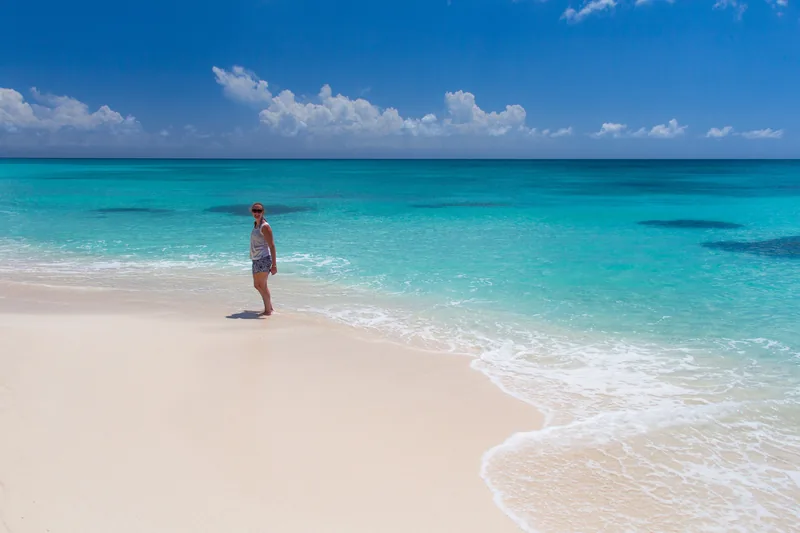
Here is the part the brief asks me to be straight about, so I will be. Boca Chica and Juan Dolio are convenient beaches, not spectacular ones. If you have seen photographs of the Dominican Republic's most beautiful coast, those pictures were not taken here.
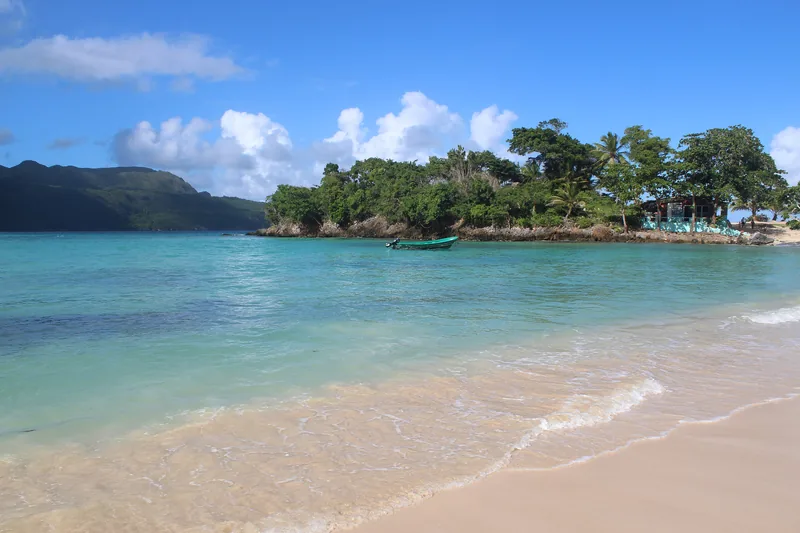
The country's genuinely stunning beaches are a serious drive away, and they are worth every hour. Playa Rincón, near Las Galeras on the Samaná Peninsula, is regularly called one of the finest beaches in the Caribbean, a long curve of pale sand backed by green hills with a cold river running into the sea at one end. Bahía de las Águilas in the far southwest is a wild, protected, almost empty crescent that you reach by boat, and it is about as close to untouched as this coast gets. These are destination beaches. You build a trip around them.
Even the packaged resort strips get more attention than Boca Chica, though I would push back on how special they really are. Punta Cana's beaches are undeniably long and pretty, but most visitors experience them from behind an all-inclusive wristband, on a stretch of sand that looks a lot like the next resort's stretch of sand, cut off from any real sense of the country. That trade, comfort and predictability in exchange for a bit of a bubble, is exactly what this whole site argues against, and there is an honest breakdown in the Punta Cana beaches guide and a head-to-head in Las Galeras versus Punta Cana. Boca Chica is the opposite kind of place: unpolished, entirely local, no wristband, no bubble.
So how should you actually think about it? Like this:
- If you have half a day and no car, and you want salt water this afternoon, Boca Chica or Juan Dolio wins easily. Nothing else is close in convenience.
- If you have a full day and want a genuinely beautiful beach without going to Samaná, take the boat to Isla Saona and read the Saona day trip guide first so you do it right.
- If you have several days and a real appetite for the best coast in the country, point yourself at Playa Rincón and the Samaná Peninsula, and treat the capital beaches as the warm-up.
None of that is a knock on Boca Chica. It is just knowing what you are getting. A shallow, warm, easy bay 35 minutes from your front door is a genuinely great thing to have. It is simply a different thing from a Caribbean showpiece, and pretending otherwise would not help you plan.
A half-day plan that actually works
If you want a template, here is a Boca Chica half-day that avoids the common headaches:
- Have a proper breakfast in the colonial city, then order an Uber around late morning, before the midday heat peaks.
- Arrive, walk the beach a minute, and pick a fish shack with a good crowd and chairs in the shade. Claim your table by ordering drinks.
- Swim and float through the early afternoon. Wade out toward the island if conditions look calm and locals say it is fine.
- Eat the whole fried fish with tostones for a late lunch. Snack on yaniqueques while you wait.
- Mid-afternoon, before the crowd starts leaving, request your ride back or find your pre-arranged driver.
- Be back in the Zona Colonial by early evening, showered and ready for dinner in the old town.
Swap Boca Chica for Juan Dolio if you want the quieter version, and add a stop at Guayacanes for the best fish if you have hired a driver. That is a full, satisfying beach day that costs little and eats almost nothing out of your Santo Domingo time.
A first day or a last day: the airport angle
Here is a piece of timing that most people miss. Las Américas International Airport, SDQ, sits right on the coast highway between Santo Domingo and Boca Chica. That means Boca Chica is only about 10 to 15 minutes from the airport, closer to it than the city is.
Use that. If you land in the late morning with your room not yet ready, you can drop a bag and go straight to Boca Chica for a first swim and a fried-fish lunch to start the trip on the right foot. If your flight home is in the evening on your last day, you can spend the afternoon at the beach and head to SDQ from there rather than doubling back into the city. It turns dead travel time into beach time. The Santo Domingo airport guide covers the arrival and departure logistics in detail.
What to bring, and a few honest cautions
You do not need much, but a few things make the day better:
- Cash in small bills for food, drinks, chairs and tips. Cards are not universal on the sand.
- Reef-safe sunscreen and a hat. The shade is real but the sun off the water is stronger than it feels.
- Water and a refillable bottle. It is hot, and you will drink more than you expect.
- A light dry bag or a way to keep your phone and money on you when you go in the water. Do not leave valuables unattended on the chair.
- Flip-flops you can walk in, since some sections, especially at Juan Dolio, have rock near the entry.
And the sensible cautions, none of which should scare you off:
- Watch your belongings, as you would at any busy public beach anywhere. Keep valuables minimal and close.
- Treat Boca Chica as a daytime beach and head back to the city in the evening, for the reasons covered above.
- Ask before you assume something is free, whether it is a chair, a "welcome" drink, or a vendor's help carrying something.
- Confirm depth and current with locals before wading far out or heading for the island. Calm-looking water can still have a channel.
For the broader, calm-headed take on staying safe in the country and the capital, the guides on whether the Dominican Republic is safe and whether Santo Domingo is safe are worth a read before you go. The short version for these beaches: normal daytime common sense is all you need.
Make the Zona Colonial your base, and the beach a day trip
The reason Boca Chica and Juan Dolio work so well is the thing this whole site is built around. When you stay in the real colonial city instead of a sealed-off resort, the coast becomes something you dip into rather than something you are trapped inside. You get the first city of the Americas on your doorstep, its cathedrals and cobblestones and colmados, and the beach is a cheap 35-minute hop whenever you feel like salt water. Then you come home to the old town for dinner, drinks and the kind of evening a resort buffet cannot touch.
The Residence is set up for exactly this rhythm. Penthouse Pallazzo is a three-suite penthouse on the top floor of a 1760s colonial townhouse in the Ciudad Colonial, with a covered gallery and a roof terrace looking out over the Caribbean and the Montesinos monument on the Malecón. It sleeps six across three bedroom suites, so a family or two couples can share, spend the morning wandering the UNESCO old town, take an afternoon at Boca Chica, and regroup on the terrace afterward. The location is the point, and it is the one guests rate 5.0.
You book it on Airbnb, where host Waner keeps the calendar and the reviews, 96 of them at a 4.8-plus average, and once you are here the whole coast east of the city is yours for the price of an Uber. Have your beach afternoon at Boca Chica or Juan Dolio, save the far beaches for a bigger day, and let the colonial city be the place you actually come home to.