Bahía de las Águilas: The Wild Southwest Beach
August 2026 · 22 min read
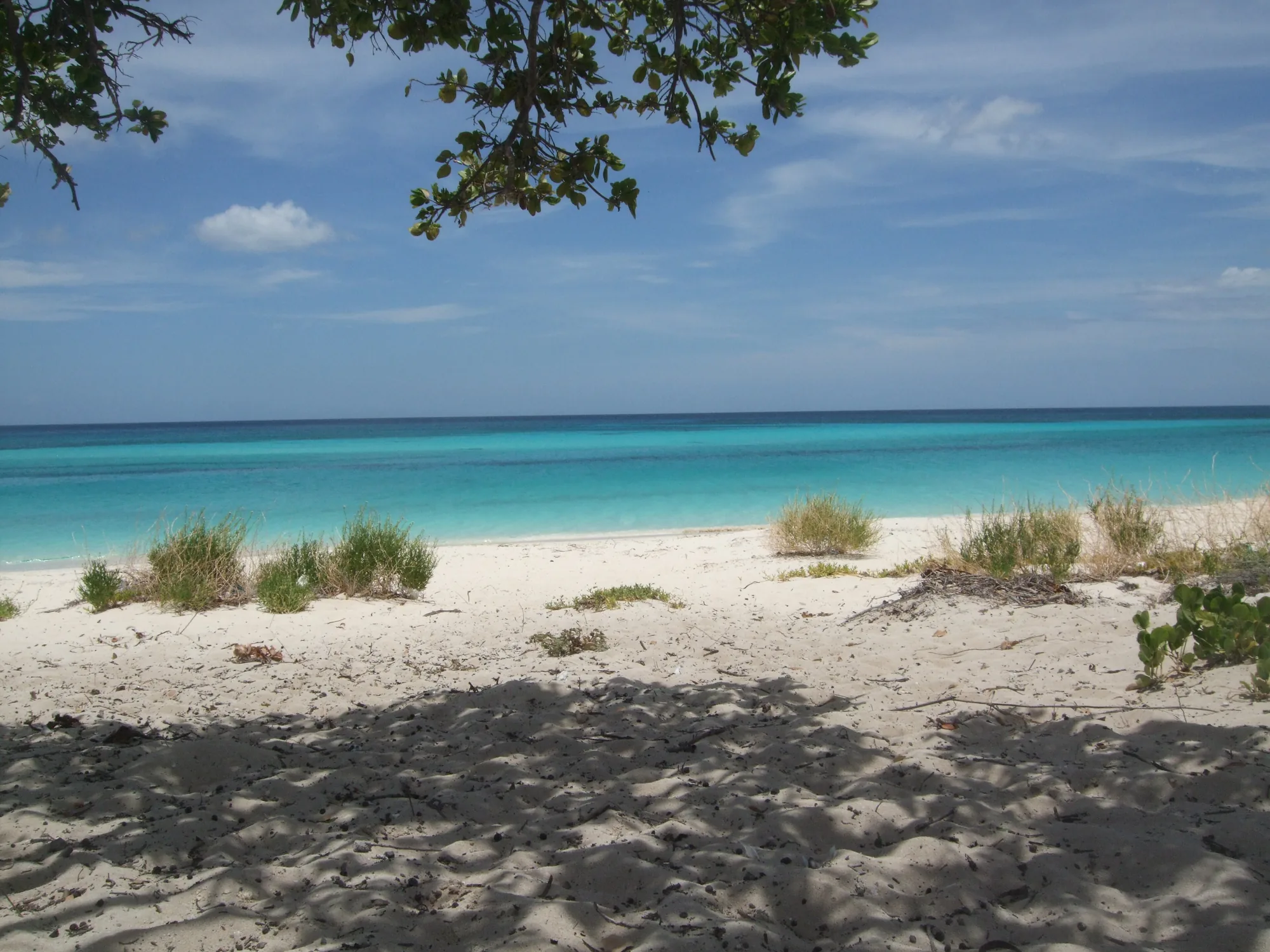
Bahía de las Águilas is the most beautiful beach in the Dominican Republic, and it is also the hardest one to reach. Eight kilometers of pale, empty sand sit at the far southwestern tip of the country, inside a national park, past the last real town, close enough to Haiti that you can see the border hills. Nothing is built on it. No hotel, no bar, no lounger you can rent by the hour. That emptiness is the whole point, and it is also the reason getting there is a proper mission rather than a casual afternoon.
I want to be honest with you from the first line, because the internet is not. Search this beach and you will find a hundred drone shots and captions calling it an easy five-minute detour you can pop over to. You cannot. From the capital it is a full day of driving before you even reach the water, and the last stretch is a boat ride or a jolting track through a cactus desert. People who treat it like a beach they can squeeze in on the way to somewhere else end up seeing it for forty exhausted minutes and calling it overrated. People who plan it as the centerpiece of a two or three day trip through the southwest come home saying it was the best thing they did in the country. This guide is written to put you firmly in the second group.
What Bahía de las Águilas actually is
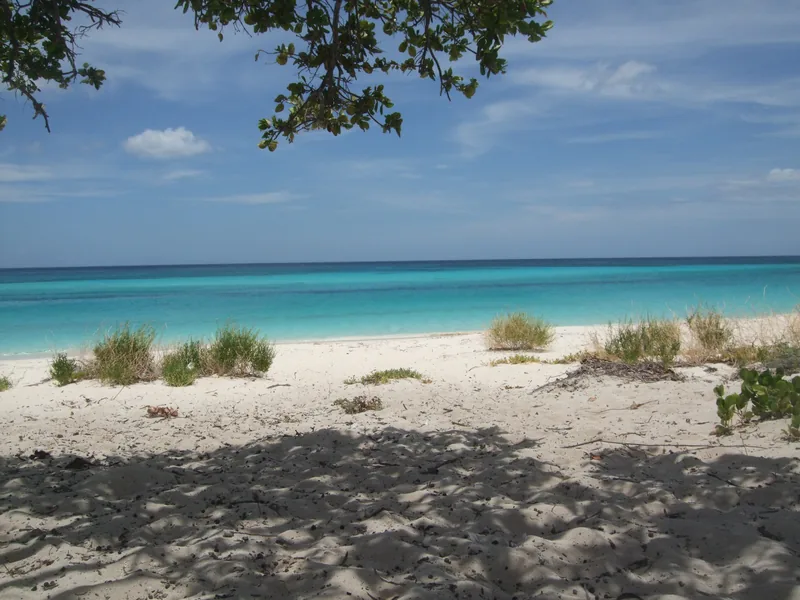
The name means Bay of the Eagles, though the eagles in question are more likely the ospreys and frigatebirds that work the coast here. What you get is a long, gently curving bay of white sand backed by low limestone cliffs and dry scrub forest, with water that runs from glass-clear at your feet to a deep, saturated blue further out. The sand is fine and pale. The seabed is mostly clean sand and seagrass, so the shallows stay bright and legible, and on a calm day you can wade out a long way and still see your feet.
The stretch runs roughly eight kilometers, and here is the thing that separates it from almost every other famous Caribbean beach: there is nothing on it. Not a discreet boutique hotel tucked into the trees. Not a single permanent structure. It sits entirely inside Jaragua National Park, the largest protected area in the Dominican Republic, and development is simply not allowed. When you stand on the sand and look inland, you see forest and cliff. When you look out, you see open Caribbean. When you look along the beach in either direction, you see sand curving away into heat haze with maybe a scatter of other visitors near the landing point and no one at all a kilometer down.
That is a genuinely rare thing in 2026, and it is worth understanding why it still exists.
This is what the Dominican coast looked like five hundred years ago, and the only reason you can still see it is that a national park drew a line and held it.
Where it sits on the map
Orientation first, because the southwest confuses people who only know Punta Cana. The Dominican Republic has four coasts with four personalities, and this is the wildest of them. Bahía de las Águilas is in the extreme southwest, in Pedernales province, hard against the Haitian border. On a map it is almost the last place in the country before you run out of Dominican Republic entirely.
The reference points that matter:
- Santo Domingo, the capital, is your likely arrival city and the base I will make a case for at the end. It sits in the middle of the south coast.
- Barahona is the main city of the southwest, about four to five hours west of the capital by road. This is the practical staging town for the whole region.
- Pedernales is the small border town near the beach, another couple of hours southwest of Barahona.
- Las Cuevas is a tiny fishing settlement inside the park, and the launch point for the boats that run to the bay. This is where the last leg begins.
So the geography, simplified: capital, then a long drive west to Barahona, then a longer drive southwest toward Pedernales, then a turn into the park to Las Cuevas, then a boat. Every one of those legs is real, and skipping the middle by pretending the beach is closer than it is the classic mistake.
Why nothing is built on it
Jaragua National Park covers well over a thousand square kilometers of land and sea in the far southwest, and it is one of the reasons the Dominican Republic still has a beach like this to show off. The park protects dry forest, mangroves, an important set of coastal lagoons, sea turtle nesting beaches, iguanas, and one of the richest bird populations in the Caribbean. Bahía de las Águilas sits inside it, and the protected status is exactly why the bay looks the way it does.
There have been repeated attempts over the years to put a resort here. Every so often a developer floats a plan for a hotel on or near the bay, and every time it runs into the park boundary, environmental groups, and public outcry. The current reality is that you visit for the day and you leave. You cannot sleep on the beach, you cannot build near it, and the only commerce allowed is a small, regulated operation at Las Cuevas run largely by a local cooperative that handles the boats and a couple of simple food shacks well back from the good sand.
I am telling you this partly as background and partly as a favor. When you arrive and there is no shade structure, no toilet block worth the name, no cold beer stand every hundred meters, that absence is not a failure of the place. It is the reason the place is worth five hours in a car. Treat it accordingly. Pack out your trash, do not touch the iguanas, keep off the marked turtle nesting zones in season, and understand that you are a guest in a protected wilderness, not a customer at a beach club.
How the trip actually works
This is the section that matters, because everything about visiting Bahía de las Águilas comes down to logistics. There is no single clean way to do it. There are a few routes, they suit different travelers, and the honest answer is that the smart move is almost always to break the journey and sleep in the region rather than attempt a same-day assault from the capital.
The distances, plainly
From Santo Domingo, Barahona is roughly four to four and a half hours by road on a good run, longer if you hit traffic leaving the city or rain in the hills. From Barahona down to the Las Cuevas turnoff near Pedernales is another two to two and a half hours along a spectacular but slow coastal road. Then the boat or the track. Then the beach.
Add that up and a same-day round trip from Santo Domingo is something like nine to eleven hours of transport for a few hours on the sand. People do it. Organized tours do it, leaving the capital in the dark and getting you home late and wrecked. I do not recommend it, and I will explain the better shape of the trip in the Barahona section below. First, the ways to get there.
Option one: the long drive from the capital
If you are driving yourself, this is a genuine road trip and a good one, provided you give it the days it needs. The route runs west out of Santo Domingo through Baní and Azua, then the road meets the Caribbean and turns into one of the best coastal drives in the country as it heads toward Barahona and beyond. South of Barahona the road hugs the sea with cliffs on one side and turquoise water on the other, passing pebble beaches, river mouths where cold mountain water meets the sea, and roadside stands selling larimar, the pale blue stone found only in this corner of the world.
Driving yourself gives you total freedom and lets you stop for all of that, which is half the reward of the southwest. It also means a rental car, Dominican road conditions, and a long day at the wheel. If you are weighing it, our guide to renting a car in the Dominican Republic covers what that actually involves here, and it is worth reading before you commit, because the southwest is not the place to discover you dislike Dominican driving.
Option two: fly or bus to Barahona, then arrange the rest
You do not strictly need your own car for the whole thing. The common non-driving approach is to get yourself to Barahona and use local transport, guides, and tours from there.
- By coach and guagua. Long-distance coaches and the informal guagua vans run west from Santo Domingo toward Barahona. It is cheap, it is slow, and it is an authentic slice of Dominican travel, but it leaves you in Barahona city without wheels for the final legs, so you will still need to arrange a tour or a driver for the beach day itself.
- By private driver. Hiring a driver for a two or three day southwest trip is the middle path. It costs more than the bus and far less than most people expect, and it removes the entire question of navigating and parking in the region. A good driver becomes an informal guide.
- By organized tour. Several operators run Bahía de las Águilas trips, either as brutal same-day marathons from the capital or, much better, as multi-day southwest tours based out of Barahona. If you book a tour, book the multi-day kind.
The final leg: the boat from Las Cuevas
However you reach the region, the last stretch to the good sand is the same for most visitors, and it starts at Las Cuevas. This little settlement inside the park is where the local cooperative runs small open boats out to the bay. You pay a park entrance fee and a boat fee, you climb into a panga with a handful of other people, and you run twenty minutes or so along the coast to the best section of beach, past cliffs and coves the road never reaches.
The boat is the classic way to arrive, and honestly the more beautiful one. You see the scale of the bay from the water, the color of the sea shifts under you, and the boatman drops you on a stretch of sand that the day-trippers arriving by land never walk to. The boats run on a rough schedule and a last pickup time, so confirm your return time with your boatman before you get out, and do not lose track of the afternoon.
The rough track alternative
There is also a land route to the near end of the beach: a rough, unpaved track through the cactus scrub that a high-clearance vehicle can pick its way along. It is jolting, dusty, and slow, and it delivers you to the closer end of the bay rather than the pristine middle stretch the boats reach. Some tours use it to save the boat fee, and in a proper four-wheel drive with someone who knows the way it is doable. In a low rental sedan it is a recipe for a very bad afternoon and possibly a stranded car. If someone offers to drive you in over the track, make sure the vehicle actually suits it, and know that the boat generally gets you to the better sand.
The beach day itself
Here is what a good day on Bahía de las Águilas actually looks like, so you can picture it and pack for it.
You arrive by boat mid-morning, ideally, when the light is already strong and the water is at its clearest. The boatman noses onto the sand and you step off into ankle-deep, bathwater-warm shallows. There is no dock, no welcome desk, no line of umbrellas. You walk up the beach, pick a spot, and that spot is yours because the next people are a long way off.
The swimming is the main event. On a calm day the water is flat, clear, and shallow a long way out, which makes it superb for floating, for kids who can swim, and for just standing chest-deep looking back at eight kilometers of empty coast. There is snorkeling to be had around the rockier edges and the cliffs, with reef fish and clean water, though this is not a dedicated reef destination and you should bring your own mask rather than expect to rent one. When the wind is up the bay can get a light chop, which is fine for swimming but worth knowing if you are prone to seasickness on the boat ride.
What there is not: shade, unless you find a scrap of it against the cliffs or bring your own. Food and water beyond whatever you carried in or bought at the Las Cuevas shacks. Toilets worth the name. Phone signal, reliably. This is the trade. You get one of the most beautiful and least spoiled beaches in the Caribbean, and in exchange you bring your own everything and you leave with your own trash.
Give yourself three or four hours on the sand. Any less and the journey math stops making sense. Any more without shade and water and you will cook. Then take the boat back to Las Cuevas in the afternoon, buy a cold Presidente and a plate of fried fish from the cooperative shacks, and drive back to your base in Barahona in the golden light with the sea on your right the whole way.
Base yourself in Barahona
The single most useful piece of advice in this guide is this: do not try to do Bahía de las Águilas as a day trip from Santo Domingo. Break the journey and sleep in the southwest, and the whole thing transforms from an endurance test into one of the best short trips in the country.
Barahona city is the natural base. It is a working provincial capital rather than a resort town, so set your expectations to modest, friendly, and real rather than polished. There is a cluster of small hotels and guesthouses in and around the city and south along the coast road, ranging from simple to genuinely lovely eco-lodges tucked above the sea. From Barahona you are within striking distance of the beach and of everything else the region does well, and there is a lot it does well.
Two or three nights in Barahona lets you spread the southwest across proper days instead of cramming it into one. Our full Barahona and the southwest guide goes deep on where to stay and what to do; here is the short version of why the region rewards the extra time.
What else the southwest gives you
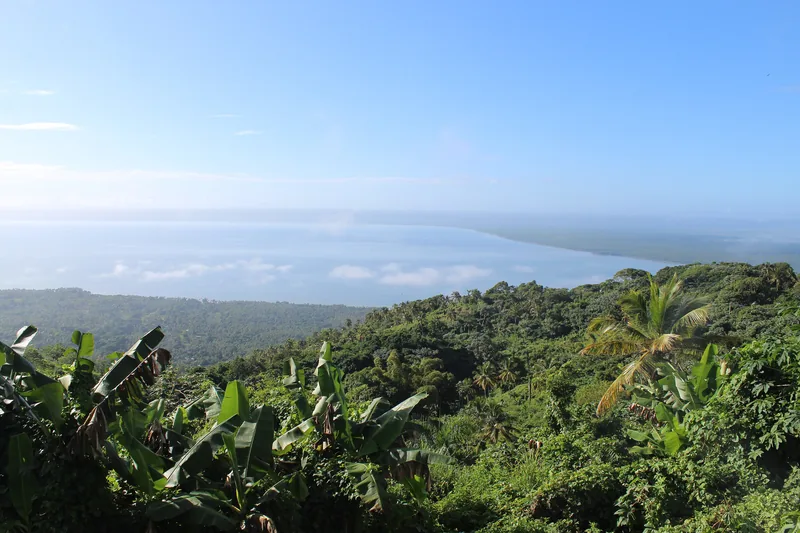
- The coast road south of Barahona. The drive itself is a destination. Cliffs, coves, and a string of beaches where cold rivers pour out of the Bahoruco mountains straight into the warm sea, so you can swim in fresh and salt water a few meters apart. San Rafael and Los Patos are the famous river-mouth stops.
- Lago Enriquillo. A hypersaline lake sitting below sea level, ringed by cactus, with wild American crocodiles and iguanas on an island in the middle. It is one of the strangest landscapes in the Caribbean, and our Lago Enriquillo guide explains how to see the crocodiles responsibly.
- Larimar and coffee country. The blue larimar stone is mined only in these hills, and the Bahoruco highlands grow some of the country's best coffee in cool, misty air a world away from the beaches below.
- The dry forest and the birds. This is one of the top birding regions in the Caribbean, with endemic species you will not see anywhere else in the country.
Put together, that is a two or three day loop that happens to include the best beach in the Dominican Republic rather than a single-minded dash to one strip of sand. That is the trip worth taking.
A sensible two-day southwest itinerary
To make all of this concrete, here is the shape of a trip I would actually recommend, built around the beach but not blind to everything else the region offers. Adjust the pace to suit yourself, but this is the frame that turns the long drive into a reward rather than a chore.
Day one: get west and slow down
Leave Santo Domingo in the morning rather than at dawn, because the point of day one is the journey, not a race. Drive west through Baní and Azua, then let the road meet the sea and settle into the coast drive toward Barahona. Stop where you want. Buy larimar from a roadside stand, swim at San Rafael or Los Patos where the cold rivers pour into the sea, and eat fried fish at a beach comedor with your feet in the sand. Reach Barahona in the afternoon, check into your guesthouse or eco-lodge, and have an early dinner. You want to be rested, because tomorrow starts early.
Day two: the beach, properly
Get up early and drive southwest along the coast toward Pedernales and the park. Aim to be at Las Cuevas by mid-morning, pay your park and boat fees in cash, and take the panga out to the pristine middle of the bay while the water is still calm and clear. Give yourself three or four unhurried hours: swim, float, snorkel the rocky edges, walk the empty sand, and stay under your own shade through the worst of the midday sun. Take the boat back in the afternoon, eat at the cooperative shacks, and either drive back toward Barahona in the golden light or, if you have a third day, push on to see Lago Enriquillo before you turn for home.
Stretching it to three days
If you can spare a third day, spend it on the things the two-day version skips: the crocodiles and iguanas at Lago Enriquillo, the coffee country up in the Bahoruco highlands, or simply a second, lazier morning on a different southwest beach before the long drive back to the capital. The region rewards every extra day you give it, and a third day means you are never rushing the parts that matter.
What it actually costs
I will not invent exact figures, because park fees, boat prices, fuel, and hotel rates all move, and a number I quote today will be wrong by the time you read it. Check current prices before you go. But I can give you the honest shape of the spending so you can budget realistically.
- The park and boat. Reaching the beach involves a national park entrance fee and a boat fee at Las Cuevas, both modest and both usually paid in cash on the spot. Bring small bills. The boat cost is often per boat rather than per person, so a group splits it and a solo traveler pays more per head or waits to share a boat with others.
- Getting to the region. The guagua and coach route is the cheapest way west by a wide margin. A rental car is a fixed daily cost plus fuel for a lot of kilometers. A private driver for a multi-day southwest trip is the most expensive of the transport options but spreads across the whole trip and everyone in your group.
- Sleeping and eating. Barahona is inexpensive compared with the resort east. Simple guesthouses are cheap, the nicer eco-lodges cost more but are still gentle by Caribbean standards, and food at local comedores and the beach shacks is very cheap and very good.
- Tours. An organized multi-day southwest tour bundles most of the above into one price. It costs more than doing it yourself piece by piece, but it removes all the arranging, and for a first-timer without a car it is often the sensible call.
The overall point: the southwest is one of the best value regions in the country. Your money goes to fuel, a few fees, simple rooms, and good plain food, not to a resort markup. What the trip costs you is mostly time and effort, not cash.
When to go
The Dominican Republic is a year-round destination, but the southwest has its own rhythm and it is worth timing your visit if you can.
The dry season, roughly December through April, is the sweet spot for the whole region. Skies are clearer, the sea is calmer more often, and the roads and the rough track to the beach are in better shape. This corner of the country is arid to begin with, so it does not get the drenching afternoon storms of the greener coasts, but rain still turns the unpaved sections to a mess and can churn up the bay.
Summer is hotter and the sun on that shadeless beach is fierce, so if you go between June and September, arrive early, drink constantly, and respect the heat. The broader Atlantic hurricane season runs June through November, and while the southwest is not a frequent direct-hit zone, a passing system means big swell and no boats. Check the forecast in the days before, and understand that if the sea is up, the boatmen will not run and the beach day is off. Build a spare day into the plan so a single bad-weather day does not sink the whole trip.
Whenever you go, aim to be on the sand in the morning. The light is best, the water is usually calmest before the afternoon wind, and you get your hours in before the sun becomes a problem.
What to bring
Because there is genuinely nothing on the beach, your packing is the difference between a great day and a miserable one. Treat this like a wilderness outing, not a beach club.
- Water, more than you think. There is no reliable drinking water on the beach. Carry several liters per person. Dehydration on a shadeless beach after a long drive is the fastest way to ruin the day.
- Sun protection you can rely on. Reef-safe sunscreen, a hat, a rash guard or long-sleeve swim shirt, and sunglasses. The sun here is unfiltered and the sand and water throw it back at you.
- Your own shade. A beach umbrella or a pop-up sun tent if you can carry one. The natural shade against the cliffs is limited and shifts with the sun.
- Food and snacks. Buy or pack a lunch. The Las Cuevas shacks can sort you out with fried fish before or after, but on the sand itself you eat what you brought.
- Cash in small bills. For the park fee, the boat, and the shacks. Do not expect card machines anywhere near here.
- A dry bag. For phone, cash, and camera on the boat ride, which involves a wet step on and off and occasional spray.
- Snorkel gear if you want it. Bring your own mask and fins; do not count on renting.
- Sturdy footwear for the track, if you are going in overland rather than by boat, and something you can walk the sand in.
- A trash bag. You pack out everything you bring in. This is not optional in a national park.
Our full Dominican Republic packing list covers the general trip, but for this specific beach the rule is simple: assume the beach provides nothing, because it provides nothing, and that is exactly why it is beautiful.
Is it worth it? An honest verdict
Let me answer the question people are really asking, which is whether the best beach in the country justifies the effort to reach it. My answer is yes, with conditions, and the conditions are what most breathless write-ups leave out.
Bahía de las Águilas is worth it if you go in with the right frame: as a multi-day trip through a wild region, with a base in Barahona, on a calm-sea day, with your own water and shade, giving yourself real hours on the sand. Do that and you will stand on one of the most beautiful and least developed beaches in the entire Caribbean, and the photographs will not have prepared you for how empty and how clear it actually is.
It is not worth it if you try to bolt it onto a Punta Cana resort week as a same-day dash, arrive frazzled at noon, cook for forty minutes with no water, and turn around. That version of the trip is where the occasional overrated review comes from, and it is a self-inflicted wound.
How it compares to the country's other great beaches
It is worth being clear-eyed about where this beach sits among its rivals, because the Dominican Republic has more than one contender.
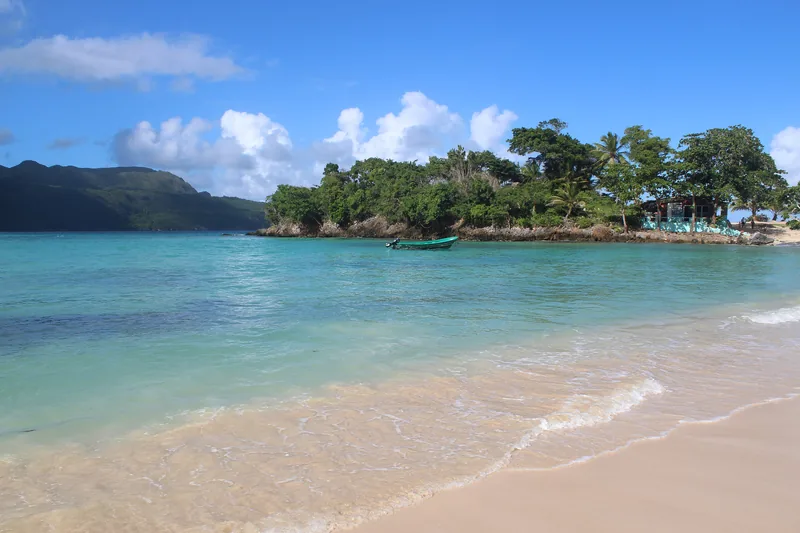
Its closest competitor for the title of best beach in the country is Playa Rincón, out at the tip of the Samaná Peninsula in the northeast. Rincón is a shorter, greener crescent backed by dense palms with a cold freshwater river running onto the sand, and it is a little easier to reach, with a simple beach kitchen or two actually on it. If Bahía de las Águilas is a desert beach, Rincón is a jungle one. Both are magnificent and both are worth the effort; our Playa Rincón guide makes the case for the other end of the country, and our ranked best beaches in the Dominican Republic puts them head to head.
Then there is the honest comparison nobody in the resort business wants to make. The packaged beaches of Punta Cana and Bávaro are long, calm, warm, palm-lined, and completely developed, with a wall of all-inclusive resorts fronting most of the good sand. They are pleasant. They are convenient. They are also more or less interchangeable with a hundred other Caribbean resort strips, and the sand behind a gate with a swim-up bar is a fundamentally different experience from sand inside a national park with nothing on it at all. If you want zero logistics and a lounger, Punta Cana delivers exactly that and our honest Punta Cana beaches guide says so plainly. If you want to stand somewhere that still looks like the island did before the resorts, that is not Punta Cana, and Bahía de las Águilas is about as far from it, in every sense, as the country gets.
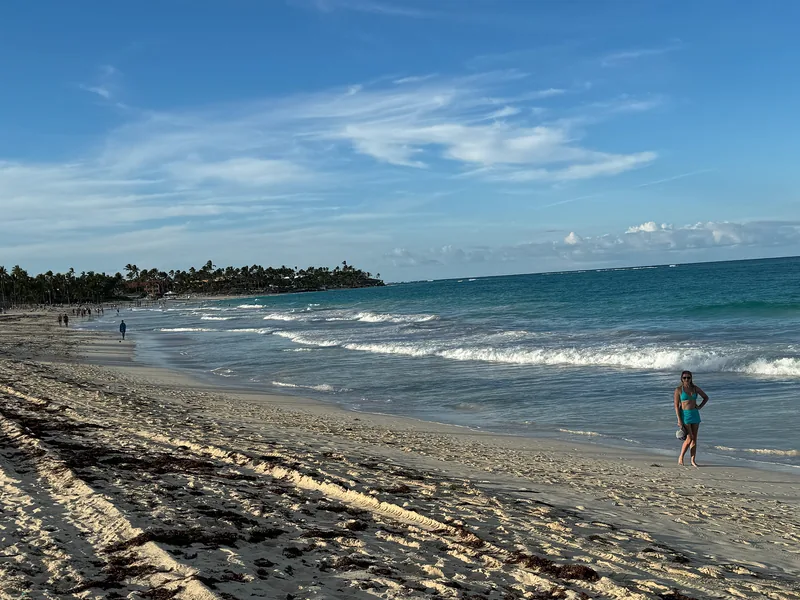
That contrast is really the story of two different Dominican Republics, the polished east and the wild southwest, and we pull it apart in full in North Coast vs Southwest: Two Dominican Republics. Bahía de las Águilas is the wild one at its most extreme.
How this fits a trip based in Santo Domingo
Here is the bias I promised to declare. I write for a place to stay in the colonial heart of the capital, and I think Santo Domingo is the smartest base for a trip that wants the real country rather than a week behind a resort gate. Bahía de las Águilas is the exception that tests the rule, because it genuinely is far, and the honest advice is to sleep in Barahona for it rather than commute from the capital. So let me be straight about how the pieces fit.
The southwest is a two or three day trip in its own right. You would leave the capital, drive west, base in Barahona, do the beach and the crocodile lake and the coast road, and come back. The penthouse is not your bed for those particular nights, and I would not pretend otherwise. What the capital gives you is the anchor for the rest of the trip and the launch point for this one. You fly into Santo Domingo, you settle into the Zona Colonial, you use the city as your home base for the parts of the country that are genuinely day trips, and when you want the southwest you make it the dedicated expedition it deserves to be, then come home to the old city.
That is the shape of a good Dominican trip: a real base in a real city, not a resort bubble, with the country's wild edges reached as proper journeys rather than pretended to be next door.
The Residence is a three-suite penthouse on the top floor of a 1760s colonial townhouse in the Zona Colonial, the UNESCO old town at the heart of Santo Domingo, sleeping six across three bedroom suites with a roof terrace over the Caribbean. It is the kind of base that makes a trip like this one possible: a real home in the first city of the Americas, with the whole country, including its wild southwest corner, spread out around it. You book it directly on Airbnb, where the host, Waner, keeps a steady run of strong reviews and a perfect score on location.
Do the southwest properly. Sleep in Barahona, take the boat from Las Cuevas on a calm morning, and give the most beautiful beach in the country the day it is owed. Then come back to the colonial city and let the capital be your base for everything else.