Las Terrenas: Beaches, Food and the Expat Coast
August 2026 · 26 min read
Las Terrenas is the beach town on the Samaná peninsula where the Dominican Republic quietly turned European. It sits on the north, Atlantic-facing shoulder of the peninsula, and over a few decades a steady trickle of French, Italian, German, and Swiss arrivals settled here, opened restaurants, and never left. The result is a town that looks and eats differently from anywhere else on the coast: espresso and fresh pasta a block from a colmado, a boulevard of open-air kitchens by the water, and a run of long, quiet beaches that development has mostly left alone.
That mix is the whole reason to come. Las Terrenas is not a resort strip and it is not a sleepy fishing village either. It is a real town with a strong expat and restaurant scene layered over a Dominican beach community, and the friction between those two things is exactly what makes it interesting. This guide covers the beaches that matter, from the long empty sweep of Playa Cosón to the boutique cove at Playa Bonita, the famous Pueblo de los Pescadores dining strip, the El Limón waterfall inland, who this town actually suits, and how to get here from Santo Domingo without a rental car.
Where Las Terrenas sits on the peninsula
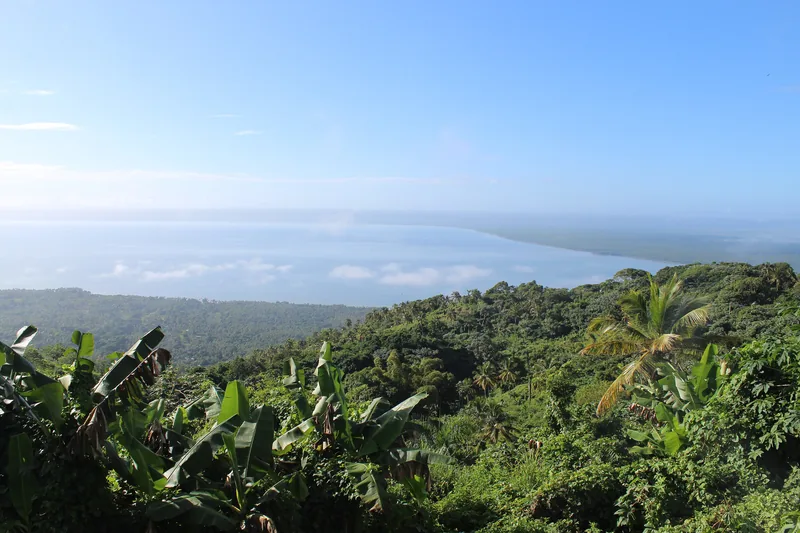
Picture Samaná as a green finger of land hooking off the country's northeast corner into the Atlantic. Santa Bárbara de Samaná, usually just called Samaná town, sits at the base of the hook on the sheltered bay side. Las Galeras sits right at the tip where the road runs out. And Las Terrenas sits along the top, the north shore that faces the open ocean, a little west and over the spine of hills from Samaná town.
That position shapes everything about the place. Because it faces the Atlantic rather than the protected bay, the beaches here are long and open, with real sand and, on some of them, real surf. Because it is on the far side of the ridge from the bay, it developed as its own separate destination rather than as an extension of Samaná town. And because a modern highway now connects it directly to Santo Domingo in a couple of hours, it grew faster and more internationally than the quieter corners of the peninsula. Las Terrenas is the busiest, most built-up, most cosmopolitan town on Samaná, which will either be the thing you want or the thing you are trying to escape. Both are fair.
The town itself is bigger than it first appears. A main road runs down from the highway to the water and meets the coast road, and the beaches, restaurants, and guesthouses spread out east and west along the shore from there. You will not walk the whole thing end to end the way you can in Las Galeras. You will use a motoconcho, a golf cart, or a short taxi hop to get between the town center, the fishermen's village dining strip, and the beaches further out. For the wider context of how the peninsula fits together, from whale season in the bay to the waterfalls inland, the complete Samaná Peninsula guide is the map to read alongside this one.
Why Las Terrenas feels European
Most Dominican beach towns feel unambiguously Dominican. Las Terrenas does not, and understanding why helps you read the place.
Starting in the 1970s and 80s, and accelerating from the 90s on, Las Terrenas drew a wave of European settlers, mostly French and Italian, along with Germans, Swiss, and Québécois. Some came to open small hotels, some to run restaurants, some simply to disappear onto a beautiful coast that was still cheap and undeveloped. They stayed, married in, raised children, and built businesses. Two or three generations on, the town runs in a comfortable blend of Spanish, French, and Italian, and the commercial center reflects that: real bakeries turning out baguettes and croissants, Italian kitchens making fresh pasta and wood-fired pizza, French bistros, gelato, decent wine lists, and coffee that would pass in Europe.
None of this replaced the Dominican town underneath. The colmados still sell rum and play bachata, the fish still comes off local boats, the motoconchos still swarm the main road. What you get instead is a genuine overlay, two food cultures and two rhythms sharing the same few streets. You can eat a plate of la bandera at a comedor for a few dollars at lunch and sit down to steak frites with a bottle of Côtes du Rhône that evening, a five-minute walk apart. For a lot of travelers that combination is the single most appealing thing about the town.
Be clear-eyed about the flip side. The European presence has pushed prices up, and Las Terrenas is noticeably more expensive than the average Dominican town. It has also produced pockets that feel more like a Mediterranean expat enclave than the Caribbean, which some visitors love and others find slightly beside the point of coming to the DR at all. Whether that trade appeals is personal. But it is real, and it is the defining fact of the place, so it is worth knowing before you arrive rather than being surprised by it.
Playa Cosón: the long, quiet one
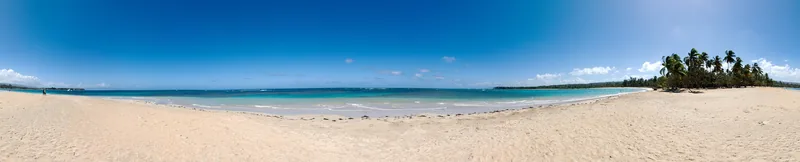
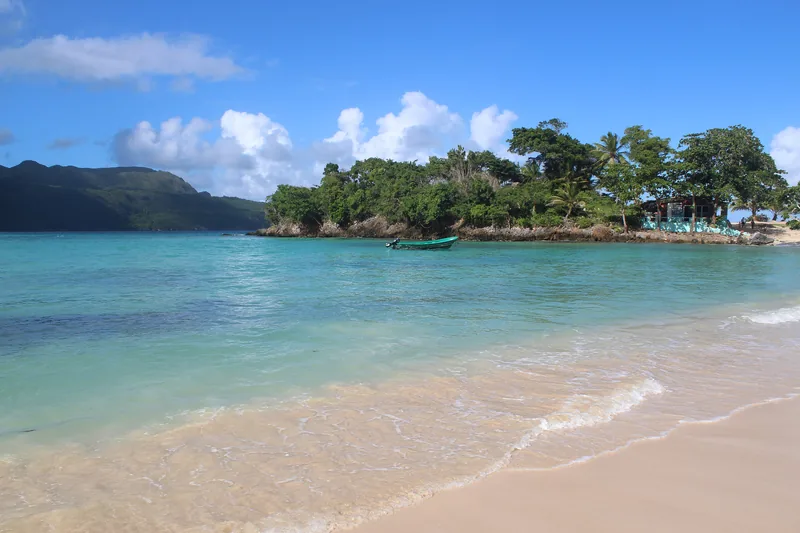
If you take one beach away from a Las Terrenas trip, make it Playa Cosón. It runs west of town, a long, wide, mostly undeveloped sweep of pale sand backed by coconut palms and green hills, and it is the beach that reminds you why people fell for this coast in the first place.
Cosón is long enough, on the order of several kilometers, that even on a decent day it never feels crowded. Walk a few minutes from wherever you enter and you can have a stretch of it to yourself. The water is clear and the setting is open and natural, with the hills rising behind and the palms leaning over the sand. There is no resort wall, no wristband gate, no line of identical umbrellas. There are a handful of simple beach restaurants and a few small hotels spread thinly along its length, and long gaps of nothing in between.
That thin development is the appeal and also the thing to plan around. Because Cosón is spread out and quiet, you want to pick your spot. Aim for one of the beach restaurants near the eastern, town end if you want lunch, chairs, and a bit of life around you. Head further west along the sand if you want emptiness and are happy to bring your own water and shade. Either way it is a beach for a long, slow half-day: swim, walk the sand, eat fresh fish with your feet in it, and let the afternoon go.
A few things worth knowing before you go:
- It is a short hop from town. Cosón is roughly ten to fifteen minutes west of the town center by taxi, motoconcho, or golf cart. It is not walkable from the main strip, so plan the transport, and if a driver drops you, arrange the pickup.
- Bring cash and basics. The beach restaurants are informal and not always all open midweek or off-season. Carry pesos, water, sunscreen, and a hat, and do not count on an ATM or a shop out here.
- Watch the surf and the sun. This is an open Atlantic beach, so the water can have more movement than the sheltered bay beaches. It is usually fine for swimming, but read the day. The sun on that open sand is strong; come earlier or later rather than baking at midday.
Cosón is the counterweight to the busy, built-up feeling of the town center. When Las Terrenas starts to feel like a lot of scooters and construction, Cosón is the ten-minute reset that puts you back on an empty Caribbean beach.
Playa Bonita: the boutique beach next door
Just west of the town, before you reach Cosón, sits Playa Bonita, and it fills a different slot in the trip. Where Cosón is long and wild, Bonita is a compact, pretty crescent lined with small boutique hotels, beach restaurants, and guesthouses. It is more developed than Cosón and less developed than the town beaches, which for a lot of people is the sweet spot.
Bonita is where a certain kind of traveler ends up basing for the whole trip. The hotels are mostly small and design-minded rather than big and all-inclusive, the beach out front is soft and swimmable, and there is enough of a scene, a few good restaurants, sunset drinks, an easy walk along the sand, without the density of the town center. It has a slightly bohemian, low-key stylish feel that suits couples and anyone who wants a beach with a bit of polish but no resort machinery.
The surf at Bonita can pick up, and at times it draws surfers and kite and windsurfers when the wind is right, so it is worth checking conditions if you have small children or want flat water for easy swimming. On a calm day it is gentle and lovely. On a windy one it is a place to watch the water more than get thrown around in it. Like everything on this coast, it depends on the day.
For orientation, think of the three western beaches as a spectrum: the town beaches for convenience and buzz, Playa Bonita for boutique polish and a bit of style, and Playa Cosón for long, quiet, wild sand. Most people who stay a few days end up sampling all three, and the short distances between them make that easy.
The town beaches: Las Ballenas and the center
Right in front of the town, the beach runs in a series of stretches, the best known of which is Playa Las Ballenas, named for a trio of small offshore rocks that some locals liken to whales. These are the beaches you can walk to from the town center, and they are the ones you will use for a quick swim, a sunset, or a lazy morning without organizing transport.
They are pleasant rather than spectacular, and I want to be straight about that. The town beaches are narrower and busier than Cosón or Bonita, with the road, the restaurants, and the life of the town right behind them. That is a feature if you want to roll out of your guesthouse, swim, and be back at a café in ten minutes. It is a drawback if you came for empty sand. The water is calm and shallow in front of the town, good for an easy dip, and the offshore rocks make for a nice foreground at sunset, which the whole town turns out to watch.
Use the town beaches for convenience and the western beaches for quality. A typical good day here is a morning swim off the town beach, a coffee and a pastry at one of the European cafés, then a taxi or golf cart out to Cosón for the long, slow afternoon, and back to the fishermen's village for dinner. That rhythm uses each beach for what it is best at.
The Pueblo de los Pescadores: where Las Terrenas eats
The heart of the town's dining scene is the Pueblo de los Pescadores, the old fishermen's village, a cluster of low, colorful former fishing shacks strung along the waterfront at the edge of the town center. The fishermen are mostly gone from it now, and the buildings have been taken over by restaurants and bars, most of them small, many of them European-run, sitting right on the water with tables spilling out toward the sand.
This is where the town comes to eat and drink at night, and it is genuinely one of the better casual dining strips on the whole coast. In the space of a couple hundred meters you can find fresh seafood, Italian, French, Spanish, and Dominican kitchens side by side, most of them open-air, most of them lit up and busy after dark, with the sound of the water underneath. You wander the strip, look at what is cooking and who is full, and pick. It is the kind of place where dinner turns into a long, unhurried evening without anyone rushing you.
What to look for as you wander:
- The fresh catch. This is a fishing coast, and the seafood is the obvious play. Whole grilled or fried fish, snapper, mahi-mahi, lobster and shrimp when they have it, usually with tostones and rice. Ask the price on lobster, which is sold by weight and can jump.
- Pescado con coco. Fish simmered in a coconut sauce is the signature dish of the Samaná coast, a legacy of the peninsula's mixed Caribbean heritage. If a kitchen does it, order it. It is the one regional plate you should not leave the peninsula without trying.
- The European kitchens. This is the Pueblo's edge over an ordinary beach strip. Real Italian pasta and wood-fired pizza, French preparations of the local fish, decent wine. Prices here run higher than a Dominican comedor, but the quality is usually there.
The Pueblo has had its ups and downs, including a fire some years back that damaged part of the strip and a rebuild since, so the exact lineup of places shifts over time. Do not go looking for one specific spot from an old article. Go for the strip itself, walk it, and choose on the night. For a broader tour of Dominican dishes to hunt down while you are in the country, the Dominican food guide runs through the ones worth ordering.
Eating and drinking beyond the Pueblo
The fishermen's village gets the attention, but the food scene spreads well beyond it, and this is where the town's European character really shows.
Start your mornings the way the town does, at one of the French or Italian bakeries and cafés in the center. Fresh baguettes, croissants, real espresso, and pastries are easy to find here in a way they simply are not in most Dominican towns, and after a few days on rice and beans it is a genuine pleasure. Several spots do a proper breakfast and good coffee, and they double as the town's daytime meeting rooms, full of a mix of locals, expats, and travelers.
For lunch, the choice splits along the same lines as the town itself. On the Dominican side, seek out the comedores and colmados for la bandera, the everyday national plate of rice, beans, and stewed or fried meat, cheap and filling. On the European side, the town runs to Italian trattorias, French bistros, pizzerias, and the odd gelato counter, along with a scattering of international spots reflecting whoever settled here and opened a kitchen. It is a small town that eats far above its size, which is directly downstream of the expat scene.
A practical note on cost. Las Terrenas is one of the more expensive towns in the country, and a European dinner with wine on the Pueblo strip will not be resort-cheap. It will still usually undercut what the same meal costs behind an all-inclusive gate, and the quality and setting are better, but do not expect village prices. Balance the trip by eating Dominican at lunch and European at dinner, and the budget stays sane while you get the best of both cultures on the same day. Bring cash in pesos for the smaller places, which often do not take cards, though the town has ATMs, unlike the tip of the peninsula.
El Limón waterfall: the inland day out
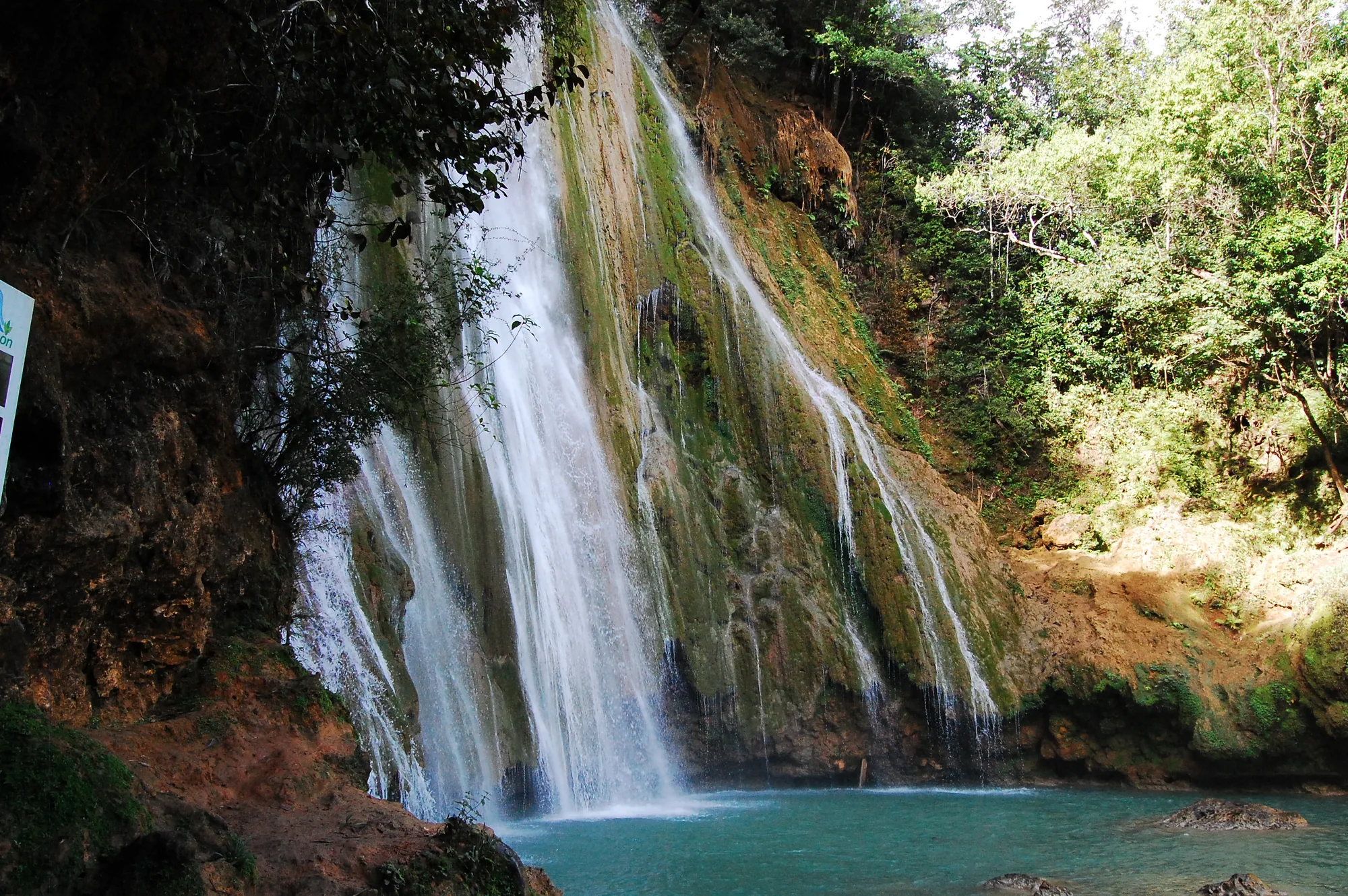
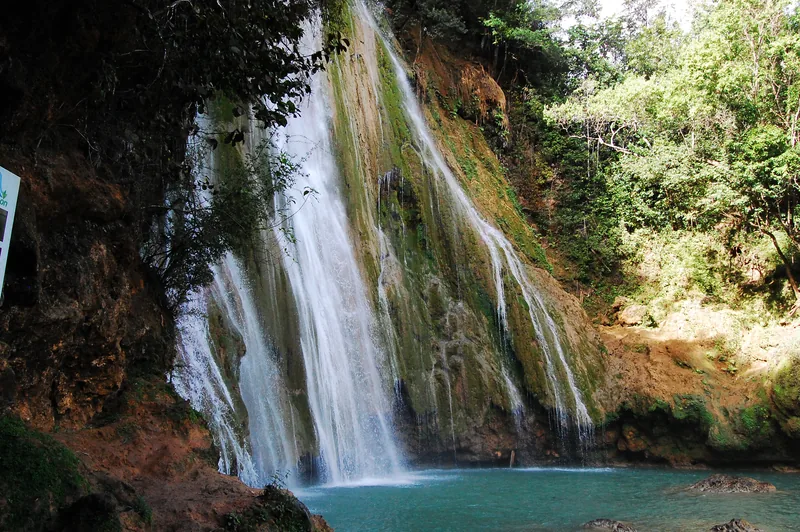
The best half-day trip out of Las Terrenas does not involve a beach at all. Inland from the coast, near the village of El Limón, the Arroyo Chico river drops off a jungle escarpment in a single fall of roughly forty meters into a wide green pool you can swim in. El Salto de Limón is the most famous waterfall on the peninsula, and it is an easy add to a Las Terrenas stay, sitting only about twenty to twenty-five minutes south of town by road.
You do not walk in from the parking area on the flat. The waterfall sits back in the hills, and the classic way to reach it is a guided trip on horseback along a muddy trail through farmland and forest, with a local guide leading the horse. The ride takes roughly half an hour each way depending on the trail and the mud, and it ends with a short walk down to the base of the fall, where you can swim in the cool pool under the spray. You can also do the trail on foot if you would rather walk than ride, which takes a bit longer and gets slippery after rain but saves the horse. Either way, wear shoes you do not mind getting muddy, bring a swimsuit and water, and expect to get wet.
How it works on the ground:
- The paradas. Several trailhead operations, known locally as paradas, sit along the road near El Limón, each offering the horseback trip with a guide, usually as a package that includes the horse, the guide, and often a simple Dominican lunch afterward. Prices are broadly similar between them; agree what is included before you set off, and confirm whether lunch and the guide tip are in the price.
- Go in the morning. Start early to beat both the heat and the tour buses that come over from the resorts. A morning trip means an easier ride, a quieter pool, and time to enjoy the swim before the crowd arrives.
- Manage the mud. The trail is genuinely muddy, especially after rain, and the horses handle it better than your shoes will. This is part of the experience, not a flaw in it, but go in expecting it.
El Limón is the trip that reminds you the peninsula is not only a coast. The interior is lush, green mountain country, and the waterfall is the easiest way to see it. If you want the full breakdown of the hike, the horseback option, and how to time it, there is a dedicated Salto El Limón waterfall guide that covers it in detail.
Day trips: Rincón, whales, and the rest of Samaná
Las Terrenas makes a comfortable base for the western half of the peninsula, and a couple of the best experiences on Samaná are day trips from here rather than things in the town itself.
Playa Rincón. The Caribbean-famous beach near Las Galeras, close to two miles of undeveloped palm-backed sand with a cold freshwater river running out to the sea, is reachable from Las Terrenas as a long day trip, roughly an hour to ninety minutes each way by road toward the tip of the peninsula, or as part of an organized excursion. It is a haul from here compared to basing in Las Galeras, but if your trip only allows one big beach day and Las Terrenas is your base, Rincón is the beach worth the drive. The dedicated Playa Rincón guide covers the two ways in, the seafood shacks, and how to time it.
Whale watching. Between roughly mid-January and mid-March, thousands of humpback whales gather in Samaná Bay to breed and calve, and the whale-watching boats that run out of Samaná town offer one of the best whale encounters in the Atlantic. From Las Terrenas it is a manageable morning: cross to Samaná town, about forty-five minutes over the hills, and join a boat. If your dates fall in that window, this is reason enough to reshape the trip around it. The Samaná whale-watching guide explains the season, the boats, and how to book responsibly.
Cayo Levantado and the bay. From Samaná town you can also take a boat out to Cayo Levantado, the small palm-covered island in the bay, and combine it with the mangroves of Los Haitises National Park on the far side. These are bay-side, calm-water experiences, a different flavor from the open Atlantic beaches around Las Terrenas, and they round out a longer stay nicely.
The point is that Las Terrenas works as a hub. You get a lively town with good food and beaches on your doorstep, and the waterfall, the famous beaches, and the whales all within day-trip range. For a slower, quieter base you would choose Las Galeras; for the liveliest, most connected base with the strongest food scene, Las Terrenas is the pick.
Who Las Terrenas is for, and who should skip it
This is the part that saves people from booking the wrong trip. Las Terrenas is a specific kind of place, and it suits some travelers perfectly and disappoints others.
It is a great fit if you want:
- A real town with life, restaurants, and a scene, not a sealed resort or a silent village. Las Terrenas has energy at night and things to do.
- A genuinely good, internationally flavored food scene. If eating well matters to you, this is one of the best beach towns in the country for it.
- Long, quiet beaches a short hop away, with the option of a lively base. Cosón and Bonita give you the empty sand; the town gives you somewhere to come back to.
- A mix of cultures. If the French-Italian-Dominican blend sounds appealing rather than off-putting, this town delivers it more than anywhere else on the coast.
- A base for the western peninsula: the waterfall, the beaches, and whale season all within reach.
You might want to look elsewhere if you want:
- Total quiet and emptiness. Las Terrenas is the busy, built-up town on Samaná. For a sleepy end-of-the-road feel, Las Galeras is the better call.
- A cheap trip. This is one of the pricier towns in the DR. Your money goes further almost anywhere else on the coast.
- A hands-off all-inclusive week where everything is handled for you behind a gate. That is not what this town is; that is Punta Cana, and there is an honest case for it in the Punta Cana beaches guide.
- An untouched, purely Dominican experience with no European overlay. The overlay is the point of Las Terrenas, so if you specifically want to avoid it, this is the wrong town.
Both lists are legitimate. The unhappiness comes from booking the town while wanting what it is not. Read the two lists honestly and you will know quickly whether Las Terrenas is your trip.
How to get to Las Terrenas from Santo Domingo
Getting here is easier than the peninsula's remote reputation suggests, thanks to a modern highway that cut the old mountain journey down dramatically. You have three realistic options and you do not need a rental car for any of them.
Option 1: Private driver or transfer (easiest)
The simplest door-to-door choice is to hire a car and driver for the run. From the Zona Colonial a private transfer picks you up at the door and takes you straight to your guesthouse in Las Terrenas in about two to two and a half hours on the highway, with a coffee or bathroom stop if you want one. It is not the cheapest option, but split between a few people it is very reasonable, and it removes every piece of friction: no changing vehicles, no luggage juggling, no working out the final leg. For a group of four, this is often what I would do.
Option 2: Coach plus local transport (best value)
The independent route that keeps costs down.
- Take a long-distance coach toward Samaná. Comfortable, air-conditioned coach services run from Santo Domingo up onto the peninsula on a regular daily schedule. Some routes serve Las Terrenas more directly than others, so check the current schedule and destination before you buy, since it changes.
- Cover the final leg if needed. Depending on where your coach terminates, you may finish the trip by local guagua, the shared minibuses that are the backbone of Dominican transport, or a short taxi. It is cheap and straightforward in daylight.
This coach-plus-local combination costs a fraction of a private transfer. The trade is a little more time and possibly a change of vehicle. If you are comfortable with that, it is the value pick.
Option 3: Fly into El Catey (fastest)
The peninsula has its own airport, El Catey, also called Samaná El Catey International (AZS), and it sits roughly thirty to forty minutes from Las Terrenas. It handles some direct international flights, mainly seasonal charters and a few scheduled services from North America and Europe, along with the occasional domestic hop. For travelers coming straight from abroad, flying into AZS and skipping Santo Domingo entirely is a real option and lands you close to the town. From within the DR, the drive from the capital is easy enough that flying domestically is rarely worth it, but if you are arriving from overseas, check whether a direct flight into El Catey fits your route before you default to landing at the capital.
For the full breakdown of the road route, the stops worth making, and what the highway is actually like, see the guide on driving from Santo Domingo to Samaná.
A word on rental cars
You can rent a car and drive yourself, and the highway to Las Terrenas is genuinely easy, better than the roads to the tip of the peninsula. If you plan to base in Las Terrenas and range widely on your own schedule, out to Cosón at odd hours, over to Samaná town, down to El Limón, a car has more of a case here than it does in Las Galeras. That said, the town itself is served well by cheap motoconchos, golf carts, and taxis, the beaches are short hops, and the day trips can be done by organized tour or hired driver. For a few days, many people find they do not need the car and the parking hassle. Weigh it against how independent you want to be.
Getting around once you are there
Las Terrenas is more spread out than the peninsula's smaller towns, so you will use local transport to get between the center, the beaches, and the dining strip. The toolkit:
- Motoconchos. Motorcycle taxis are everywhere and are the cheapest, fastest way to hop around town and out to the nearer beaches, if you are comfortable on the back of a bike. Agree the price before you get on.
- Golf carts and quads. A very Las Terrenas thing: many visitors rent a golf cart or a quad for a few days to buzz between the beaches and the town at their own pace. It suits the flat, short distances here.
- Taxis. Standard taxis handle the longer hops and the runs you would rather not do on a bike, like an evening out to a beach restaurant. Agree the fare first; there is a local taxi association with set routes.
- Ride apps. Uber and similar apps are excellent in Santo Domingo and a big part of why the capital makes such an easy base, but do not count on them working reliably out on the peninsula. In Las Terrenas, plan on motoconchos, golf carts, and local taxis rather than the app.
Within the compact center you can walk, and the walk along the beachfront and through the Pueblo de los Pescadores is part of the pleasure. For everything further out, one of the options above gets you there in minutes.
A three-day plan for Las Terrenas
Las Terrenas rewards an unhurried stay. Two nights is the minimum to make the trip up worthwhile; three or four lets you fold in the waterfall and a day trip without rushing. Here is how I would spend three days.
Day one: settle in and eat well
Travel up from Santo Domingo in the morning, arrive by early afternoon, and check in. Spend the rest of the day getting your bearings gently: a swim off the town beach, a coffee and a pastry at one of the European cafés, a walk along the front to the Pueblo de los Pescadores to see what looks good for later. As the light drops, join the town for the sunset over the Las Ballenas rocks, then have your first dinner on the Pueblo strip, seafood or Italian, unhurried, with your feet more or less in the sand. You have been travelling; do not overreach on the first night.
Day two: the beaches
This is your beach day, and you spend it west of town. Head out to Playa Cosón in the morning while the light is good and the sand is empty, and give it hours: walk the long stretch, swim, and eat lunch at one of the beach restaurants. In the afternoon, stop at Playa Bonita on the way back for a change of scene, a coffee or a drink, and a look at the boutique end of the coast. Back to town to clean up, then dinner, maybe French this time to work through the town's range. This is the day that shows you why the western beaches, not the town beaches, are the real draw.
Day three: the waterfall, or a bigger trip
Spend the morning inland at El Limón, the horseback trip through the hills to the waterfall and a swim in the pool under the fall, back in time for a late lunch. That is the easy, high-reward option and it fits comfortably in a morning. Alternatively, if your dates land in whale season, roughly mid-January to mid-March, trade the waterfall for a morning whale-watching trip out of Samaná town, which is the single best thing the peninsula offers in that window. Or, if you want the famous beach, use the day for the long run out to Playa Rincón. Any of the three sends you home having seen more than just the town.
Compress this to two days by choosing between the waterfall and the beaches, and you still come home with the best of Las Terrenas. Stretch it to four if you want the town, Cosón, El Limón, and a day trip without hurrying any of them.
When to go and what to know
A few practicalities that shape the trip more than any single beach or restaurant.
Season. The Dominican Republic is warm year-round. The driest, most settled stretch on this coast runs roughly December through April, which is also the busiest and priciest window, and it overlaps with whale season in the bay. Late summer into autumn is hotter and wetter and carries the small but real risk of a tropical storm affecting the peninsula, so watch the forecast if you travel then. For a fuller look at the tradeoffs between weather, crowds, and price, the best time to visit guide lays them out.
Budget accordingly. Las Terrenas is one of the more expensive towns in the country. Restaurants, especially the European ones, cost more than a typical Dominican comedor, and accommodation runs higher too. Eat Dominican at lunch and European at dinner to keep the balance, and know going in that this is not a budget beach town.
Cash and cards. The town has ATMs and more of the restaurants take cards than they would in a village, but the smaller comedores, colmados, and beach shacks are cash-only. Carry pesos for the informal places and keep a card for the sit-down dinners.
Sea conditions. These are open Atlantic beaches, so the surf and wind vary more than on the sheltered bay side. Most days are fine for swimming; some days the water is lively enough to just watch. Check the day, especially if you are swimming with children.
Pack for a beach town with range. Beach kit and reef-safe sunscreen, obviously, plus real shoes for the muddy El Limón trail and something a notch nicer for a dinner out on the Pueblo strip, which runs a little more dressed-up than the average Dominican beach. A dry bag helps for boat trips and the waterfall.
Where Las Terrenas fits into a smarter Dominican trip
Here is the bias I will declare up front. I write for a place to stay in the heart of the capital, so weigh what follows accordingly, but I believe it: the best way to see the Dominican Republic is not to plant yourself in one beach town or resort for a week. It is to base in Santo Domingo, the first city of the Americas and a genuinely great city to spend time in, and to take the beaches and mountains as trips out from a base with real character.
Las Terrenas fits that model well. It is close enough to the capital, a little over two hours on the highway, to do as a two-to-three day excursion from the colonial city, giving you the European food scene, the long western beaches, and the El Limón waterfall, then bringing you back to a place with history, music, and life on the street rather than trading the whole holiday for one beach town. You get the best of the north-shore coast and a real city, instead of choosing one and missing the other. That thinking runs through the whole case for skipping the resort, and Las Terrenas is a good trip to prove it out.
Our own base for this is Penthouse Pallazzo, a three-suite penthouse on the top floor of a 1760s colonial townhouse in the Zona Colonial, sleeping six, with a covered gallery and a roof terrace facing the Caribbean and the Montesinos monument on the Malecón. It puts you in the middle of the old city, a short walk from the cathedral, the Alcázar, and the best of the colonial restaurants, and within easy reach of a driver or coach north to Samaná when you want the sand. You can see the rooms and book directly, through Airbnb, on the residence page.
However you build the trip, give Las Terrenas its due. Spend a slow afternoon on Playa Cosón, ride up to the El Limón waterfall and swim under it, eat your way along the Pueblo de los Pescadores, and taste the odd, comfortable blend of the Dominican Republic and Europe that no other beach town on the coast quite manages. It is a specific place with a specific character, and for the right traveler it is one of the most enjoyable towns in the country.