The Samaná Peninsula: A Complete Guide
August 2026 · 25 min read
The Samaná Peninsula is the green thumb of land that hooks off the northeast corner of the Dominican Republic, and it holds more genuinely great coastline in one stretch than anywhere else in the country. This is where the humpbacks come to breed each winter, where Playa Rincón runs for nearly two miles of empty palm-backed sand, and where a waterfall drops through the hills a short ride from the beach. If you only leave the capital once on your trip, this is the direction to go.
I want to give you the whole peninsula in one guide, because most articles pick a single town and leave you guessing how the pieces connect. They connect closely. Santa Bárbara de Samaná, Las Galeras, and Las Terrenas are the three hubs, each with its own character, all within an hour or so of one another. Add Cayo Levantado out in the bay, the El Limón waterfall in the interior, and the January-to-March whale season, and you have the makings of a three-to-five day trip that most visitors to the Dominican Republic never make and later wish they had. This guide covers what each place is, how they differ, how to reach the peninsula from Santo Domingo without a rental car, where to base, and how to structure your days.
The peninsula in one picture
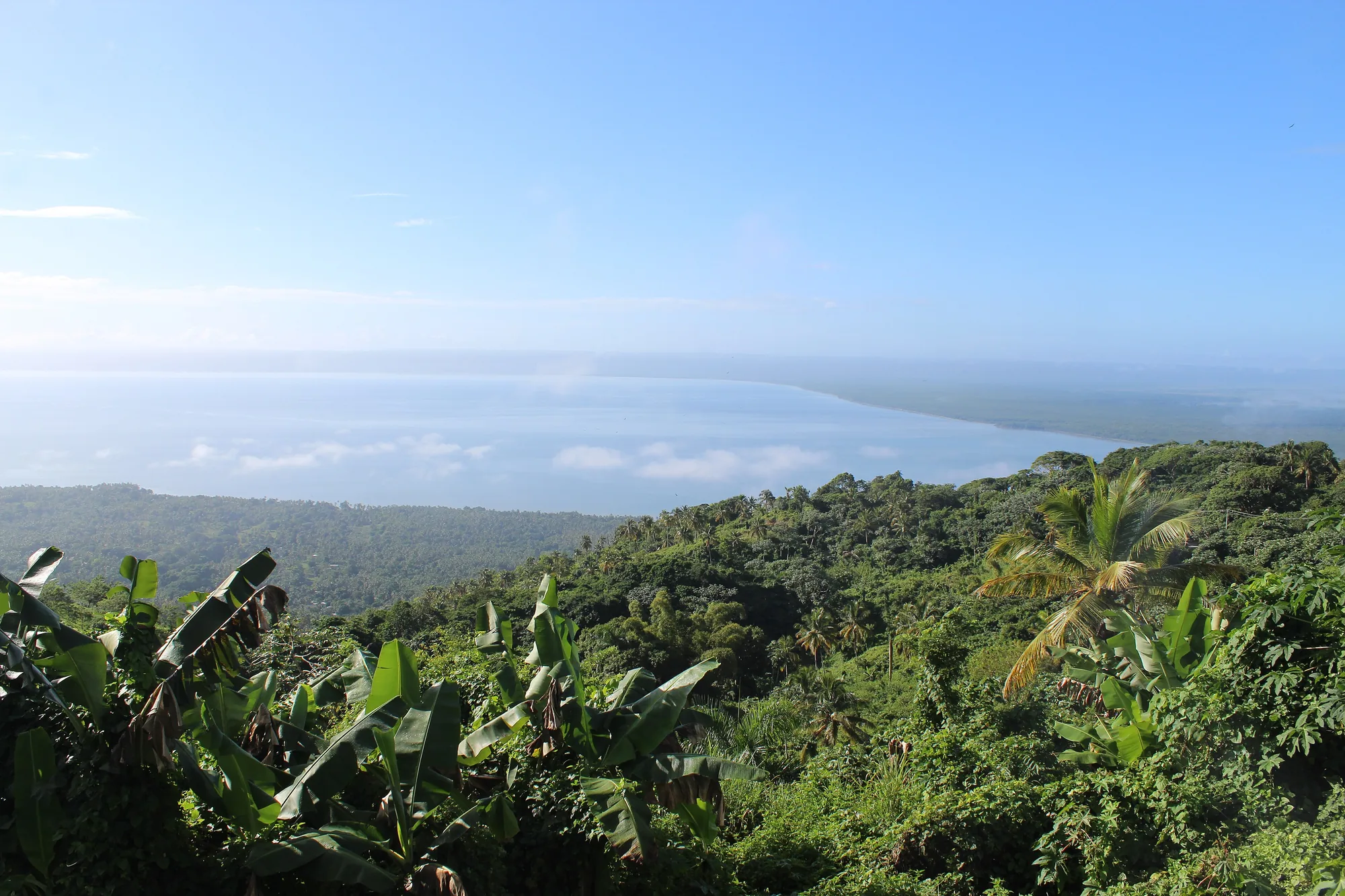
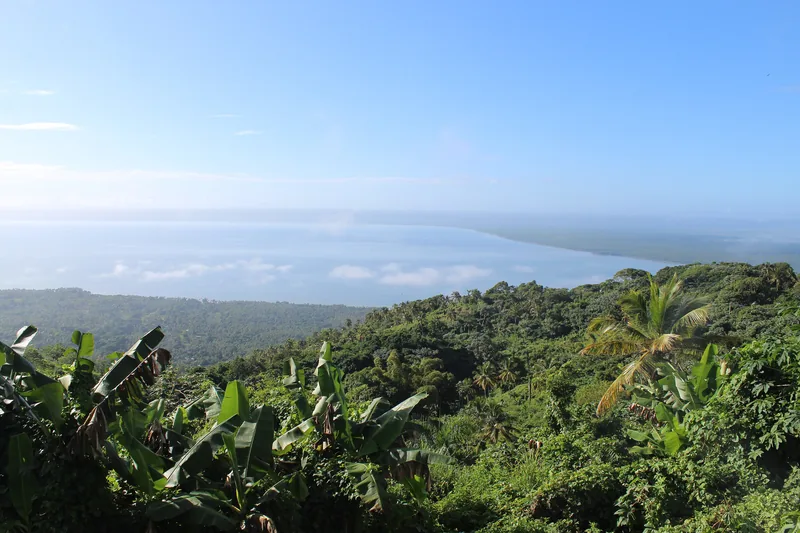
Picture the Dominican Republic as a rough rectangle. Off the top-right corner, a long narrow peninsula curls eastward into the Atlantic like a hooked finger. That finger is Samaná, roughly thirty miles of mountainous land with the calm, protected Samaná Bay along its southern shore and the open Atlantic along the north. The whole peninsula is greener and steeper than the flat resort country of the east, with coconut plantations climbing the hills and a coastline that folds into cove after cove.
Three towns anchor a trip here, and it helps to fix them in your head before anything else.
- Santa Bárbara de Samaná, usually just called Samaná town, sits partway along the bay-side shore. It is the peninsula's main town, the transport hub, and the launch point for whale-watching boats and the ferry to Cayo Levantado. It is a working town more than a beach town.
- Las Galeras sits right at the eastern tip, where the coast road runs out of land. It is the quiet one, a small fishing village that is the jumping-off point for Playa Rincón and a string of boat-only beaches.
- Las Terrenas sits on the north, Atlantic-facing shoulder. It is the developed one, a cosmopolitan beach town with a French and Italian expat streak, the widest choice of restaurants and hotels, and long town beaches you can walk straight onto.
Everything else fits around those three. Cayo Levantado is an island in the bay off Samaná town. The El Limón waterfall is inland, roughly between Samaná town and Las Terrenas. And Samaná Bay, the water the whole southern shore faces, is where the whales gather each winter. Hold that map in your head and the rest of this guide will slot into place.
The distances are short. Samaná town to Las Galeras is about forty-five minutes by road. Samaná town to Las Terrenas is about forty minutes over the hills. Las Galeras to Las Terrenas is a little over an hour. That means you can base in one hub and reach the others on day trips, or split your nights between two of them without losing much time to transit. The peninsula is compact in a way that rewards a few unhurried days rather than a single frantic one.
Santa Bárbara de Samaná: the bay-side town
Samaná town is not where you come for the beach. It is where you come to catch a boat. That sounds like faint praise, and I do not mean it that way. As the peninsula's hub, the town is the practical center of everything, and it has a low-key, workaday charm that grows on you once you stop expecting a resort strip.
The town wraps around a horseshoe harbor on the bay, with a waterfront promenade, a scattering of restaurants and bars, a market, and the whale-watching operators whose season defines the town's calendar. A curious footbridge crosses part of the harbor to a couple of small islands, a leftover from an ambitious tourism scheme that never fully arrived, and it makes for a pleasant short walk. The pace is unhurried. People are getting on with life rather than performing hospitality, and that is a large part of the appeal.
What Samaná town gives you is access. This is where the whale-watching fleet departs from mid-January to late March. It is where the ferry to Cayo Levantado runs. It is a natural staging post for the El Limón waterfall and an easy hop to both Las Galeras and Las Terrenas. If you want a single base from which to reach every corner of the peninsula with the least driving, Samaná town is the logical choice, even though it is the least beach-pretty of the three hubs.
A few practical notes on the town itself:
- It is a transport nexus, so it is where the coaches from Santo Domingo terminate. If you arrive by long-distance bus, this is where you land, and where you pick up onward local transport to the other hubs.
- Eat on the waterfront, and eat the seafood. The bay delivers fish daily, and the coconut-sauce cooking of this coast, a legacy of the peninsula's mixed heritage, is worth seeking out. Pescado con coco is the dish to order.
- Draw cash here. Samaná town has the most reliable ATMs on the peninsula. The villages beyond it are thin on working machines, so top up before you head out to Las Galeras or into the hills.
Give the town half a day and it will surprise you. It is not a destination in the way the beaches are, but it is a real Dominican town doing real things, and as a base it is unbeatable for reach.
Cayo Levantado: the island in the bay
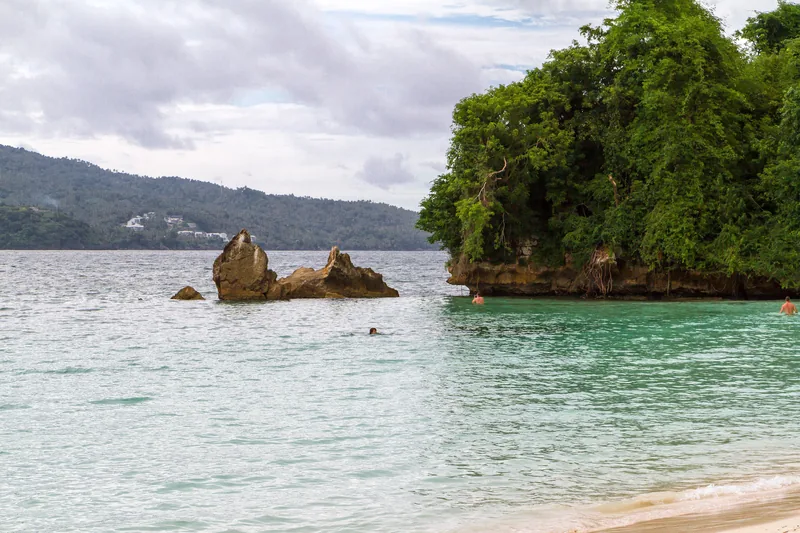
Out in Samaná Bay, a couple of miles off the town, sits Cayo Levantado, a small green island ringed by pale sand that most people know by its nickname, Bacardi Island. The story goes that the rum brand once filmed an advertisement here, and the image of the palm-fringed desert island stuck. Whether or not you buy the legend, the island is genuinely postcard-pretty, and it is one of the easiest half-day outings on the peninsula.
The reality is a little more nuanced than the postcard. Part of Cayo Levantado is occupied by a resort and private to its guests, and the public beach can get busy when excursion boats and cruise tenders arrive together, so timing matters. Come early, or on a day without a cruise ship in Samaná, and you get a lovely stretch of soft sand, warm shallow water, and a few thatched shades to sit under. Come at midday on a cruise day and you share it with a crowd. Both are worth knowing before you go.
Getting out to the island is simple. Small public boats and organized excursions run from Samaná town's waterfront across to the cay in fifteen to twenty minutes. You can arrange a return boat with the same operator, agreeing a pickup time before you leave, or buy a place on an organized half-day trip that often folds in a bit of the bay and a swim. As with everything on this coast, agree the price and the return before you step off the dock, and bring cash, water, and your own snacks, because the beach amenities are limited on the public side.
My honest take: Cayo Levantado is worth a half day, not a full one, and it pairs beautifully with a morning of whale watching in the same bay during season. It is pretty and easy, but it is not on the level of Playa Rincón out near Las Galeras. Treat it as a relaxed bay outing rather than the headline of your trip, and it delivers exactly what it promises.
Las Galeras: the quiet tip
Drive to the eastern end of the peninsula and the road simply stops at the water. That is Las Galeras, a small fishing village that is the quietest of the three hubs and, for a certain kind of traveler, the best. There is no gate, no wristband, no resort strip. There is a calm town beach, a handful of guesthouses and open-air restaurants, and a line of small boats waiting to run you around the headlands to coves you cannot reach any other way.
The reason to make the trip out here is the beaches. Las Galeras is the launch point for Playa Rincón, routinely named among the finest beaches in the Caribbean, and in this case the reputation is earned. Rincón runs close to two miles, soft pale sand backed by a wall of coconut palms and green hills, with a cold, clear freshwater river, the Caño Frío, spilling into the sea at one end. It is almost entirely undeveloped, and on a weekday you can have long stretches of it nearly to yourself. Beyond Rincón, boat-and-hike coves like Playa Frontón and Playa Madama fold into the point, reached only by water or on foot, which is exactly why they stay pristine.
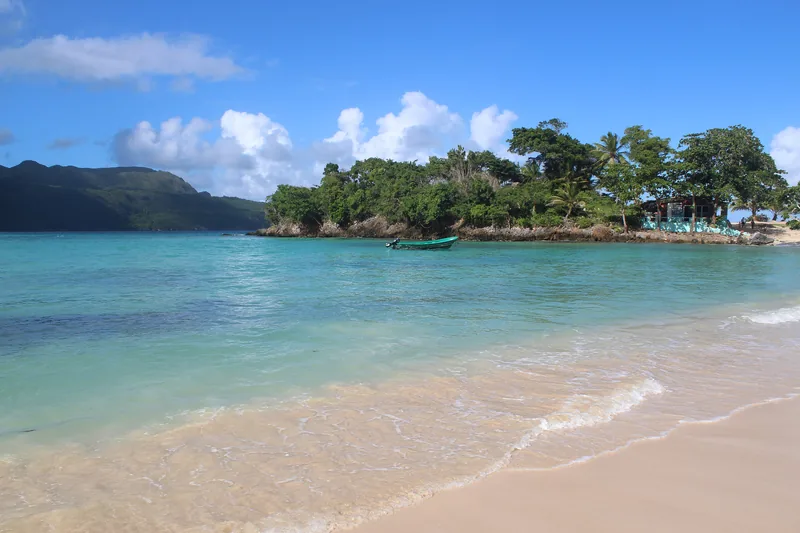
Las Galeras itself is tiny and walkable, a single main road that runs down to the beach and ends there. You come here to slow all the way down: swim in the calm bay water, eat fried fish at a plastic table with your feet in the sand, take a boat around the point once, and let the days blur together. There is very little to do beyond the beaches, and that is the entire point. If your idea of a good trip is a real village and extraordinary sand rather than a programmed resort day, this is your corner of the peninsula.
Because it sits at the end of the road, Las Galeras takes a little more effort to reach and to move around in, and it deserves its own deeper treatment. The full Las Galeras travel guide covers the town beach, the boat trips, where to eat, and how to visit without a car, while the dedicated Playa Rincón guide breaks down the freshwater river, the seafood shacks, and the two ways in. For structuring a peninsula trip, what you need to know is this: Las Galeras is the beach-purist's base, forty-five minutes past Samaná town, and worth at least two nights if you go.
Las Terrenas: the cosmopolitan north shore
Cross the hills to the Atlantic-facing side of the peninsula and the mood changes completely. Las Terrenas is the developed hub, a beach town that grew from a fishing settlement into a cosmopolitan resort of sorts, with a heavy French and Italian expat presence that shows up everywhere from the bakeries to the restaurant menus. If Las Galeras is the anti-resort, Las Terrenas is the peninsula's compromise: real beaches and real Dominican life, but with the infrastructure, dining, and nightlife that the quieter hubs lack.
The town strings along several beaches. Playa Las Terrenas and Playa Cacao run right off the town itself, easy to walk onto, lined with beach bars and restaurants. A short way west, Playa Bonita is a longer, wilder curve of sand favored by surfers and anyone wanting a little more space. Further along, Playa Cosón opens into a vast, quiet expanse that is one of the peninsula's underrated stretches. You can beach-hop by scooter or short taxi hops and find a different feel at each one.
What sets Las Terrenas apart is the eating and the ease. This is the peninsula's food capital, thanks to that European settlement: French bakeries turning out real croissants, Italian trattorias with fresh pasta, seafood grills on the sand, and beach bars that stay open into the night. The town has a walkable center, a marina, and enough going on after dark that you are not choosing between a beach and a scene. You can have both. For travelers who want the peninsula's coast without giving up creature comforts, Las Terrenas is the natural pick, and it has its own dedicated Las Terrenas guide with the beach-by-beach breakdown and where to eat.
Las Terrenas is also the closest hub to the El Limón waterfall and to the peninsula's small regional airport, El Catey, which makes it the easiest entry point if you decide to fly in rather than drive. It is the busiest and most built-up of the three hubs, which is a plus or a minus depending on what you are after. If you want variety, dining, and a bit of life at night, base here. If you want quiet and raw coast, base elsewhere and visit for a meal.
Salto El Limón: the waterfall in the hills
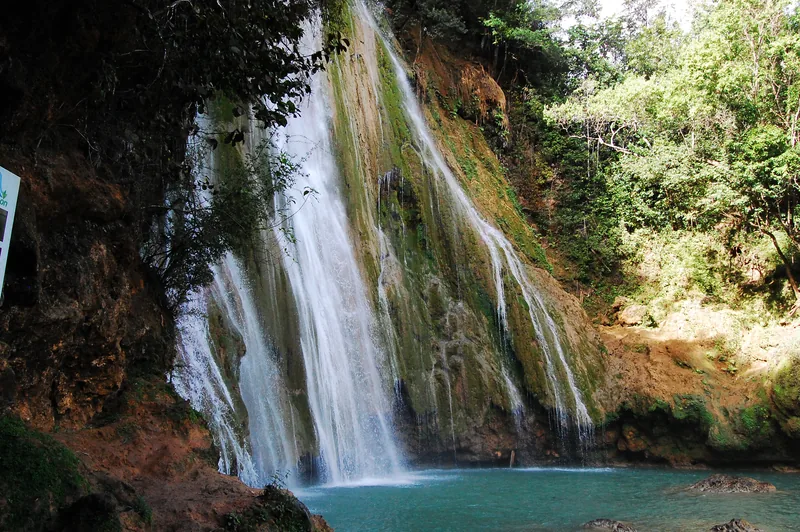
The peninsula is not all coast. Inland, in the green hills roughly between Samaná town and Las Terrenas, the Salto El Limón waterfall drops around forty meters into a cool pool you can swim in. It is the classic half-day excursion of the interior, and it makes a fine change of pace from the sand, a reminder that Samaná is a mountainous place and not just a string of beaches.
The trip is a small adventure in itself. From the village of El Limón, local guides lead the way up into the hills on foot or, more commonly, on horseback, along a muddy track through farmland and dense green forest. The ride takes roughly thirty to forty minutes each way and ends with a short walk down to the pool at the base of the cascade. The water is cold, clear, and deep enough to swim, and standing under the falling water after a hot, muddy ride is the whole reward.
A few things worth knowing before you go:
- Go with a guide and a paradas. The trip runs through a network of local staging points, called paradas, that provide the horses and guides. This is how the local community shares the income, and it is the normal way to do the hike. You do not wander up alone.
- Wear shoes you can ruin and bring a swimsuit. The trail is genuinely muddy, especially after rain, and you will want to swim at the bottom. Sandals that strap on beat flip-flops.
- It is a half day, not a full one. Combined with the horseback ride there and back, the falls fill a morning nicely and leave the afternoon for the beach or the road.
If you want the full breakdown of the hike, the horseback option, and how to arrange it without an overpriced tour, the dedicated Salto El Limón guide covers it in detail. For a peninsula itinerary, slot the waterfall in as a half-day between beach days, ideally on a morning when the sea is too rough for the boat trips you were saving. It is the best inland thing on the peninsula and a genuine highlight, not a filler.
Whale season: January to March in the bay
Here is the peninsula's headline act, and one of the best wildlife encounters in the Atlantic. Every winter, from roughly mid-January to late March, thousands of humpback whales migrate to the warm, sheltered waters of Samaná Bay to breed and calve, arriving from feeding grounds thousands of miles north to mate and give birth. For those few weeks, the bay off Samaná town becomes one of the most reliable places on earth to watch humpbacks up close.
On a good trip you see breaching, tail-slapping, and the massive males competing in noisy surface displays, sometimes within meters of the boat, while mothers move slowly with their calves. The sheer scale of the animals, the size of a bus, surfacing beside a small boat is something you do not forget. If your dates fall inside the season, this alone justifies timing your whole Dominican trip around it.
How it works in practice:
- Boats leave from Samaná town. The whale-watching fleet departs from the town's harbor, which is the single strongest argument for basing in or near Samaná town during the season. Trips typically run a few hours out on the bay.
- The season is fixed by the whales, not the calendar you would prefer. Mid-January to late March is the window, with the peak usually in February. Outside those weeks the whales are simply not there, so this is one trip you cannot flex to suit your schedule.
- Go with a responsible, regulated operator. Samaná runs its whale watching under rules meant to protect the animals, with limits on how boats approach. A good captain reads the whales and keeps a respectful distance rather than chasing.
- Book ahead in season. February is busy. Reserve your boat, and if you can, pick a morning when the bay tends to be calmer.
The full logistics, what to expect on the water, how to choose an operator, and how seasickness-prone travelers can prepare, live in the dedicated Samaná whale watching guide. For planning purposes, know this: if you are visiting the Dominican Republic between mid-January and late March, the Samaná Peninsula is not just a nice option, it is close to mandatory, and the whales should anchor your itinerary.
Which hub should you base in?
The most common question about the peninsula is where to sleep, and the honest answer is that it depends on what you want most. All three hubs work, and none is more than about an hour from the others, so you are not locking yourself out of anything. But they are different trips.
Base in Santa Bárbara de Samaná if your priority is reach and, above all, whales. It is the most central hub, the launch point for whale watching and Cayo Levantado, and the terminus for the coaches from the capital. It is the least beach-pretty of the three, but for a short trip built around the bay and easy access to everything, it is the efficient choice. This is where I would stay in whale season.
Base in Las Galeras if your priority is the best beaches and the quietest days. Playa Rincón and the boat-only coves are on your doorstep, and the village pace is a tonic. The trade is that it is the furthest out and the thinnest on dining and nightlife, and moving beyond it depends on boats and rough roads. This is the beach-purist's base.
Base in Las Terrenas if your priority is variety, food, and a bit of life. The best restaurants, the most beaches within easy reach, the closest access to the airport and to El Limón, and something to do after dark. It is the busiest and most developed, which is the point for some travelers and the drawback for others.
If you have only two or three nights, pick one and take the rest as day trips. If you have four or five, consider splitting: two nights in Las Galeras for the beaches, then two in Las Terrenas for the food and the north-coast beaches, with El Limón and a whale trip folded into the transitions. There is no wrong answer among the three, only the trip that matches what you actually came for. Be honest with yourself about that before you book.
How to get to the peninsula from Santo Domingo
This is the part people worry about most, and it is more manageable than it looks. The peninsula is roughly three to three and a half hours from Santo Domingo by road, running northeast on a modern coastal highway that cut the old journey time roughly in half. You do not need a rental car for any of the options below.
Option 1: Private driver or transfer (easiest)
The simplest door-to-door choice is to hire a car and driver. From the Zona Colonial you can arrange a private transfer that picks you up at your door and delivers you straight to your guesthouse anywhere on the peninsula in about three and a half hours. It is not the cheapest option, but split among a few people it is very reasonable, and it removes every piece of friction: no changing vehicles, no luggage juggling, no working out the last leg. For a group of four or more heading to Las Galeras, where the final stretch is fiddly, this is often what I would do.
Option 2: Coach to Samaná, then local transport (best value)
The classic independent route, and the one that keeps costs down.
- Take a long-distance coach to Samaná town. Comfortable, air-conditioned coach services run from Santo Domingo up to Santa Bárbara de Samaná on a regular daily schedule. The ride is a few hours on good road. Buy ahead in busy season, and check current departure times before you travel, since schedules shift.
- Cover the last leg to your hub. From Samaná town, Las Galeras is about forty-five minutes further east and Las Terrenas about forty minutes over the hills. You finish the trip by local guagua, the shared minibuses that are the backbone of Dominican transport, by shared taxi, or by private taxi if you would rather not wait. The guagua is cheap and an experience in itself; a private taxi is quick and still affordable.
This coach-plus-local combination is how a lot of independent travelers do it, and it costs a fraction of a private transfer. The trade is a little more time and a change of vehicle. If you are comfortable with that, it is the value pick.
Option 3: Fly (fastest, priciest)
The peninsula has a small regional airport, El Catey, also called Samaná airport, served by some domestic and seasonal international flights and sitting closest to Las Terrenas. Short domestic hops run from Santo Domingo. It is the fastest option and the most expensive, and for most travelers the drive is simple enough that flying is not worth it. It is there if your time is tight and your budget is not.
For the full breakdown of the road route, what the coastal highway is actually like, and the stops worth making, see the dedicated guide on driving from Santo Domingo to Samaná. If you are weighing whether to rent a car at all, it is worth understanding how guaguas, coaches, ride apps, and drivers actually work on the ground first.
Getting around once you are there
Within each hub, your feet and a scooter or short taxi cover most of what you need. Between hubs and out to the beaches, here is the toolkit.
- Boats. On the coast around Las Galeras, boats from the town beach are your main way to the best beaches and coves. Negotiate, confirm the return time and pickup before you get in, and watch the weather. This is the single most important local skill out at the tip.
- Guaguas and shared taxis. The cheap, frequent shared transport that connects the towns and runs the last legs from Samaná town. Slow, sociable, and part of the fun.
- Motoconchos. Motorcycle taxis are everywhere in Dominican towns and handy for short local hops if you are comfortable on the back of a bike. Agree the price first, and skip them on the rough beach roads.
- Scooter rental. In Las Terrenas especially, a rented scooter is the natural way to hop between the town beaches and out to Playa Bonita or Cosón. Drive carefully and wear the helmet.
- Ride apps. Uber and similar apps work well in Santo Domingo and are a big reason the capital makes such an easy base, but do not count on them out on the peninsula. Sort your capital-city transport with the app, and switch to local methods once you are on the peninsula.
The pattern that works for most people: a driver or coach for the long haul from the capital, then boats, guaguas, scooters, and local taxis on the ground. A rental car spends most of a peninsula trip parked, because the best beaches out here are reached by boat or rough track.
How to structure 3 to 5 days
The peninsula is too far and too good for a rushed day trip from the capital, and most travelers find three to five days the sweet spot. Here is how I would build it.
Three days: a focused first taste
- Day one: travel and settle. Make the run up from Santo Domingo in the morning and aim to arrive by early afternoon. If whales are your focus, base in Samaná town; if beaches are, push on to Las Galeras. Spend the afternoon getting your bearings, walking the town, and lining up the next day's boat or trip so you are not negotiating from scratch in the morning.
- Day two: the headline. In whale season, this is your whale-watching morning out of Samaná town, ideally paired with a half day on Cayo Levantado in the same bay. Outside season, this is your Playa Rincón day from Las Galeras, taken early before the light gets harsh. Either way, protect the day and do not let logistics eat it.
- Day three: one more highlight, then home. Fit in the El Limón waterfall as a half-day horseback ride, or a boat trip to the coves around Las Galeras, then make the run back to the capital in the afternoon. Three days gives you the essence without the depth.
Four to five days: do it properly
With four or five days you can split your base and see the whole peninsula rather than a corner of it.
- Days one and two in Las Galeras. Travel up, settle, and give yourself a full beach day at Playa Rincón plus a boat trip around the point to Playa Frontón and Playa Madama if the sea cooperates. This is the raw, quiet coast, and it wants unhurried time.
- Day three: transition via the interior. Move over toward the north shore, folding in the Salto El Limón waterfall on the way, a horseback ride to the falls and a swim in the cold pool before you reach Las Terrenas by evening.
- Days four and five in Las Terrenas. Beach-hop the town beaches, Playa Bonita, and the long sweep of Cosón, eat your way through the French and Italian kitchens, and take a scooter out to whichever beach you liked best. If it is whale season, run a boat trip from Samaná town on one of these mornings, since it is only forty minutes away. Then make the drive back to the capital on your final day.
The beauty of the peninsula is that this all fits inside a comfortable window. You are never more than about an hour between hubs, so splitting your nights costs you very little transit and buys you the full range: quiet beaches, a developed base, a waterfall, an island, and, in season, the whales. For the wider picture of how a Samaná leg fits into a longer Dominican trip, a one-week Dominican itinerary threads it together with the capital and beyond.
When to go, and honest tradeoffs
The Dominican Republic is warm year-round, but the peninsula rewards some thought about timing, because the seasons change the trip meaningfully.
December through April is the driest, most settled stretch on this coast, and it overlaps almost exactly with whale season from mid-January to late March. It is also the busiest and priciest window, and February in particular fills up around the whales. If you want the peninsula at its best and the whales are on your list, this is the time, and you should book ahead.
May through November is the wetter, hotter, quieter half of the year. Prices soften, crowds thin, and the beaches feel emptier, which has real appeal if you are not chasing the whales. The tradeoff is more rain and the small but real risk of a tropical storm affecting the peninsula in the late-summer-into-autumn peak of hurricane season. Watch the forecast if you travel then, and keep your plans flexible.
Two honest caveats worth internalizing before you lock in dates:
- Sea conditions rule the coast. More than anywhere, a Samaná itinerary bends to the weather. Calm days open up the boat trips and the ocean-facing beaches; windy days close them. Build in flexibility and do not schedule the one thing you most want to do for your final, no-margin morning.
- The whales are a fixed window. You cannot move mid-January to late March to suit your calendar. If the whales are the goal, the dates choose you, not the other way around.
For a fuller look at how weather, crowds, prices, and wildlife line up across the year, it helps to weigh the whole calendar before you commit to dates. On this coast, the short version is simple: come in whale season for the spectacle and the settled weather, or come off-season for empty beaches and lower prices, and go in knowing which trade you are making.
Samaná versus the packaged east
Since this site exists to argue for a smarter way to see the Dominican Republic, let me be plain about how the Samaná Peninsula stacks up against the resort coast most visitors default to. Punta Cana and the eastern beaches are a machine built to deliver a frictionless week behind a gate: long, warm, palm-lined sand, everything included, zero logistics, and beaches that are pleasant but nearly interchangeable from one resort to the next. If total predictability is what you want, that machine works, and I will not pretend otherwise. My honest guide to the Punta Cana beaches says as much.
The peninsula is the opposite trade, and a better one for the right traveler. Playa Rincón out near Las Galeras is on a level the packaged east simply cannot reach, undeveloped, dramatic, and nearly empty on a weekday. The whales in the bay are a genuine wonder you cannot buy inside a resort fence. The waterfall, the island, the French bakeries of Las Terrenas, and the working charm of Samaná town add up to a real place rather than a stage set. You do a little more work here, and in exchange you get scenery the resort strips cannot match. For the head-to-head on exactly this, our journal runs the two coasts side by side, and any honest roundup of the best beaches in the Dominican Republic puts the peninsula's sand near the top.
Neither trip is wrong, but they are genuinely different holidays, and most of the disappointment I hear about comes from people who booked one while wanting the other. If the peninsula's version, a little effort for a lot of reward, sounds like your kind of trip, it will not let you down.
Where the peninsula fits: base in the colonial city
Here is the bias I should declare, so you can weigh it. I write for a place to stay in the heart of the capital, so take the following with that in mind, but I believe it. The smartest way to see the Dominican Republic is not to plant yourself in one beach resort for a week. It is to base in Santo Domingo, the first city of the Americas and a genuinely great place to spend time, and to take the peninsula and the other coasts as trips out from a base with real character.
The Samaná Peninsula is the model example of why that works. From the colonial city you can do the peninsula properly as a three-to-five day excursion, then come back to a place with history, restaurants, music, and life on the street, rather than trading your whole holiday for a single managed strip of sand. You get the best beach coast in the country, the whales, the waterfall, and a real capital city, instead of choosing one and missing the rest.
Our own base for this is Penthouse Pallazzo, a three-suite penthouse on the top floor of a 1760s colonial townhouse in the Zona Colonial, sleeping six, with a covered hacienda-style gallery and a roof terrace facing the Caribbean Sea and the Montesinos monument on the Malecón. It puts you in the middle of the old city, a short walk from the cathedral, the Alcázar, and the best of the colonial restaurants, and within easy reach of a driver or coach north to Samaná when you want the coast. You can see the suites and book directly, through Airbnb, on the residence page.
However you build it, do the peninsula justice. Give it three to five unhurried days, take a boat out at least once, stand on Playa Rincón and understand what the fuss is about, ride up to the El Limón falls, and, if your dates land between mid-January and late March, get out on the bay with the whales. It is the Dominican Republic that most visitors never reach, and it is the one worth the journey.