Las Galeras, Samaná: A Travel Guide
August 2026 · 23 min read
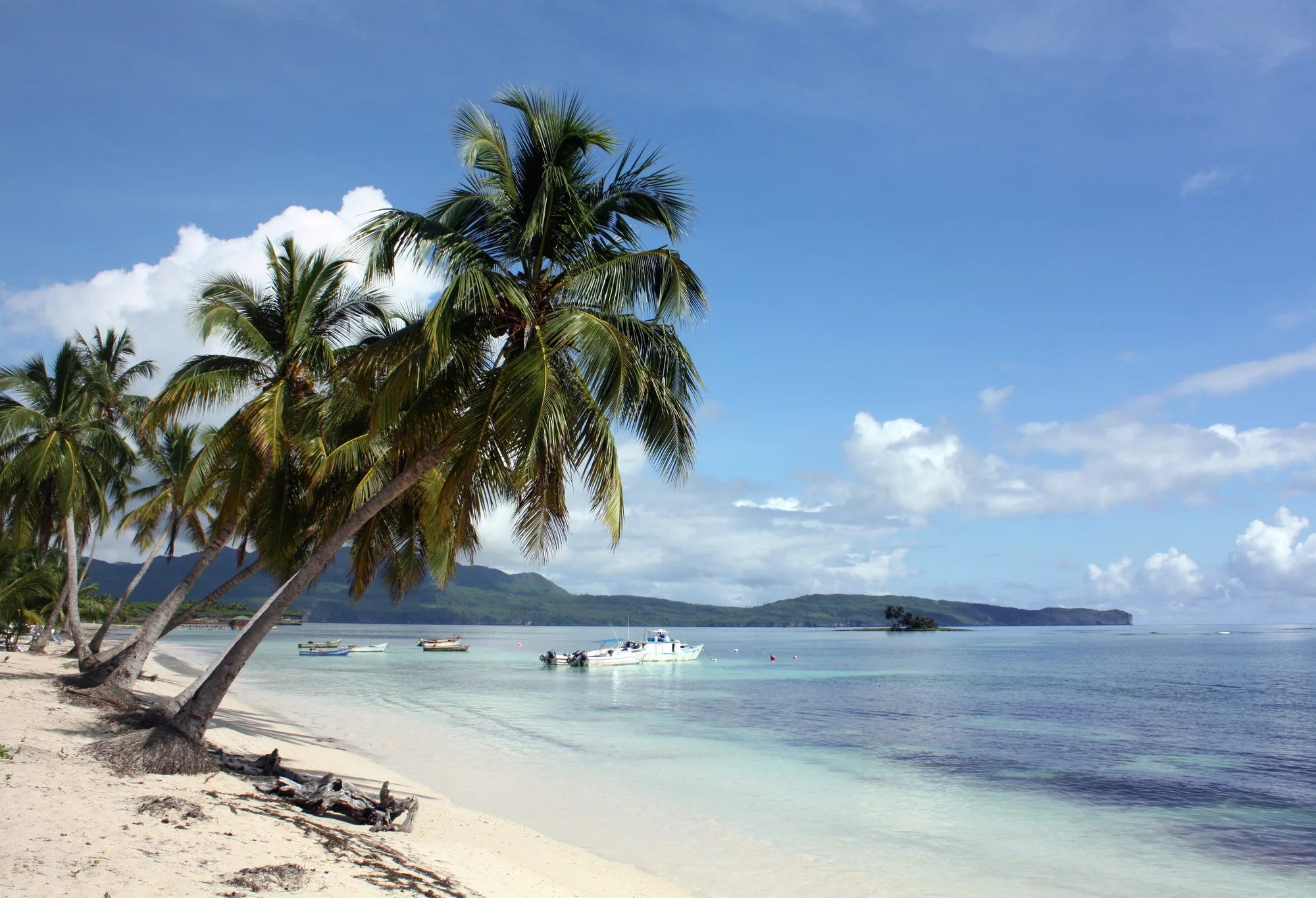
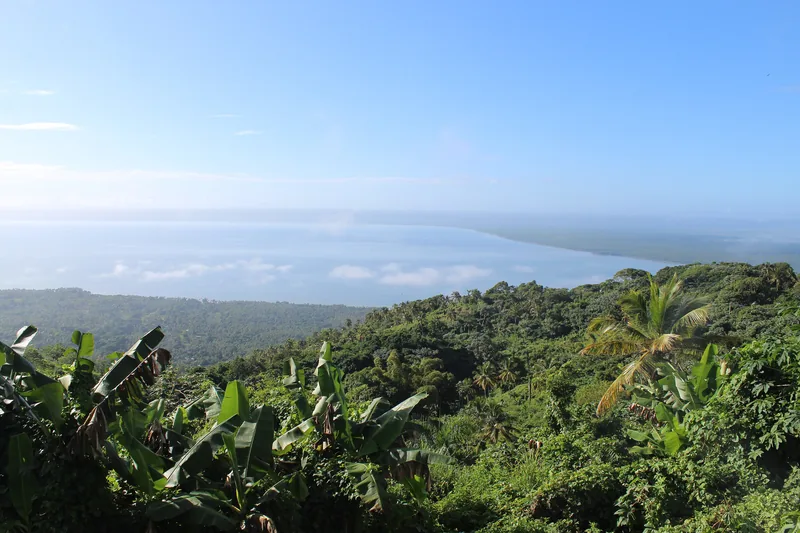
Las Galeras is a small fishing village at the end of the road, and that is the whole appeal. It sits at the northeastern tip of the Samaná peninsula, the green thumb of land that juts into the Atlantic in the country's northeast, and the coastal highway that carries you there simply stops when it reaches the water. There is no gate, no wristband, no resort strip. There is a beach, a scattering of guesthouses and open-air restaurants, a line of small boats waiting to take you around a headland to a cove you cannot drive to, and the flat blue plate of Samaná Bay opening to the horizon.
If you have read anything on this site, you know the argument I keep making: the Dominican Republic that most visitors fly home having seen is the least interesting version of it. Las Galeras is the counter-argument, in one village. It is roughly three and a half hours from the capital, close enough to reach on a long day but far better as an overnight or a two-to-three day trip, and it rewards the effort with beaches that belong in any honest ranking of the Caribbean's best. This guide covers the town beach, the famous stretch at Playa Rincón, the boat-and-hike coves of Playa Frontón and Playa Madama, where to eat, exactly how to get there from Santo Domingo without a rental car, and how to plan a couple of unhurried days once you arrive.
Where Las Galeras actually is
Picture the Dominican Republic as a rough rectangle with a peninsula curling off the top-right corner like a hooked finger. That finger is Samaná. The town of Santa Bárbara de Samaná sits at the base of the hook, on the bay side. The beach town of Las Terrenas sits on the north, Atlantic-facing shoulder. And Las Galeras sits right at the tip, where the peninsula runs out of land.
That geography matters for two reasons. First, it is the reason the beaches here are so good: the tip of the peninsula is ringed by headlands, coves, and offshore water that development never reached, because there was no easy way to build a runway or a marina at the literal end of a mountain road. Second, it is the reason Las Galeras stays quiet. You do not pass through it on the way to somewhere else. It is the somewhere else. People who come here came on purpose, and the town has the calm that comes with that.
The village itself is tiny and walkable. One main road runs down to the beach and ends there. Along it you will find the guesthouses, a handful of restaurants and colmados, a dive shop or two, and the boatmen who run the water taxis to the beaches you cannot reach by car. You can see the whole place in a twenty-minute stroll, which is part of the point. This is not a town you tour. It is a base you settle into.
For a wider view of the peninsula and how the pieces fit together, from whale season in the bay to the waterfalls inland, the complete Samaná Peninsula guide is the map to read alongside this one. Las Galeras is the quietest corner of that map, and for a certain kind of traveler it is the best.
The town beach: quiet water and fishing boats
The village beach, Playa Grande, is the one at the end of the main road. It is not the most spectacular beach in the area, and I want to be honest about that up front, because the boat-access coves and Playa Rincón are on a different level. But the town beach is the one you will use most, and it is genuinely lovely in an everyday, unglamorous way.
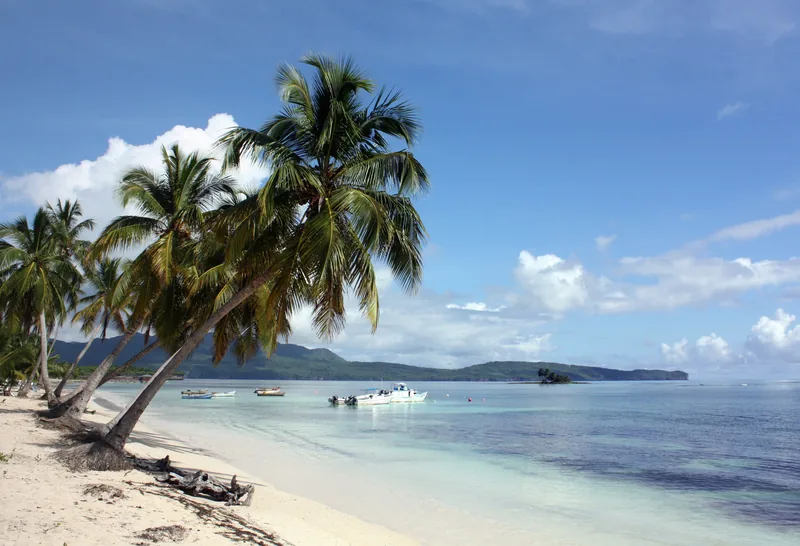
It is a broad, calm strip of pale sand facing the bay, with fishing boats pulled up on one end and a row of open-sided restaurants set back under the trees on the other. The water is shallow and gentle, good for a slow swim or for standing waist-deep with a drink while the afternoon goes by. In the morning you will see fishermen coming in, and in the late afternoon the light on the bay turns the whole scene the color of weak tea and gold. It is the kind of beach where you end up talking to the person at the next table, or watching a dominoes game spill out of a colmado, rather than ticking off an activity.
Do not expect a scene. There is no beach club thumping music, no jet-ski rental hawker working the loungers, no line of identical resort umbrellas. There are a few chairs, a few thatched shades, and a lot of open sand. If you want a spectacle, this is not it. If you want to swim, read, eat fried fish with your feet in the sand, and feel your shoulders drop, the town beach does that better than almost anywhere.
A few things to know about the town beach
- It faces the bay, not the open Atlantic. That means calm, protected water most days, which is great for easy swimming and less great if you came for surf. For real waves you would look to the north coast around Cabarete, not here.
- The restaurants along the back are your base of operations. Most will let you settle in for the day if you are eating and drinking, and several rent chairs or shade for a small fee. This is where you will eat lunch, watch the boats, and arrange your onward trips.
- Sunrise and late afternoon are the magic hours. Midday sun is strong and the beach can feel a little bare. Come early, disappear during the hottest part of the day, and come back for the golden light.
Playa Rincón: the reason people come
Now the famous one. Playa Rincón sits just around the coast from Las Galeras, and it is routinely named one of the best beaches in the Caribbean, which is the sort of claim I usually distrust. In this case it is earned. Rincón is close to two miles of soft, pale sand backed by a wall of coconut palms and green hills, with a cold, clear freshwater river, the Caño Frío, running out to the sea at one end. The water shifts from clear shallows to deep turquoise, the setting is almost entirely undeveloped, and on a weekday you can have long stretches of it nearly to yourself.
It is not a manicured beach. There is no boardwalk, no resort, no infrastructure beyond a cluster of simple seafood shacks near the middle where local families set up on weekends. That absence is exactly what makes it special. Rincón looks the way the Dominican coast looked before the resorts, and standing on it you understand quickly why the packaged beaches of the east cannot compete on character.
I have written a full, separate breakdown of this beach, because it deserves one: the Playa Rincón guide covers the freshwater river, the seafood shacks, the two ways in, and how to time your visit. For the purposes of this article, here is what you need in order to fit it into a Las Galeras trip.
Getting to Playa Rincón
There are two realistic ways to reach Rincón from Las Galeras, and they suit different moods.
- By boat. A short water taxi from the town beach drops you on the sand in fifteen to twenty minutes. This is the easy, scenic option, and it is how most people go. You arrange it with the boatmen at the village beach, agree a price and a pickup time before you get in, and they come back for you in the afternoon. Confirm the return arrangement clearly, because Rincón has no road-side taxi rank to save you if plans slip.
- By land. A rough dirt road climbs over the headland and down to the far end of Rincón. In a sturdy vehicle or with a local driver it takes roughly thirty to forty minutes, and it delivers you near the Caño Frío river end. The road is bumpy and not something to attempt in a low rental car after rain, which is one more reason a hired driver or a boat beats bringing your own vehicle out here.
Either way, bring cash, water, and your own snacks if you are picky, since the shacks are informal and not always open midweek. There is no ATM on the sand and no reliable shop. Rincón gives you an extraordinary beach and almost nothing else, which is the trade you came to make.
Playa Frontón and Playa Madama: boat or boots
Beyond Rincón, the coast around the tip of the peninsula folds into a series of coves that no road reaches at all. The two best known are Playa Frontón and Playa Madama, and both are reached only by boat or on foot. That single fact is why they stay pristine, and why reaching them feels like a small adventure rather than a beach transfer.
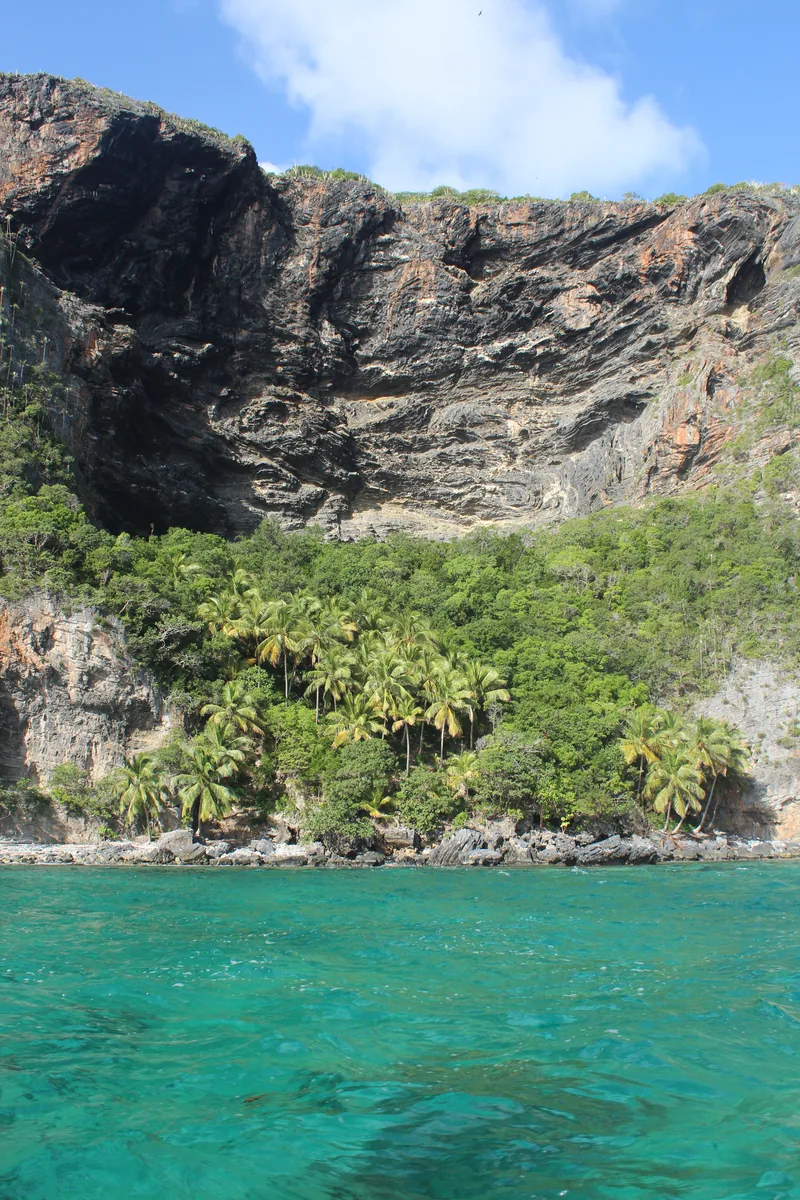
Playa Frontón is the showpiece. It sits beneath dramatic limestone cliffs on the Atlantic-facing side of the point, a compact cove of golden sand and reef-fringed water that is one of the best snorkeling and diving spots in the area. The rock walls behind it are popular with climbers, and the offshore reef holds fish, coral, and clear visibility on a calm day. Because it faces the open ocean, Frontón can get choppy when the wind is up, and the boatmen will not run out to it in rough conditions, which is worth knowing if you have your heart set on it: build in a flexible day rather than pinning it to your last morning.
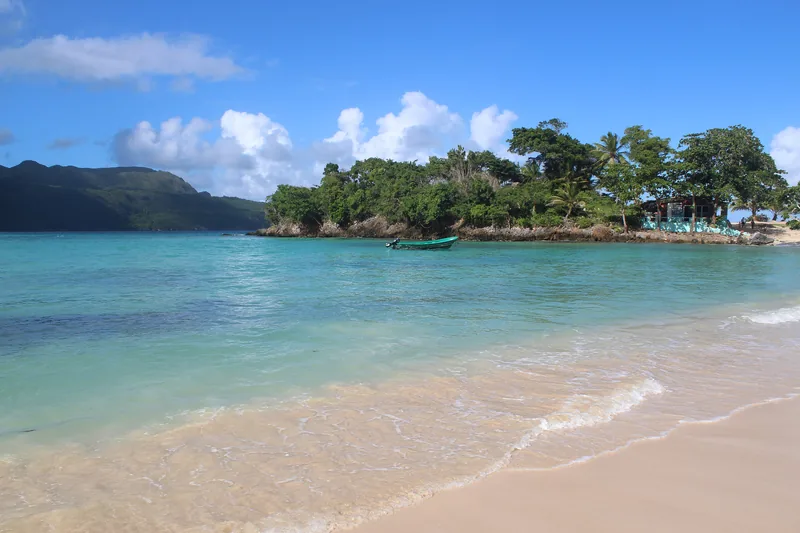
Playa Madama is the smaller, gentler of the two. It is a horseshoe cove tucked between headlands, shaded by cliffs and trees, with calm water and a quiet, sheltered feel. It is less of a snorkeling showcase than Frontón and more of a swim-and-do-nothing cove, which for a lot of people is exactly right. The two often get combined into a single half-day boat outing.
How to reach Frontón and Madama
- By boat. The standard way. A boatman from the town beach runs you around the point, and a typical trip strings together Madama, Frontón, and sometimes a snorkeling stop into one half-day on the water. Agree the itinerary, the price, and the return time before you leave the sand. Prices vary with the number of people and the season, so ask two or three of the boatmen rather than taking the first quote, and expect to negotiate.
- On foot. Both coves can be reached by hiking trails over the headlands from Las Galeras, through farmland and forest, with local guides available in the village. The walk to Madama is the more manageable of the two, on the order of an hour each way; Frontón is longer and rougher. Wear real shoes, carry plenty of water, and take a guide unless you are confident, because the trails are not signposted and the heat is serious. The reward is arriving at a cove you earned on foot, usually with no one else there.
A quick honesty note on conditions: everything out on this coast depends on the sea and the weather. On a calm, bright day the boat trips are glorious. On a windy one, the Atlantic-facing beaches may be off the table entirely, and a good boatman will tell you so rather than take your money and turn back. Do not treat any single cove as guaranteed. Treat the whole coast as a menu you order from based on the day.
Why this is the anti-Punta Cana
I keep calling Las Galeras the anti-Punta Cana, so let me make the case plainly, because it is the single most useful frame for deciding whether this trip is for you.
Punta Cana is a machine, and it is a good machine at what it does. It exists to deliver a frictionless week: you land, a transfer takes you to a gated resort, and everything from that point, the food, the drinks, the loungers, the entertainment, happens inside the fence. The beaches are long, warm, calm, and palm-lined, and they are also nearly interchangeable from one resort to the next. You could be anywhere in the tropics. That is not an accident; it is the product. If your idea of a holiday is zero logistics and total predictability, Punta Cana is honestly a reasonable choice, and I will not pretend otherwise. My own honest guide to the Punta Cana beaches says as much.
Las Galeras is the opposite trade. Nothing here is packaged. You arrange your own boat, you eat where the locals eat, you deal with a bumpy road and a beach with no bar. In exchange you get scenery on a completely different level, a village that is a real place rather than a stage set, and beaches that make the resort strips look tame. Playa Rincón alone is worth the peninsula. Frontón and Madama are the kind of place a Punta Cana resort would put on its brochure if it had them, and it does not, because they cannot be reached from behind a gate.
Here is the comparison stripped to its bones:
- Punta Cana: effortless, predictable, all-inclusive, interchangeable beaches, sealed off from the country around it. Great for people who want to switch off completely.
- Las Galeras: a little effort required, gloriously unpredictable, à la carte, some of the best beaches in the country, embedded in real Dominican life. Great for people who want to feel like they actually went somewhere.
Neither is wrong. But they are genuinely different holidays, and a lot of unhappiness comes from booking one while wanting the other. If you have read this far and the second list sounds like you, keep reading. For a longer head-to-head, the journal has a dedicated piece on Las Galeras versus Punta Cana that runs the two side by side on beaches, cost, and feel.
Where to eat and drink
Las Galeras eats simply and eats well. This is a fishing village, and the best meals here are the obvious ones: whatever came out of the water that morning, cooked without fuss. You are not coming for fine dining, and the town is better for it.
The staples you will see everywhere:
- Fresh fish and seafood. Whole fried fish, grilled snapper, lobster and shrimp when they have it, usually served with tostones (twice-fried green plantain), rice, and beans. On the town beach this is the default lunch, eaten at a plastic table a few steps from the water. Ask the price before you order lobster, which is charged by weight and can jump.
- Pescado con coco. Fish in a coconut-based sauce is a signature of the Samaná coast, a legacy of the peninsula's mixed Caribbean heritage, and it is worth seeking out here specifically. If you see it, order it.
- La bandera and everyday Dominican plates. Rice, beans, stewed or fried meat, a bit of salad. The national lunch, cheap and filling, found at the simpler comedores and colmados.
- French and Italian touches. Samaná drew a small wave of European settlers over the years, and Las Galeras has a couple of French- and Italian-run spots doing crêpes, fresh pasta, and good coffee. It is a pleasant surprise in a village this size, and a nice change of pace on a second or third night.
Across the country the food goes much deeper, from mangú at breakfast to sancocho on a Sunday, but here in Las Galeras you can keep it simple: eat the fish, drink a cold Presidente or a fresh juice, and do not overthink it.
A practical note on cost and cash. Meals here are inexpensive by resort standards, and a plate of fresh fish with sides plus a beer will run a fraction of what the same thing costs behind a gate in the east. Bring cash in Dominican pesos, because many of the small places do not take cards, and the nearest reliable ATMs are not always working. Draw money in Samaná town or before you leave the capital rather than counting on the village.
Beyond the sand: diving, cliffs, and doing nothing
The beaches are the headline, but a few other things fill out a Las Galeras trip nicely.
The waters off the point are a genuine dive and snorkel destination, with reef, walls, and good visibility on calm days, and the village has a dive operation or two running trips out to the better sites, Frontón among them. Even if you do not dive, a snorkel stop worked into a boat outing is worth the small extra time. Ask at the beach about conditions and what is running; like everything here, it depends on the sea.
For the best long view of the coast, seek out the cliff-top viewpoints on the headlands above the village, where the land drops away to the Atlantic and the reef shows through the water below. There are a couple of restaurants and lookout spots perched up on the cliffs that are worth a sundowner for the panorama alone, and they make a good target for a slow late afternoon between beach days. Local guides also run horseback rides through the farmland and forest behind the village, a low-key way to see the interior of the peninsula's tip.
And then there is the main event, which is doing very little. The whole design of a Las Galeras trip is that the town gives you nowhere to rush to. Read on the beach, nap through the heat, watch the boats, eat when you are hungry, and let a day go by without a plan. In a country that sells packaged, scheduled, wristband holidays by the thousand, the freedom to do nothing in a real place is the rarest thing on offer, and the village hands it to you for the price of a fried fish and a cold beer.
How to get to Las Galeras from Santo Domingo
This is the part people worry about, and it is more manageable than it looks. Las Galeras is roughly a three-and-a-half-hour drive from Santo Domingo, running northeast on the modern coastal highway that cut the old journey time in half. You have three realistic options, and you do not need a rental car for any of them.
Option 1: Private driver or transfer (easiest)
The simplest door-to-door choice is to hire a car and driver for the run. From the Zona Colonial you can arrange a private transfer that picks you up at the door and takes you straight to your guesthouse in Las Galeras in about three and a half hours, with a stop or two along the way if you want them. It is not the cheapest option, but split between a few people it is very reasonable, and it removes every piece of friction: no changing vehicles, no luggage juggling, no working out the last leg. For a group of four or more, this is often what I would do.
Option 2: Coach to Samaná, then local transport (best value)
The classic independent route, and the one that keeps costs down.
- Take a long-distance coach to Samaná. Comfortable, air-conditioned coach services run from Santo Domingo up to Samaná town (Santa Bárbara de Samaná) on a regular daily schedule. The ride is a few hours on good road. Buy ahead in busy season, and check current departure times before you travel, since schedules shift.
- Cover the last leg from Samaná to Las Galeras. Las Galeras is about forty-five minutes further out along the peninsula from Samaná town. From Samaná you finish the trip by local guagua (the shared minibuses that are the backbone of Dominican transport), a shared taxi, or a private taxi if you would rather not wait. The guagua is cheap and an experience in itself; a private taxi is quick and still affordable.
This coach-plus-local combination is how a lot of independent travelers do it, and it costs a fraction of a private transfer. The trade is a little more time and a change of vehicle. If you are comfortable with that, it is the value pick.
Option 3: Fly (fastest, priciest)
The peninsula has a small regional airport, El Catey (AZS), served by some domestic and seasonal flights, and there are short domestic hops from Santo Domingo for people who would rather not spend the hours on the road. It is the fastest option and the most expensive, and for most travelers the drive is simple enough that flying is not worth it. It is there if your time is tight and your budget is not.
For the full breakdown of the road route, the stops worth making, and what the coastal highway is actually like, see the dedicated guide on driving from Santo Domingo to Samaná. And if you are weighing whether to rent a car at all for a trip like this, it helps to understand how guaguas, coaches, ride apps, and drivers actually work on the ground before you decide.
A word on rental cars
You can rent a car and drive yourself, and the highway portion is easy. But I would think twice for a Las Galeras trip specifically. The best beaches out here are reached by boat or by rough dirt track, not by paved road, so a rental car spends most of the trip parked. Dominican driving also has its own rhythm that catches first-timers out, and the last thing you want is a low-clearance rental stuck on the Rincón road after rain. A private driver for the long haul plus boats and local taxis on the ground usually works out easier and, for a couple of days, not much more expensive.
Getting around once you are there
Las Galeras itself is walkable end to end, so within the village you do not need transport at all. For everything beyond it, here is the toolkit:
- Boats from the town beach. Your main way to the good beaches. Negotiate, confirm the return, and pay attention to the weather. This is the single most important local skill in Las Galeras.
- Guaguas and shared taxis. For the run to and from Samaná town, and for hops along the peninsula. Cheap, frequent enough in daylight, and part of the fun.
- Motoconchos. Motorcycle taxis are everywhere in Dominican towns and handy for short local hops if you are comfortable on the back of a bike. Agree the price first and skip them for anything on the rough beach roads.
- Ride apps. Uber and similar apps work well in Santo Domingo and are a big part of why the capital makes such an easy base, but do not count on them at the tip of the peninsula. Out here it is boats, guaguas, and local drivers. Sort your capital-city transport with the app and switch to local methods once you are on the peninsula.
A two-to-three day plan
Las Galeras is too far and too good to do as a rushed day trip, and too small to fill a week for most people. Two to three days is the sweet spot. Here is how I would spend them.
Day one: arrive and settle
Travel up from Santo Domingo in the morning, whichever way you have chosen, and aim to reach Las Galeras by early afternoon. Check in, walk the length of the village to get your bearings, and spend the rest of the day on the town beach doing very little: a swim in the calm bay water, a late lunch of fried fish at one of the beachfront restaurants, a slow beer as the light goes gold. Use the afternoon to talk to a couple of the boatmen and line up the next day's trip, so you are not negotiating from scratch in the morning. Eat dinner in the village, early and simple, and turn in. You will have been travelling; do not overreach.
Day two: the big beach day
This is your Playa Rincón day, and you want it early. Take a morning boat or a driver over to Rincón before the light gets harsh and any weekend crowd builds. Give yourself hours there: walk the length of the sand, swim where the Caño Frío river meets the sea, and eat lunch at the seafood shacks if they are open, or from the picnic you brought if they are not. Come back to the village in the mid-afternoon, rest, and have a proper dinner out. If you only get one beach on the whole trip, this is the one, so protect the day and do not let logistics eat it.
Day three: coves, cliffs, or the road home
If you have the third day, spend the morning on the boat-and-hike coves, Playa Madama for an easy sheltered swim, Playa Frontón for the cliffs and snorkeling if the sea is calm enough to run out there. This is also the flexible day to hold Frontón, since it depends on conditions. Alternatively, if you would rather explore the wider peninsula, this is when you might fold in a Samaná-area outing on the way back toward the capital, the Salto El Limón waterfall hike inland, or, if you are visiting between roughly January and March, the extraordinary humpback whale watching in Samaná Bay, which is one of the best whale encounters in the Atlantic and reason enough to time a trip around it. Then make the three-and-a-half-hour run back to Santo Domingo, ideally arriving with the evening free.
Compress this to two days by dropping day three and choosing between Rincón and the coves, and you still come home having seen the best of the area. Stretch it to four if you want to fold in the whales, El Limón, and a night in Las Terrenas, the busier, more developed beach town on the peninsula's north shore.
When to go and what to know before you do
A few practicalities that will shape the trip more than any single beach.
Season. The Dominican Republic is warm year-round. The driest, most settled stretch on this coast runs roughly December through April, which is also the busiest and priciest window and, not coincidentally, whale season in the bay. Late summer into autumn is the wetter, hotter, quieter part of the year and carries the small but real risk of a tropical storm affecting the peninsula; watch the forecast if you travel then. The tradeoffs between crowds, price, weather, and whales are worth weighing before you lock in dates.
Sea conditions rule everything. More than anywhere else in this article, your Las Galeras itinerary bends to the weather. Calm days open up Frontón and the boat trips; windy days close them. Build in flexibility, keep the ocean-facing plans loose, and do not schedule the one thing you most want to do for your final, no-margin morning.
Cash and connectivity. Bring pesos, plenty of them, and do not rely on finding a working ATM in the village. Mobile signal exists but is patchy in the coves and out on the water. This is a place to be a little unreachable, which most people find they do not mind.
Pack for a rough-and-ready coast. Real shoes for the trails, reef-safe sunscreen, a dry bag for the boat, water, and a hat. There are no pharmacies or big shops at the tip, so bring what you need rather than planning to buy it there.
Manage your expectations, and enjoy them. Las Galeras is not polished. The road is bumpy, the plans are improvised, and the infrastructure is thin. If you arrive wanting a resort, you will be frustrated. If you arrive wanting the real coast, you will have one of the best few days of your trip.
Where all this fits into a smarter Dominican trip
Here is the bias I promised to declare. I write for a place to stay in the heart of the capital, so weigh what follows accordingly, but I believe it: the smartest way to see the Dominican Republic is not to plant yourself in one beach resort for a week. It is to base in Santo Domingo, the first city of the Americas and a genuinely great city to spend time in, and to take the beaches and mountains as trips out from a base with real character.
Las Galeras is the model example of why that works. From a base in the colonial city you can do the peninsula properly as a two-to-three day excursion, then come back to a place with history, restaurants, music, and life on the street, rather than trading the whole holiday for a single strip of managed sand. You get the best beach coast in the country and a real city, instead of choosing one and missing the other. That thinking runs through the whole case for skipping the resort entirely, and Las Galeras is the trip that proves it out.
Our own base for this is Penthouse Pallazzo, a three-suite penthouse on the top floor of a 1760s colonial townhouse in the Zona Colonial, sleeping six, with a covered gallery and a roof terrace facing the Caribbean and the Montesinos monument on the Malecón. It puts you in the middle of the old city, a short walk from the cathedral, the Alcázar, and the best of the colonial restaurants, and within easy reach of a driver or coach north to Samaná when you want the sand. You can see the rooms and book directly, through Airbnb, on the residence page.
Whichever way you build the trip, do the peninsula justice. Give Las Galeras two or three unhurried days, take a boat around the point at least once, stand on Playa Rincón and understand what all the fuss is about, and eat the fish at a plastic table with your feet in the sand. It is the Dominican Republic that most visitors never reach, and it is the one worth the journey.