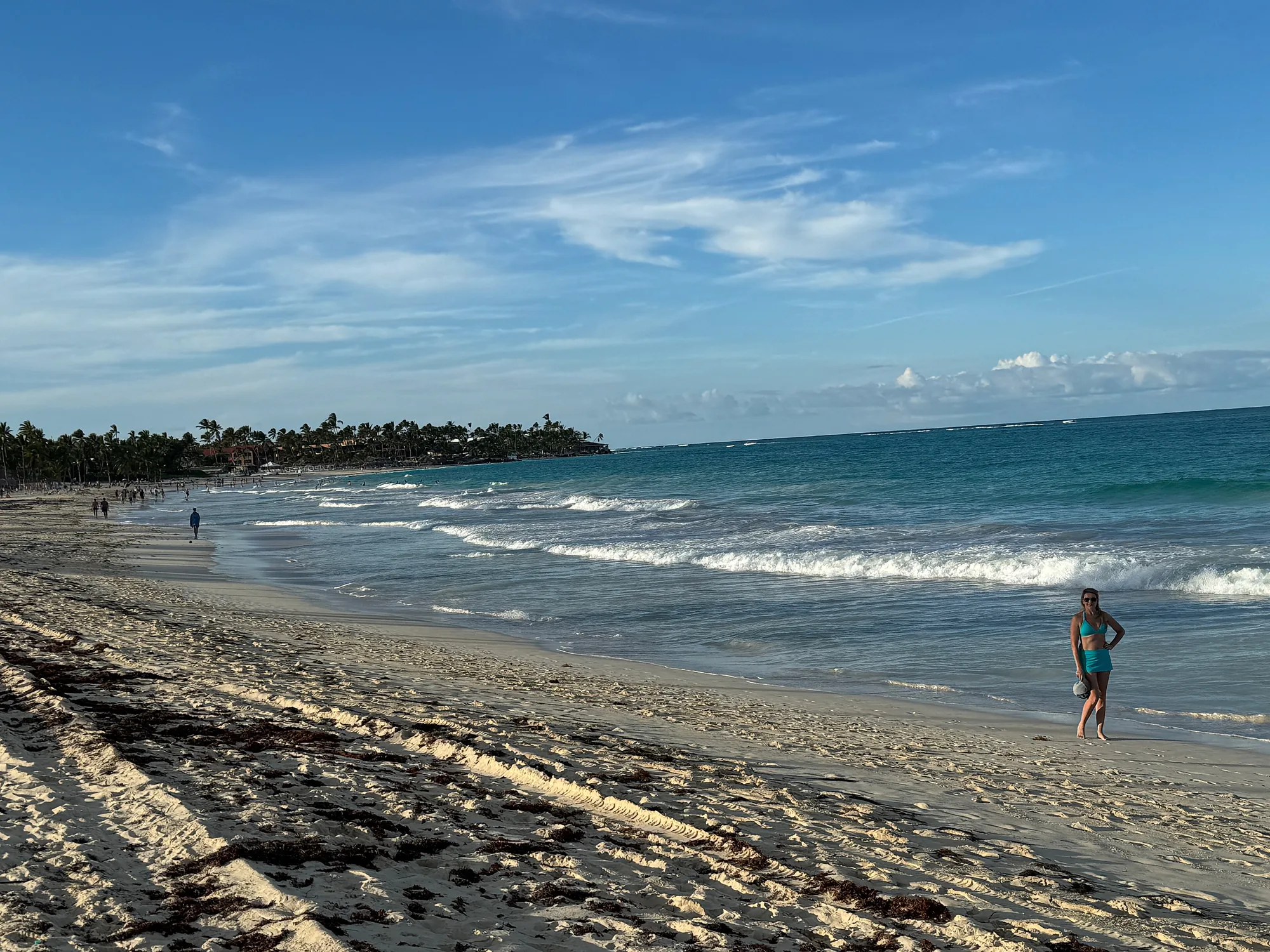
Punta Cana Beaches: An Honest Guide
August 2026 · 23 min read
The Punta Cana beaches are the reason most people first picture the Dominican Republic: a long, calm, palm-lined strip of pale sand on the country's far southeastern corner, warm water that barely has a temperature, and a resort wall behind you that makes sure the logistics of your day are somebody else's job. That picture is real. It is also incomplete, and the incompleteness is the whole point of this guide.
I write for a place to stay in the colonial heart of the capital, three hours west of here, so treat me as biased and weigh what I say accordingly. But I am not here to talk you out of Punta Cana. I am here to tell you the truth about it, which is that this coast is genuinely good at one specific job and quietly mediocre at a couple of others, and that the difference between a great week and a slightly flat one comes down to knowing which is which before you book. Some people should absolutely fly straight to Punta Cana and never feel a moment's regret. Some people are booking it by default and would be happier somewhere else. My job is to help you figure out which one you are.
So this is the honest version. What the sand and water are actually like. Which of the named beaches, Bávaro, Macao, Juanillo, Cabeza de Toro, is worth your time and which is a name on a map. The sargassum question, answered plainly instead of buried. What a day and a week actually cost. And an honest comparison with the beaches that beat Punta Cana, because they exist and you should know their names before you decide.
Where Punta Cana actually is
Start with geography, because the marketing blurs it on purpose. "Punta Cana" is not really one place. It is a loose brand covering roughly forty kilometers of the country's easternmost coast, from Uvero Alto in the north down through Bávaro, past the actual point called Punta Cana, and into the gated golf enclave of Cap Cana in the south. When people say they are "going to Punta Cana," nine times out of ten they mean Bávaro, the dense middle stretch where most of the big all-inclusive resorts sit shoulder to shoulder.
The airport, Punta Cana International (PUJ), is the busiest in the country and the reason this whole coast exists in its current form. You land, a resort shuttle collects you, and twenty to forty minutes later you are behind a gate on a beach you will barely leave for a week. That frictionlessness is the product. For a lot of travelers it is exactly the right product, and I want to be clear about that before I start poking holes.
The thing to hold in your head is that the east coast faces the open Atlantic more than the sheltered Caribbean, protected here by an offshore reef that flattens the waves into that famous calm. The reef is why the swimming is so gentle. It is also, indirectly, part of the sargassum story, which we will get to.
What is genuinely good here
Let me give Punta Cana its due, honestly and specifically, because a guide that only complains is useless.
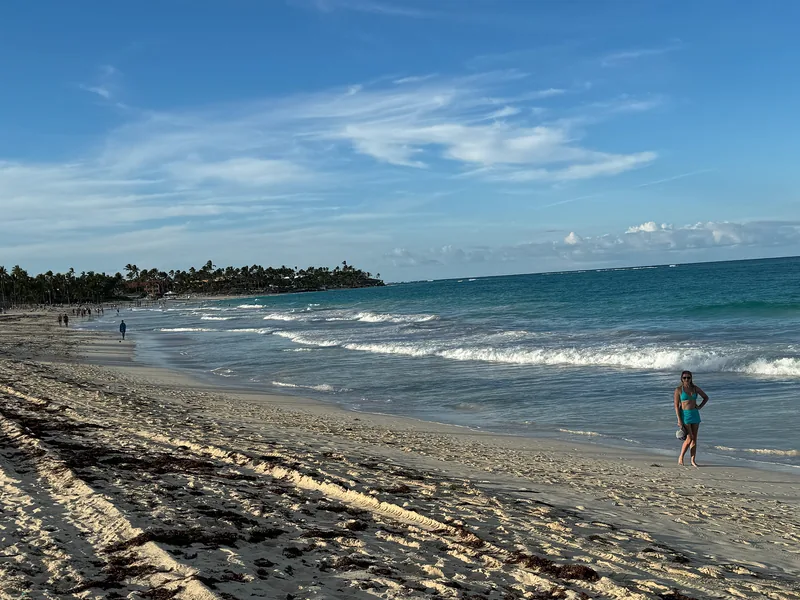
The water is the real headline. On a good day the sea along Bávaro is warm, clear, and almost absurdly calm, held flat by that offshore reef. You can walk out a long way and still touch sand. For families with small kids, for nervous swimmers, for anyone who wants to float rather than fight the ocean, this is a genuine gift and it is hard to find in this reliable a form anywhere else in the country. The wild beaches I love on the Samaná peninsula and in the southwest are more beautiful and considerably less swimmable.
The sand is the second thing. It is pale, fine, and it runs for kilometers in an almost unbroken line, backed by coconut palms that were, in many cases, actually here before the resorts. A long beach walk at Bávaro at seven in the morning, before the loungers fill and the jet skis start, is a real pleasure. The scale of the thing is impressive in a way photos undersell.
And then there is the ease, which I keep coming back to because it is the honest core of Punta Cana's appeal. Everything is handled. You do not rent a car, you do not negotiate a fare, you do not think about lunch. For a couple recovering from a brutal work year, for a family that does not want a single logistical decision on their holiday, for a wedding party that needs one place that sleeps forty, that friction-free quality is worth real money and I will not pretend otherwise. The Dominican Republic rewards effort with its best beaches, but not everyone is on a trip that has effort to spare.
Punta Cana is not a lie. It is a specific product, extremely good at calm water and zero logistics, and quietly ordinary at everything that makes a beach memorable.
The honest downsides
Now the other side, because you came here for the honest version.
The first problem is the wall. Almost the entire Punta Cana and Bávaro beachfront is lined with all-inclusive resorts, one after another, and it changes what the coast feels like. Dominican beaches are legally public up to the high-tide line, so no one can technically stop you walking the sand, but in practice the resorts own the access, the loungers, the shade, the bars, and the atmosphere. If you are not a guest, getting onto the good stretches is awkward, and even as a guest you are experiencing a curated, walled version of the country rather than the country itself. You could be in Cancún, or Aruba, or a dozen other Caribbean resort strips. There is very little that tells you which specific place on earth you are standing in.
The second problem is sameness. Because the resorts optimize for the same thing, the calm and the convenience, the beaches blur together. One long pale strand with loungers and a catamaran on the horizon looks a lot like the next. There is no fishing village to wander into, no headland cove to discover, no reason to walk beyond your own resort's stretch. The beauty is real but it is monotonous, and after three or four days a certain flatness sets in for the kind of traveler who likes a place to have edges.
The third problem is seasonal, and it is sargassum. I am giving it its own section because it deserves one.
The sargassum question
Sargassum is a brown, ropy seaweed that drifts across the Atlantic in enormous rafts and washes up on windward Caribbean beaches, and the Dominican east coast, facing the open Atlantic, catches it more than the country's other coasts. When it lands in volume it piles up along the tide line, browns the shallows, and, as it rots, produces a smell somewhere between low tide and rotten eggs. It is not dangerous, but it can genuinely spoil a beach day, and if you have paid resort prices for a picture-perfect strand, arriving to a bank of decomposing seaweed is a real letdown.
Here is the honest shape of it:
- It is seasonal and variable, generally worst in the warmer months from roughly late spring through summer, and often much better in the drier winter and early spring. But it swings year to year and even week to week with the currents and wind, so no one can promise you a clean beach on specific dates.
- The east coast, Punta Cana and Bávaro included, is among the more affected stretches, precisely because it faces the Atlantic. The sheltered Caribbean-facing southwest and much of the Samaná peninsula tend to see less.
- The big resorts fight it hard. Many run crews with tractors and rakes at dawn to clear their own beach frontage, and floating barriers offshore in the worst spots. This means the resort strip is often kept far cleaner than an unmanaged public beach a kilometer away. It is one of the few genuine practical arguments for the resort model on this coast.
If you are set on the east coast in the high-sargassum months, check recent conditions before you commit, look at very recent guest photos and local reports rather than the brochure, and lean toward the resorts known for aggressive beach cleaning. Or plan your beach week for the drier season. Or, and this is the quiet subtext of this whole guide, consider a coast that catches less of it.
The named beaches, ranked honestly
"Punta Cana beaches" is a category, not a single place, so let me walk you through the ones worth knowing by name, best to most skippable.
Playa Bávaro
Bávaro is the main event, the long central stretch that most "Punta Cana" imagery actually shows. It is the postcard: kilometers of pale sand, calm turquoise water, leaning palms, and an unbroken line of resorts behind. If you want the classic experience, this is it, and on a clean day it delivers exactly what it promises. The catch is everything in the downsides section above. It is walled, it is busy, and outside a resort you will struggle to find easy public access or a patch of shade you do not have to buy. Lovely to look at, hard to experience unfiltered.
Playa Macao
Macao is the one I would send a curious traveler to, and the reason is simple: it is one of the very few public, largely undeveloped beaches left on this coast. No wall of resorts directly on the sand, just a wide, wild-feeling beach with real Atlantic surf, a cluster of simple local seafood shacks, and a surf school or two. The water here is not the flat resort pond of Bávaro; there is actual wave action, which makes it fun for a body-surf and worth respect for weak swimmers. Macao is where you go to remember you are on a real coast in a real country, not inside a brand. It gets busy midday when the buggy and ATV tours descend, so go early. This is the closest thing the Punta Cana area has to an honest beach.
Playa Juanillo (Cap Cana)
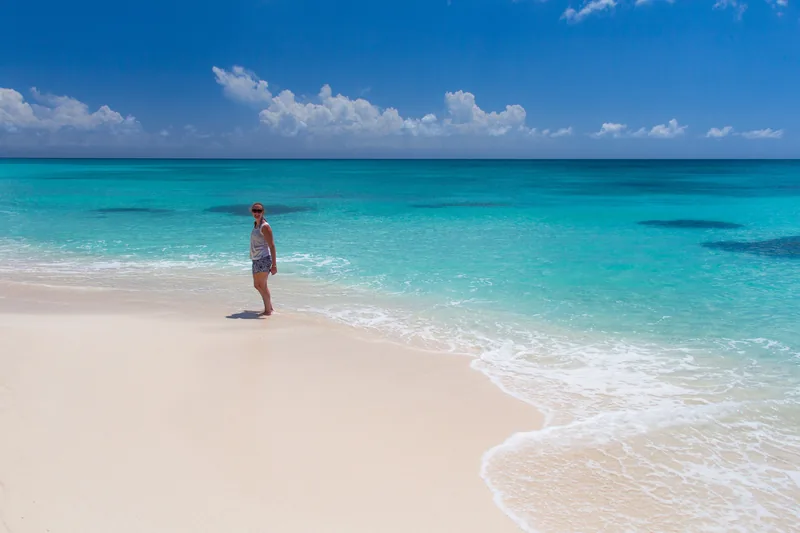
Juanillo sits south of the airport inside Cap Cana, the upscale gated development of marinas, golf, and villas. The beach itself is genuinely pretty, a curved bay with calm, clear water and better looks than much of Bávaro, and it has a public section with beach clubs where you can buy your way onto a lounger for the day. It feels more polished and less packed than the Bávaro strip. The trade-off is that Cap Cana is its own manicured bubble, arguably even more sealed off from anything Dominican than the resorts, and the beach clubs are not cheap. If you want the prettiest sand in the immediate area and do not mind paying for the setting, Juanillo is a strong pick. Our Cap Cana guide goes deeper on the marina, the golf, and how to spend a day at Juanillo without staying there.
Cabeza de Toro
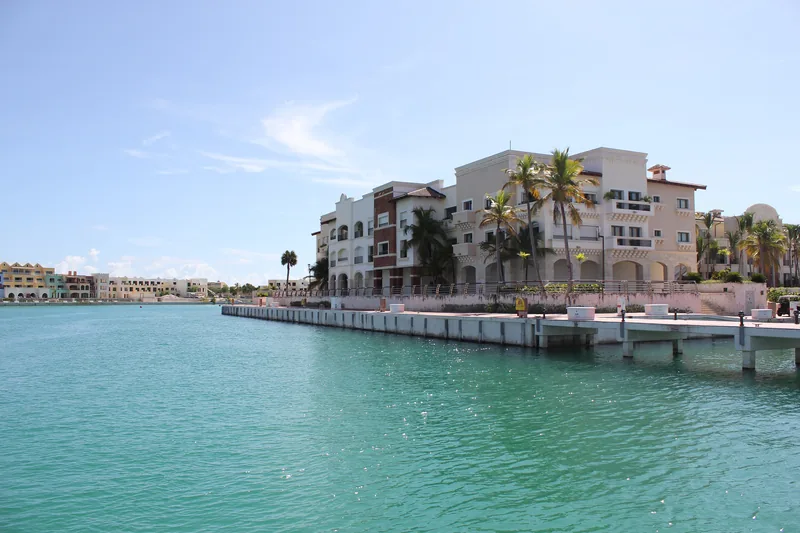
Cabeza de Toro is the quieter headland between Bávaro and the point, home to a few resorts, a marina, and some dive operations. The beach is fine, calmer and less crowded than Bávaro, but it is not a destination in its own right. It is where you end up if your resort is there, and it is perfectly pleasant, but I would not cross the region for it. Worth knowing the name so you can place it on the map; not worth a special trip.
There are other named strips, Uvero Alto up north, Cortecito as the more local-feeling pocket within Bávaro with actual restaurants and bars you do not need a wristband for, but the four above are the ones that matter for deciding whether this coast is your coast.
Beyond the sand: the excursions worth doing
Here is a thing the all-inclusive model quietly discourages: leaving. The whole business rests on you staying put and drinking from the wristband. But the best days I have seen people have on this coast were the ones where they got out, and a few of the excursions are genuinely excellent rather than tourist filler. Here is my honest ranking of what is worth your money.
Isla Saona. The signature day trip, and for good reason. Saona is a protected island off the southeast tip, all white sand, coconut palms, and a shallow turquoise sandbar in the middle of the sea where the boats stop so you can stand waist-deep in the open ocean with a drink. It is touristy, it is a party boat as much as a nature trip, and it is still worth doing once because the water color is unreal and the island itself is beautiful. The trick is doing it right, which usually means starting from Bayahibe rather than enduring the long bus transfer from Bávaro, and choosing a smaller operator over the mega-catamaran cattle runs. Our full Isla Saona day trip guide covers how to book it so it is a good day and not a hungover blur.
Hoyo Azul at Scape Park. Inside Cap Cana there is a cenote, a startlingly blue natural sinkhole pool at the base of a cliff, reached by a short jungle walk. It is a proper wow, a completely different landscape from the beach, and a good pick for a change of pace or a hot afternoon. The wider park bundles ziplines and other add-ons that you can take or leave.
A catamaran and snorkel run. The offshore reef that keeps the water calm is also worth getting in over. A half-day catamaran with a snorkel stop and a natural pool sandbar is the classic, and if you get a smaller boat and a decent crew it is a lovely way to see the coast from the water. Manage expectations on the reef itself; it has taken a beating over the years, but there is still fish and structure to see.
The dune-buggy or ATV run to Macao. Muddy, loud, chaotic, and genuinely fun if that is your thing, ending at Macao beach. Just know that you will be one buggy in a long convoy, and Macao is at its most crowded exactly when these tours arrive. Good for adrenaline, bad for solitude.
What I would gently steer you away from is spending the whole week on packaged excursions bought from your resort lobby, which are convenient but often marked up. For the closer spots, booking a ride yourself is frequently cheaper and less herded.
Eating on this coast
Food is where the resort bubble shows itself most clearly, so a word on it. Inside an all-inclusive, you eat buffet and themed à-la-carte restaurants that range from fine to forgettable, and the ceiling is set by feeding a thousand people at once. It is convenient and it is included, and it is almost never the best meal you could have within a few kilometers.
The honest food is outside the gate. At Macao, the simple beach shacks do fried whole fish, tostones, and rice and beans, eaten with your feet in the sand, and it is exactly the meal you flew here for whether you knew it or not. In the Cortecito and Los Corales pocket of Bávaro there are actual independent restaurants and bars, from Dominican comedor plates to decent seafood and pizza, where you pay in cash and no one checks your wristband. This is where to go for one real dinner out, and a short Uber will get you there.
Two things to try while you are on this coast. First, fresh seafood done plainly, grilled or fried, ideally at a spot where the fishing boats are visible. Second, a cold Presidente, the national beer, which is served so cold it comes with ice crystals and is the correct drink for a hot afternoon. If you want to understand the country's food beyond the resort buffet, the honest version lives in small local kitchens, and it is a good enough reason on its own to spend part of your trip somewhere with a real neighborhood around you.
Where to actually stay if you go
If you have decided the east coast is for you, where inside it you land matters more than the brochures let on. The zones have real personalities.
- Bávaro: the dense center, the widest choice of big all-inclusives, the busiest beach, and the easiest access to nightlife, shopping, and excursions. Pick this if you want everything close and do not mind crowds.
- Cortecito and Los Corales: a pocket within Bávaro that keeps some actual town texture, walkable to independent restaurants and bars. This is where I would look for a smaller hotel or an apartment if I wanted the convenience of Bávaro without total resort sealing.
- Uvero Alto: further north, quieter, more spread out, the newer luxury end. Good for calm and privacy, less good if you want to walk to anything; you are reliant on transport for everything.
- Cap Cana: the gated upscale enclave in the south, with Juanillo beach, marinas, and golf. Polished, expensive, and even more insulated from the country than the resort strip.
- Bayahibe: technically west of Punta Cana proper and worth knowing about. It is a smaller, calmer former fishing village, the smart launch point for Saona, and it tends to catch less sargassum than the exposed east. If the resort strip's scale puts you off, Bayahibe is the softer landing.
The general rule: the further you get from the dense Bávaro center, the calmer and more expensive it gets, and the more you depend on cars and tours to do anything. There is no free lunch on this coast, only different trade-offs.
Getting to Punta Cana, and getting around once there
Most people fly straight into Punta Cana International (PUJ) and let a resort shuttle handle the rest, and if that is your plan there is genuinely nothing to arrange. But if you are basing yourself elsewhere, in the capital, say, and want to see this coast without committing a week to it, here are the honest options.
- From Santo Domingo by coach or car: it is roughly a two-and-a-half to three-hour drive east on Highway 3, mostly good road. There is no cheap public bus that goes cleanly door to door, so realistically this is a rental car, a private transfer, or a long day that does not quite make sense as a day trip. Punta Cana is better as a stay than a Santo Domingo day trip; it is too far for a comfortable there-and-back beach day.
- Rides within the resort zone: Uber works in the Punta Cana and Bávaro area and is usually far cheaper than the resort taxis, which are notoriously expensive and often run on fixed tourist rates. If you plan to leave your resort for Macao, dinner in Cortecito, or a beach club at Juanillo, the ride apps will save you real money. Coverage can thin out at the far edges and late at night, so have a backup.
- Tours: almost everything here, Saona island, Macao buggy runs, catamaran trips, is sold as an organized excursion, picked up from your lobby. Convenient, sometimes overpriced, and worth comparing against just booking an Uber and a beach club yourself for the closer spots.
If you want the full picture on moving around the country without a rental car, our guide on getting around the Dominican Republic lays out the guaguas, coaches, and ride apps in detail.
What a beach day and a week actually cost
I will not invent exact prices, because they move with the season, the operator, and how far ahead you book, and anyone quoting you a precise figure a year out is guessing. But you deserve rough ranges so you can plan, so here is the honest shape of the money. Check current prices before you commit to anything.
- An all-inclusive week is the big lever, and it swings enormously with the resort tier and the season. Mid-range family resorts sit at one end, adults-only luxury at the other, and the same room can cost wildly different amounts in August versus February. Book early, be flexible on dates, and treat the shoulder seasons as your friend.
- A beach-club day pass at somewhere like Juanillo, if you are not staying on that beach, is a real cost. Expect a day rate that often includes some food-and-drink credit, and expect it to feel expensive relative to a free public beach. You are paying for the setting and the lounger.
- Rides: an Uber across the Bávaro zone is modest; a resort taxi for the same trip can be several times more. Airport transfers and longer runs to Santo Domingo are where the real transport money goes, so factor a private transfer into a multi-base trip.
- Excursions: the big-ticket day trips, Saona by catamaran, Scape Park with add-ons, run to a meaningful per-person figure, more if you book through the resort. Two or three of these across a week adds up fast, so choose the ones that actually excite you rather than filling every day.
- An independent beach day at Macao, by contrast, can cost almost nothing beyond the ride and a plate of fried fish. This is the cheapest good day on the coast, which is not a coincidence.
The pattern is the same as everywhere else in this guide: the walled, packaged version costs the most and delivers the least surprise, and the effort of doing it yourself is repaid in both money and character.
Best time to go for these beaches
Timing this coast well is mostly about two things, weather and seaweed, and they line up conveniently.
The dry season, roughly December through April, is the sweet spot: warm, sunny, less humid, less rain, and generally the lower end of the sargassum calendar. It is also peak season, so prices are highest and the beaches busiest, especially around the winter holidays and Easter. If you want the best odds of a clean, clear beach, this is when to come, and you pay for the privilege.
The summer, roughly May through August, is hotter and more humid, with short heavy downpours, and it tends to be the higher end of the sargassum risk on this Atlantic-facing coast. The upside is lower prices and warmer sea, and plenty of people have a perfect week in July; it is just less of a sure thing.
Late summer into autumn, August through October, is hurricane season. Direct hits on the DR are not common in any given year, but the risk is real, the weather is less settled, and this is reflected in the lowest prices of the year. Travel insurance and flexible bookings matter more in this window.
None of this is a reason to avoid Punta Cana; it is a reason to match your dates to what you care about. Chasing the cleanest sand and clearest sky points you at winter. Chasing value and not minding a gamble points you at summer.
Who Punta Cana is actually right for
This is the section that matters most, so let me be direct. Punta Cana is the right call for you if you recognize yourself in this list:
- You want zero logistics. You are tired, you want to land, get handed a drink, and not make a decision for a week. Punta Cana is built for exactly this and does it better than anywhere else in the country.
- You are traveling with young kids or nervous swimmers. That flat, warm, wade-out-forever water is a genuine, hard-to-replicate asset, and the all-inclusive kids' setup takes real pressure off parents.
- You have a group or an event. Weddings, big families, friend reunions: one resort that sleeps everyone, feeds everyone, and entertains everyone is a legitimately good answer, and Punta Cana has more of those than anywhere.
- You mainly want a pool, a beach, and a buffet, and you are honest about that. No shame in it. If the sand is a backdrop to a relaxing week rather than the point, Punta Cana over-delivers.
And it is the wrong call, or at least a poor default, if this sounds more like you:
- You want to feel like you visited the Dominican Republic, not a walled resort strip that could be anywhere in the Caribbean. Punta Cana will leave you with a tan and almost no sense of the country.
- You want the best beaches. They are not here, and I will name the ones that beat it in the next section.
- You are curious, independent, and get restless behind a gate. Three days in, the sameness will start to itch.
How Punta Cana compares to the beaches that beat it
Here is the comparison the brochures will never make. Punta Cana's beaches are pleasant and easy. They are not the country's best, and it is not close. If beauty is what you are after, two regions outclass this coast, and you should at least know their names before you default east.
Samaná, and Playa Rincón
The Samaná peninsula in the northeast is, for my money, the best all-round beach region in the country, and its crown jewel, Playa Rincón near Las Galeras, is regularly rated one of the finest beaches in the Caribbean. Picture a three-kilometer crescent of pale sand backed by coconut palms and green cliffs, a cold freshwater river you can rinse off in at one end, a scattering of seafood shacks, and almost none of the development that walls off Punta Cana. The water is clear and swimmable, the setting is genuinely wild, and it feels like the country rather than a stage set. It takes more effort to reach, a boat from Las Galeras or a rough track, and that effort is exactly why it stays this good.
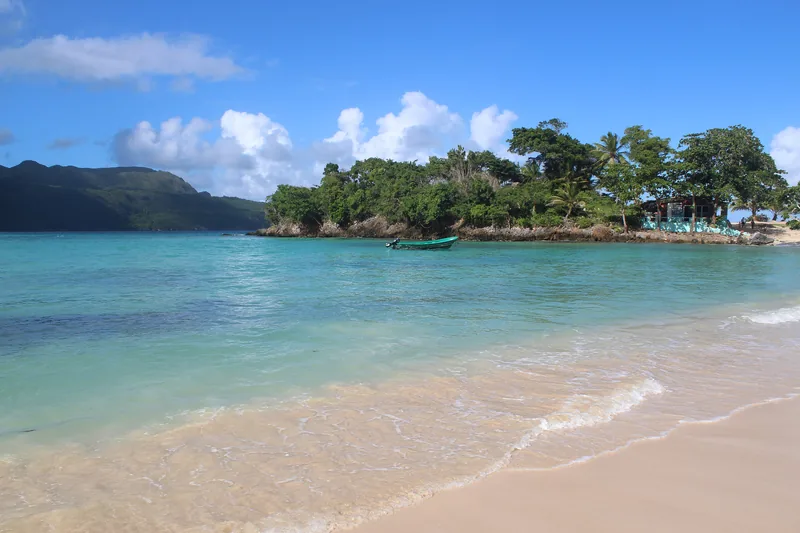
Samaná also generally catches less sargassum than the exposed east coast, offers whale watching in season, and has waterfalls inland. If your priority is beauty over convenience, read our Playa Rincón guide and the wider Samaná peninsula guide, and understand that you are trading some ease for a genuinely better beach. We even ran the head-to-head directly in Las Galeras versus Punta Cana, and it was not a close fight.
The southwest, and Bahía de las Águilas
At the far other end of the country, out past Barahona toward the Haitian border, sits Bahía de las Águilas, an eight-kilometer arc of white sand inside a national park with no road, no resort, and almost no one. You reach it by boat from a fishing hamlet, and what you get is arguably the most beautiful beach in the Dominican Republic and one of the emptiest in the whole Caribbean. It is a long way from anywhere, it takes planning, and that is the entire reason it is still perfect. The Bahía de las Águilas guide has the how-to. This is the anti-Punta Cana: maximum effort, maximum reward, zero wristbands.
The pattern across the whole country is the same one axis: character versus convenience. Punta Cana sits hard at the convenient, low-character end. Rincón and Bahía de las Águilas sit at the wild, high-character end. Neither is wrong. But if no one told you the other end existed, you would book Punta Cana thinking it was the ceiling, and it is closer to the floor. Our ranked best beaches in the Dominican Republic lays the whole spectrum out.
A smarter way to see this coast
Here is the plan I would actually recommend to a curious traveler who still wants to see Punta Cana with their own eyes rather than take my word for it.
Do not give the resort strip your whole trip. Give it two or three nights if the calm water and the switch-your-brain-off ease appeal, and spend the rest of your time somewhere with more country in it. Base yourself in the capital, day-trip or short-hop to the beaches, and you get variety instead of a week of the same sand. From Santo Domingo you can reach the closer beaches of Boca Chica and Juan Dolio in under an hour, run day trips out to the islands and the cave lakes of Los Tres Ojos, and still make the longer journey east to Punta Cana or northeast to Samaná if a proper beach stay is what you want.
That way Punta Cana becomes one chapter of a trip that also has an old city, a mountain river, and a wild beach in it, instead of the whole book. And it brings me to the soft part.
I will keep this honest and short, because you did not come here for a sales pitch. The Residence is a three-suite penthouse on the top floor of a 1760s colonial townhouse in the Zona Colonial, the old walled heart of Santo Domingo and the first city of the Americas. It sleeps six across three bedroom suites, and it has a covered gallery and a roof terrace looking out over the Caribbean and the Montesinos monument on the Malecón. It is the opposite of a resort in every way that matters: you are in a real, lived-in city, on cobbled streets with five hundred years of history, five minutes from restaurants and bars and life that has nothing to do with a wristband.
The reason it works as a beach base is that Santo Domingo puts most of the country within a day trip or a short hop without locking you inside any one coast for a week. Ride apps like Uber work well across the city, so you are not tethered to a rental car for the capital itself. You spend your mornings in the oldest cathedral and fort in the Americas, and your beach days wherever the sand is actually good that week, then come home to a city with edges instead of a gate. If that sounds more like your kind of trip than a lounger behind a wall, the penthouse takes bookings through Airbnb, and you can plan the rest of your route from the wider library of guides.
Punta Cana will always be there, calm and easy and exactly what it is. Just go in knowing what it is, and knowing what else this country keeps a little further down the road.