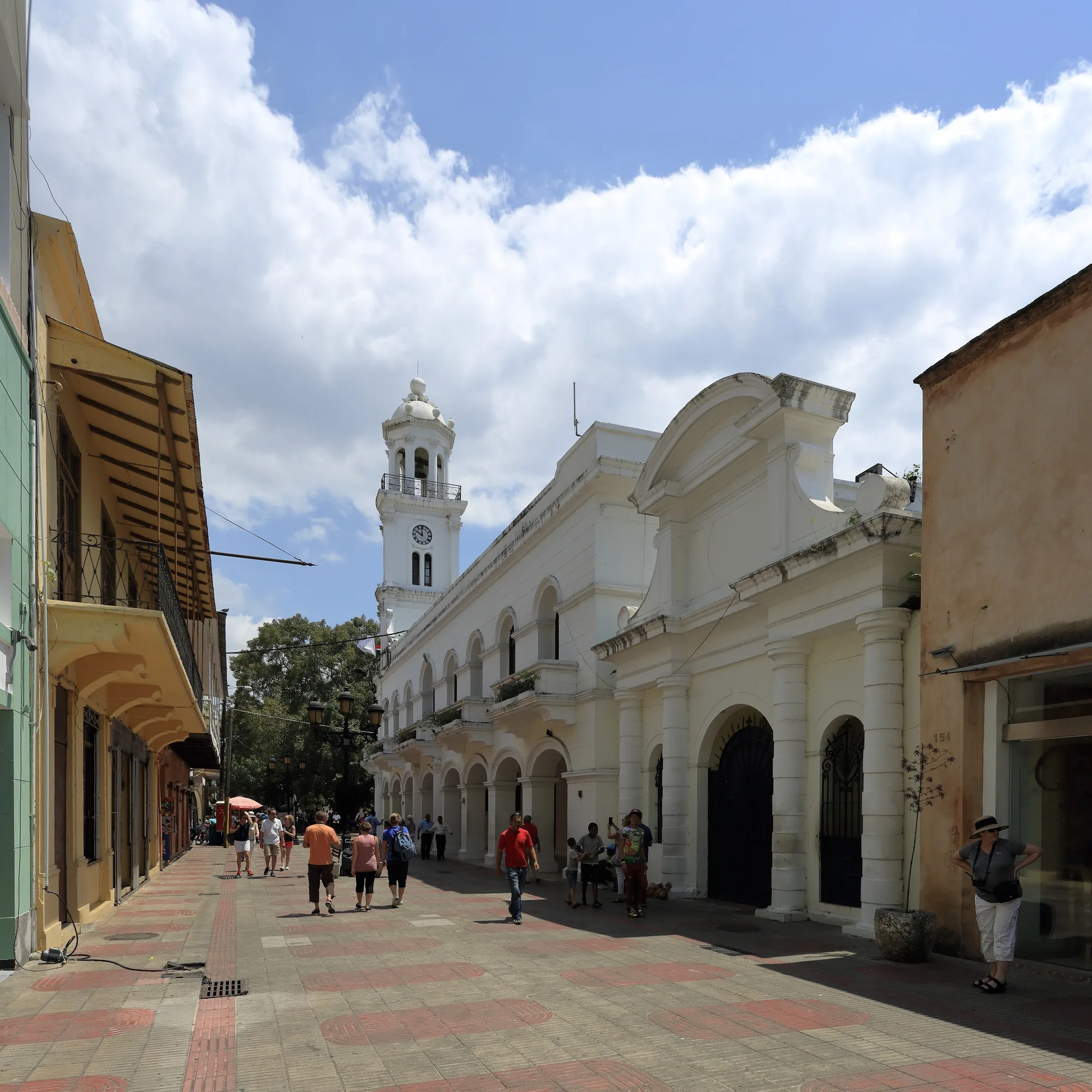
Zona Colonial, Santo Domingo: The Complete Guide
August 2026 · 22 min read
The Zona Colonial in Santo Domingo is the oldest surviving European-built neighborhood in the Americas, and it is also, separately from all the history, just a very good place to spend a few days. Ten or so walkable blocks of coral-stone churches, shaded plazas, coffee counters, and unhurried street life, with the Caribbean lapping at one edge and a working city carrying on around it. Most visitors to the Dominican Republic never see it. They fly into Punta Cana, ride a shuttle behind a resort gate, and go home having tasted a version of the country built for them. This guide is for the traveler who wants the real one.
I am going to orient you properly: the grid and how it works, the streets that actually matter and the ones you can skip, where the plazas are and what each is for, how mornings differ from nights, where the good cafes and bars really are rather than where a listicle says they are, and how a few days here feel when you are living in the middle of it instead of visiting for an afternoon. I will be honest about safety, honest about the heat, and honest about which day trips are worth leaving town for. And yes, I have a stake in this: the whole point of staying inside the walls, in a place like the penthouse, is that the city stops being a museum you tour and becomes a neighborhood you belong to for a week.
The oldest city in the Americas, and why it still matters
Santo Domingo was founded in 1498 and its original street grid, laid out on the west bank of the Ozama River in the first years of the 1500s, is the one you walk today. That makes the Ciudad Colonial the oldest continuously inhabited European settlement in the Americas, and the first place in the hemisphere to get a cathedral, a university, a paved street, a monastery, and a stone fortress. The whole district is a UNESCO World Heritage Site, inscribed in 1990, which in practice means the facades, the cobbles, and the sightlines are protected, and you get to move through five centuries of architecture that has never been turned into a theme park.
The phrase "first city of the Americas" gets thrown around loosely, so here is what it concretely buys you as a visitor. Everything that came later in the colonial New World, in Cartagena, in Havana, in Lima, was rehearsed here first. The grid you are standing on is the template every Spanish colonial city copied. That is genuinely rare, and it is the difference between a pretty old town and a foundational one. If you want the full arc, the site has a dedicated history of Santo Domingo, but you do not need a degree to feel it. You feel it when you realize the corner store, the school, and the government office you just passed are all operating inside buildings older than any structure in the United States.
What surprises people is how alive it is. This is not a preserved shell that empties at 6 p.m. Families live here. Kids play baseball in the plazas. Motoconchos buzz past 16th-century doorways, laundry hangs off wrought-iron balconies, and a colmado on the corner sells cold Presidente beer to men playing dominoes. The history is the setting, not the show.
How the Zona Colonial is laid out
Get this part right and the neighborhood clicks into place in about an hour of walking. The Zona Colonial is a compact grid, roughly rectangular, bounded by the Ozama River on the east and the Caribbean on the south. You cannot really get lost, because the water is always downhill to the south and the river is always east, and the whole thing is small enough to cross on foot in fifteen minutes. Within that grid, three streets do most of the work, and once you know them you can navigate by feel.
Calle El Conde: the pedestrian spine
El Conde is the main artery, a pedestrian-only street that runs the full width of the district from Parque Colón at the cathedral all the way to the Puerta del Conde, the old city gate, at the western edge. This is where the neighborhood does its shopping and its people-watching. Cafes put tables out along it, buskers play, shoeshine men work the benches, and every kind of Dominican and every kind of tourist funnels through at some point in the day. It is loud, commercial, and a little worn in places, and it is also the easiest way to get your bearings, because if you are on El Conde you are on the main line and everything else branches off it.
Use El Conde as your compass, not necessarily your destination. Some of the shops are tourist tat and some of the restaurants are aimed squarely at cruise-ship crowds. But walk its length once and you will understand the shape of the whole district. The stretch nearest Parque Colón, closest to the cathedral, is the prettiest and busiest. The stretch toward Puerta del Conde thins out and gets more local.
Calle Las Damas: the oldest paved street in the Americas
One block in from the river runs Calle Las Damas, laid down in 1502, the oldest paved street in the Americas. It was named for the ladies of the viceregal court who would stroll it in the evenings, and it is still the most atmospheric stretch of stone in the country. This is where the heavy history clusters: the Alcázar de Colón, the palace of Diego Columbus, sits at its north end above the Plaza de España; the Fortaleza Ozama, the oldest military fortress in the Americas, anchors the south; and colonial mansions, the Panteón Nacional, and the old Jesuit church line the walk between.
Las Damas is quieter than El Conde, shaded, and best walked slowly in the morning or the late afternoon when the light is on the stone. If you only have time to walk one street properly, walk this one. For the monuments themselves, the room-by-room detail lives in the Santo Domingo landmarks guide, but even without going inside anything, the street itself is the attraction.
Calle Hostos and the uphill blocks
Running perpendicular, climbing gently away from the sea, Calle Hostos is the quiet one, and my favorite for wandering. It rises past pastel houses toward the ruins of the Hospital San Nicolás de Bari, the first hospital of the Americas, now a roofless coral-stone skeleton that you can look into through an iron gate. The blocks around Hostos, Calle Isabel la Católica, and the streets threading between them are where the neighborhood feels most residential and least performed. Bougainvillea takes whole walls. A cat watches you from a windowsill. Someone is frying something that smells like lunch.
This is the part of the map that rewards having no plan. The grid is small enough that aimless wandering is safe in daylight and always deposits you back on a street you recognize within a couple of blocks.
The plazas, the neighborhood's living rooms
If the streets are the circulation, the plazas are where the district actually gathers. There are several, and they each have a different character and a different best time of day.
Parque Colón
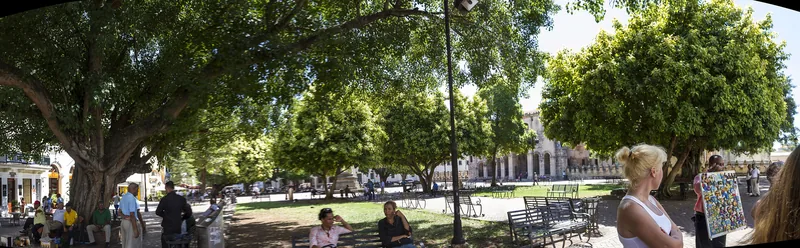
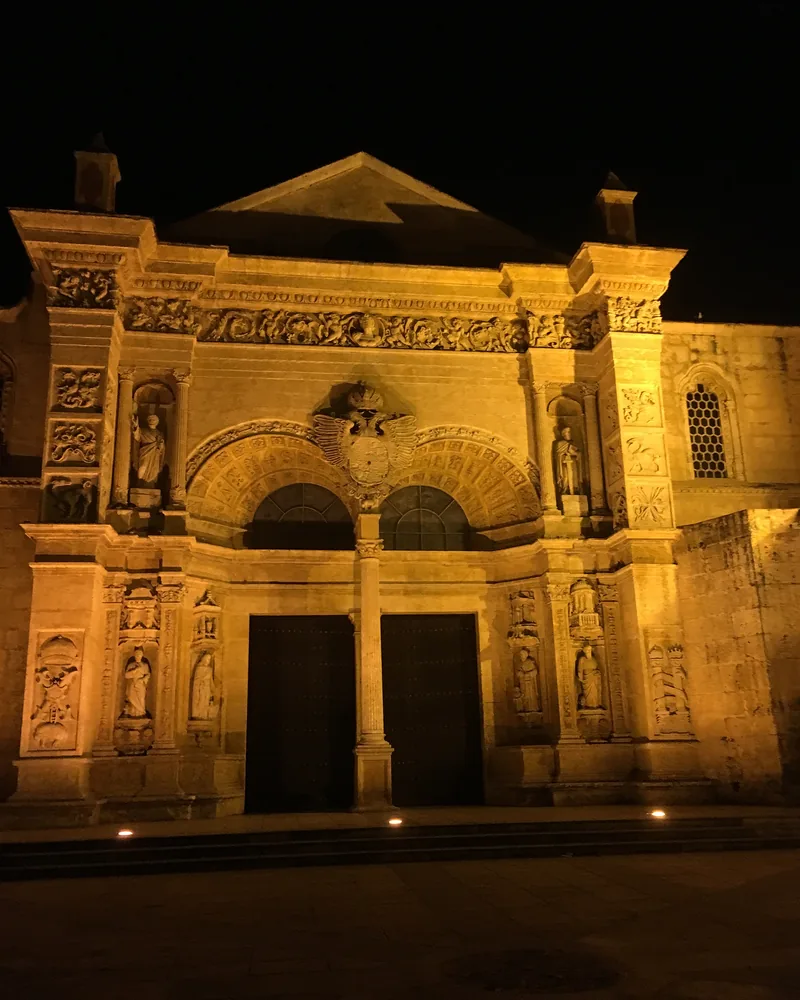
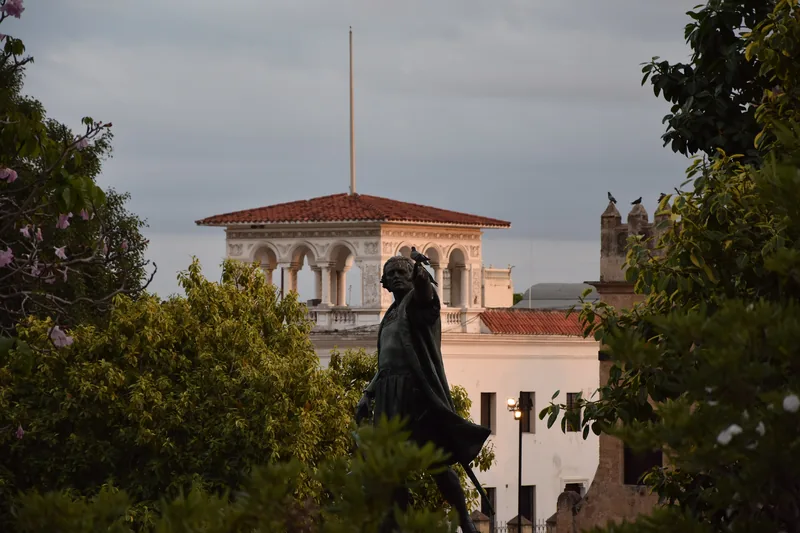
Parque Colón, the square in front of the cathedral, is the heart of it. A statue of Columbus stands in the middle, pigeons everywhere, benches full of people doing nothing in particular, which is the correct thing to do there. Cafes ring the edges, the great coral-limestone facade of the Catedral Primada de América looms over the north side, and the whole thing hums from mid-morning until late. It is touristy, unapologetically, but it is also where locals cut through and sit, so it never tips into feeling fake. Come here for a coffee, orient yourself, and use it as the pivot point for everything else.
Plaza de España
Two blocks northeast, the Plaza de España is the grand one: a wide open square opening off the arcaded facade of the Alcázar de Colón, with the river and the port beyond. This is the district's best photograph and its best sunset-adjacent hangout, because a row of restaurants lines one side and the tables spill out under the arches as the light goes gold. It is more expensive and more polished than Parque Colón, and in the evening it is one of the most pleasant places in the city to sit with a drink and watch the sky do its thing over the old palace.
Parque Duarte
Smaller and more local, Parque Duarte, tucked beside the Convento de los Dominicos, is where you go to feel the neighborhood off-duty. In the evenings it fills with a younger, artsier crowd, students, musicians, people spilling out of a couple of well-loved bars nearby, and it has none of the cruise-ship gloss of the bigger squares. If you want to see where residents actually drink and talk on a warm night, this is a better bet than the postcard plazas.
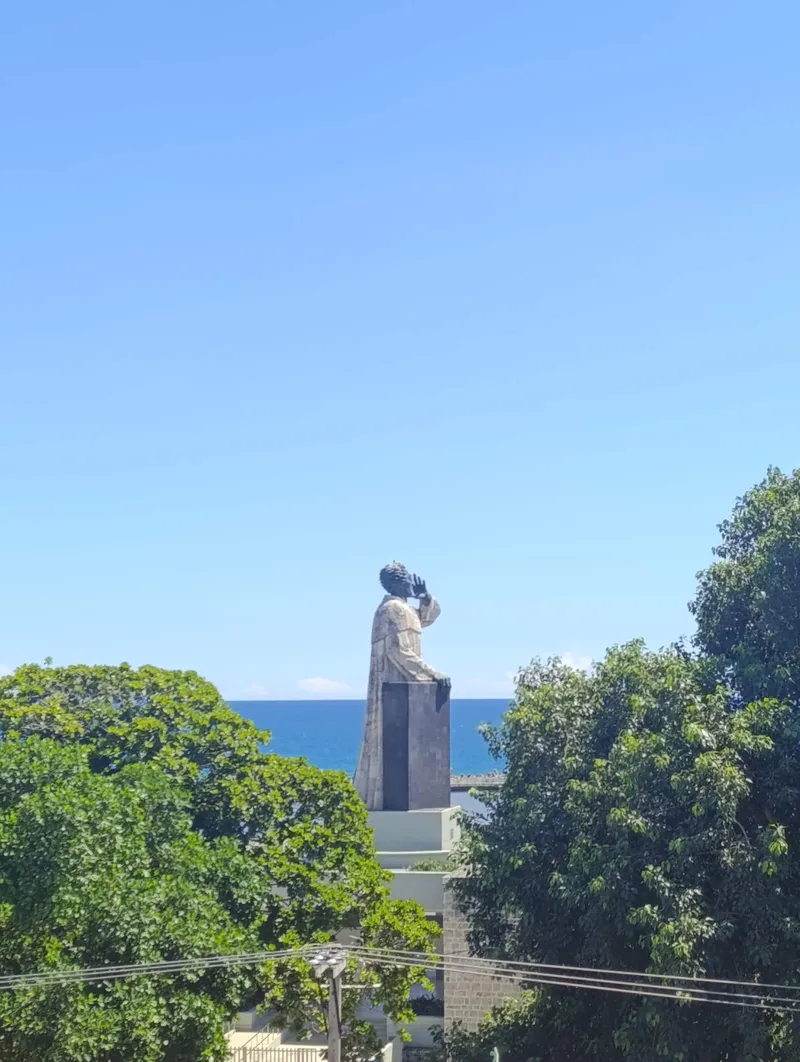
Beyond these, you will stumble on smaller squares and pocket parks constantly, including the little green space down by the sea wall near the Montesinos monument, which is a few minutes' walk from the penthouse and one of the calmest spots in the whole district at dusk.
A morning in the Colonial City
Mornings are the best hours here, and it is not close. The air is cool, the coral stone glows, the tour groups have not yet disembarked, and the light rakes down Las Damas and across the cathedral in a way it never does at midday. Get up earlier than you want to. This is the single best piece of advice in this guide.
A good first morning goes like this. Coffee first, somewhere with an outdoor table, because Dominican coffee is excellent and cheap and the ritual of it sets the pace of the day. Then walk the cathedral before it opens to crowds, standing in the empty plaza while it is still yours. Head down Las Damas to the Plaza de España, then to the river side by the Fortaleza Ozama, where the harbor light is clean and the fortress walls are photogenic. Loop back up through the quiet Hostos blocks to the hospital ruins. By the time you have done all that it will be maybe 10 or 11 a.m., the heat will be building, and you will have seen the bones of the entire district before most visitors have finished breakfast.
If you want a structured plan rather than a wander, the three-day Santo Domingo itinerary sequences all of this with the day trips folded in, and the 25 things to do in Santo Domingo list fills in the corners for longer stays.
Afternoons, heat, and the museums worth your time
By early afternoon the sun is direct and the stone is throwing heat back at you, and the smart move is to do what residents do: go indoors, go slow, or go horizontal. This is museum time, siesta time, or long-lunch time, and it is a mistake to fight it.
The interiors worth your afternoon, ranked by how glad you will be you went:
- Alcázar de Colón, the Columbus family palace on the Plaza de España, furnished to the viceregal period. The best single interior in the district and worth the ticket.
- Museo de las Casas Reales, the old royal houses on Las Damas, a genuinely good history museum covering the colonial administration, arms, and navigation.
- Fortaleza Ozama, more grounds than museum, but climb the Tower of Homage for the view the harbor's defenders had over the river mouth.
- Catedral Primada de América, the interior of the first cathedral, cool and dim and quiet in the heat of the day, with modest dress expected.
- Panteón Nacional, the former Jesuit church on Las Damas now holding the country's honored dead, austere and free to enter.
Do not try to do all of them in one afternoon. Two interiors plus a long lunch is a full, satisfying afternoon, and you will retain more. Check current opening times and ticket prices before you go, because hours shift with the season and some sites close one day a week.
The Zona Colonial after dark
The district transforms at night, and this is where staying inside the walls pays off, because you can walk home. As the heat drops, the plazas fill, the restaurant tables come out, and live music starts up. Plaza de España glows under the arcade lights. Parque Duarte gets loose and local. And there is one particular street, Calle El Conde and the lanes around it, plus a couple of famous corners, where the bars and the merengue and the crowd concentrate.
The nightlife here is not a club district in the Punta Cana sense, and that is the appeal. It is people out in the warm air, bachata leaking from doorways, a bar with plastic chairs on the cobbles, a mojito or a Cuba libre made with local rum, and conversation. If you want to understand the soundtrack, the merengue and bachata primer explains what you are hearing and why it matters here. Colmados, the corner stores that double as informal bars, are a huge part of it: buy a large Presidente, stand on the corner, and you are participating in the most Dominican evening activity there is.
A practical note on nights. The tourist core stays busy and reasonably watched until late, and walking a few blocks home within the district is normal. Stick to the lit, populated streets after midnight, keep your phone in your pocket rather than your hand, and you will be fine. More on this below.
Where the good coffee is
Dominican coffee deserves better than the instant most hotels serve, and in the Zona Colonial you can drink it properly. The country grows excellent arabica in the mountains around Jarabacoa and the Cordillera Central, and a small wave of good independent cafes has taken root inside the walls, roasting locally and pulling real espresso. There is a full Dominican coffee guide on the site, but the short version for the neighborhood is this.
You have two good options and you want both on rotation. First, the traditional route: a cafecito, a small strong sweet coffee, from a counter or a colmado for pocket change, drunk standing up, the way most Dominicans take it all day. Second, the sit-down route: the independent specialty cafes clustered around El Conde, Calle Arzobispo Meriño, and the streets near Parque Colón, where you can get a flat white at an outdoor table and watch the street wake up. The area around Meriño in particular has become the closest thing the district has to a cafe row.
For a working traveler, this matters more than it sounds. If you are here for a stretch and want to actually get things done, the combination of strong coffee, shaded tables, and walkable mornings makes the Zona Colonial a genuinely good place to work from between explorations.
Where to drink, and a note on eating
Drinking in the Zona Colonial is easy and rewards a little roaming rather than committing to one spot. The rough geography: Plaza de España for a polished evening drink under the arches, Parque Duarte and its surrounding lanes for the local and student crowd, the El Conde area for the busiest bar-hopping, and colmados everywhere for the cheapest and most authentic option. Order local. Dominican rum, Brugal or Barceló or Bermúdez, is world-class and absurdly cheap, and a rum on ice with a wedge of lime is the correct order. The rum and cigars primer covers the good bottles if you want to bring some home.
Eating gets its own full treatment in the Colonial Zone restaurants guide, so I will keep this brief. The district runs the full range, from cheap and excellent comida criolla at lunch counters to genuinely refined dinners around the Plaza de España. Do not skip the everyday food chasing the fancy: la bandera, the national plate of rice, beans, and stewed meat, is what you should eat for lunch most days, and mangú, mashed plantains, is the breakfast to seek out. The broader Dominican food guide covers the twenty dishes worth trying. The one rule: eat where the food is Dominican, not where the menu is translated into four languages and photographed. The gap in quality is wide and it always favors the local place.
What's walkable, and when to call an Uber
Almost everything in this guide is walkable, and that is the entire pitch of staying inside the walls. From a base in the district you can reach the cathedral, both major plazas, all three signature streets, the fortress, the museums, the coffee, the bars, and the sea wall on foot, most of them in under ten minutes. You will not need a car and you should not rent one for a stay in the capital. Parking is a headache, the one-way colonial streets are tight, and you would spend your first hour looking for somewhere to leave it. The getting around the DR guide makes the fuller case.
When you do want a ride, use Uber. Ride apps work reliably across the whole capital, the cars are cheap by North American or European standards, and paying in-app means no haggling and no cash fumbling. This is the single biggest practical quality-of-life fact about Santo Domingo, and it changes how you should think about the city. Things that are a bit far to walk, the Malecón bars a mile west, the Colonial Gate mall, the Tres Ojos cave lakes on the east side, become a five-dollar, ten-minute hop rather than a project.
A few specifics on when to open the app rather than lace up:
- Arriving from the airport. SDQ is roughly 30 to 40 minutes east of the district. Take an official taxi or a pre-arranged transfer from the airport; the airport guide covers the current options and rough fares.
- The Malecón at night. The seafront boulevard and its bars are a pleasant walk by day but an easy Uber after dark.
- Los Tres Ojos. The cave lakes are a quick, worthwhile half-day just across the river, and a cheap ride each way.
- Day trips out of town. For beaches and mountains, see the base section below; some are Ubered, most want a driver or a tour.
Is the Zona Colonial safe?
Short version: yes, with ordinary city sense, and it is one of the safer parts of Santo Domingo precisely because it is the tourist core and gets a visible police presence. Reviews of the penthouse rate its location 5.0, and part of that is that guests feel comfortable walking the neighborhood day and night. That said, this is a real Latin American capital, not a sanitized resort compound, and it deserves a real answer rather than a reassuring one, so I will keep it honest and point you to the deeper pieces.
The practical rules are the same ones that serve you in any city and cost you nothing:
- Walk the lit, populated streets at night and save the empty back lanes for daylight.
- Keep your phone in your pocket rather than out in your hand, especially near traffic where phone-snatching from motorbikes is the main petty risk.
- Do not flash jewelry, big cameras, or a fat wallet, and carry only the cash you need.
- Take Uber rather than unmarked street taxis after dark, which is easy since the app is everywhere.
- Trust the neighborhood feel: the tourist core stays busy and watched, and busy is safe.
Violent crime against tourists in the district is uncommon; the realistic risks are opportunistic theft and the usual overcharging if you look lost. For the full treatment, the site has a dedicated is Santo Domingo safe piece on neighborhoods and specifics, and a country-wide Dominican Republic safety guide that puts the capital in context. Read one of them before you come, then relax when you get here.
A few practical basics before you go
None of this is complicated, but knowing it in advance smooths the first day. Here is the shortlist.
- Language. Spanish is the language, and in the tourist core of the Zona Colonial you will find enough English to get by in restaurants and at the big sights. Away from that core, a little Spanish goes a long way and is warmly received. Dominicans are quick to help someone making an effort.
- Money. The currency is the Dominican peso. Cards work at most restaurants, hotels, and larger shops, but you want cash for colmados, street food, small cafes, tips, and taxis. Withdraw pesos from a bank ATM rather than changing money on the street, and use machines attached to a bank branch in daylight.
- Connectivity. Buy a local SIM or, easier, load an eSIM before you fly so you land connected. You want data the moment you arrive, mostly so Uber works without hunting for wifi. Coverage in the capital is good.
- Tipping. A 10 percent service charge is usually added to restaurant bills by law; rounding up a little more for good service is normal but not expected. Small tips for helpful staff and drivers are appreciated.
- Power and water. Plugs are the same 110-volt, North American style as the United States. Drink bottled or filtered water rather than tap.
The site has a fuller money, tipping and SIM cards rundown if you want the detail. As for timing, the capital is warm and walkable year-round; the driest, most comfortable months run roughly December through April, and the late-summer months bring more heat and the outer edge of hurricane season. The best time to visit the DR guide breaks the seasons down, but honestly, the Zona Colonial is a good idea in any month, because so much of its pleasure is in the shade, the stone, and the evenings rather than the beach.
The capital as a base, not a resort bubble
Here is the argument at the center of this whole guide. The standard Dominican Republic trip, an all-inclusive behind a Punta Cana gate, gives you a nice beach and almost nothing else. You never meet the country. The Zona Colonial does the opposite: it puts you inside a living city, and it turns the beaches, mountains, and waterfalls into day trips and short hops rather than the sole point of the trip. You get the culture and the coast, instead of trading one for the other. The site lays this out bluntly in Zona Colonial vs an all-inclusive resort, and I stand by every word of it.
And to be clear about the beaches, because this is where the resort math really falls apart: Punta Cana's packaged resort beaches are pretty but they are not the best the country has, and they are not even close. The most spectacular sand in the Dominican Republic is out on the Samaná Peninsula and in the wild southwest, places like Playa Rincón near Las Galeras and Bahía de las Águilas down past Barahona, which are emptier, wilder, and genuinely world-class in a way a groomed resort strip never is. The full case is in the best beaches in the DR and specifically Playa Rincón. From the capital you are well placed to reach a lot of it.
What is realistic as a day trip or overnight from the Zona Colonial:
- Closest beaches: Boca Chica and Juan Dolio are about 45 minutes to an hour east, the easy sea-swim fix when you just want salt water for an afternoon.
- Los Tres Ojos and the east-side sights: a quick half-day across the river.
- Samaná Peninsula: roughly two and a half to three hours northeast on the good toll road, doable as a long day but better as an overnight; whale season runs mid-January to mid-March.
- The mountains: Jarabacoa and Constanza, the Dominican Alps, are two to three hours inland for pine forests and cool air.
- Isla Saona: the classic postcard-island day trip, usually booked as an organized tour from the southeast.
The point is not that you should spend every day out of town. It is that you can, cheaply and easily, while sleeping each night inside the oldest city in the Americas instead of behind a wristband gate. The day trips from Santo Domingo guide has the full menu with drive times and how to book each one without a rental car.
How many days, and how they feel
People routinely give the Zona Colonial an afternoon off a cruise ship and think they have seen it. They have seen the surface. Give it three or four nights and it becomes something else entirely.
Here is how the days tend to shape up. Day one you walk yourself into orientation, get lost on purpose, drink too much coffee, and see the big landmarks in the good morning light. It feels dense and a little overwhelming, in a good way, and you go to bed having covered the whole grid. Day two the map is in your head, you stop navigating and start noticing, you pick a couple of museum interiors for the hot hours and a long dinner on a plaza, and the neighborhood starts to feel like yours. By day three you have a coffee counter you return to, you recognize faces, you know which streets are quiet and which are loud at which hours, and you take a day trip out to the water knowing you get to come home to the city. That third-day feeling, of the place having settled around you, is the entire reason to stay inside the walls instead of visiting them.
A few days here works beautifully as the anchor of a longer Dominican trip, too. Start in the capital to get the history and the food and the rhythm, then push out to the coast or the mountains for the second half. The one week in the DR itinerary sequences exactly that, and it is a far better week than any single resort can give you.
Making the penthouse your base
Everything above assumes you are staying inside the walls, because that is what makes the neighborhood turn from a sight into a home. The penthouse is a three-suite floor at the top of a 1760s colonial townhouse, on the sea edge of the district facing the Montesinos monument and the water. That location is the quiet trick of the place: close enough that the cathedral, the plazas, and the coffee are all a few minutes on foot, and far enough from the loud bar streets that you actually sleep. There is a covered hacienda-style gallery and a roof terrace looking out at the Caribbean, which is where you will want to be with a coffee at seven and a rum at seven. It sleeps six across three bedroom suites, so it works for a couple who want room to breathe or two couples or a family splitting the cost.
Guests book it directly through Airbnb, where it holds a 4.8-plus rating across 96 reviews and a perfect 5.0 on location, hosted by Waner, who lives in the city and answers questions like someone who does. You can see the full photo gallery and read what past guests actually said in the reviews, and the broader Santo Domingo location page puts the address in context. If this guide has done its job, you already understand why the address matters more than the amenities: you are not booking a room, you are booking a spot in the middle of the first city of the Americas, with the whole country in easy reach and none of it behind a gate.