25 Best Things to Do in Santo Domingo (Ranked)
August 2026 · 21 min read
The best things to do in Santo Domingo cluster tightly. Almost all of the first-tier sights sit inside a fifteen-minute walk of each other, and a cheap Uber ride opens up the rest of the city. This is the first city Europeans built in the Americas, and its old core, the Zona Colonial, still works as a real neighborhood where people live, argue about baseball, and eat lunch, rather than a roped-off stage set.
That changes how you plan. You do not need a rental car, you do not need a resort, and you do not need to see everything in a rush. What you need is a base inside the old city and a sense of which sights earn your morning and which ones you can skip without regret.
So this is a ranked, honest list of 25 things, grouped by half-day so it doubles as a planning tool. Within each half-day block I have put the strongest first, and I have said plainly which stops are worth your time, which are worth it only with the right expectations, and which you can drop. Do the first two half-days and you have seen the essential city. Add a third and fourth and you have seen it properly.
How to use this list
Think in half-days, not hours. The Colonial Zone rewards slow walking, long lunches, and a coffee stop when the midday heat peaks. A packed itinerary here is a wasted one, because half the point of the district is sitting in a plaza watching it work.
Two half-days cover the colonial core on foot. A third takes you across the river and out to the museums and monuments of the wider city, all by car. A fourth is the waterfront and the evening. Slot food and nightlife into whichever blocks suit you, because the best meals overlap with the best sights anyway.
A few ground rules before the list:
- Uber works well here. Rides inside the city are cheap and quick, usually a couple of US dollars to cross town. Use the app rather than flagging a street taxi, and you avoid the whole haggling problem.
- Mornings are for monuments, afternoons for shade. Most museums open mid-morning and many close by late afternoon, and some shut on Mondays. Check current hours before you go, because they shift.
- Wear real shoes. The colonial streets are cobbled and uneven, and pretty sandals lose that fight fast.
- Carry small cash. Entry fees are low, often a few hundred pesos, but many small sites and comedores do not love cards. Confirm current prices on the day, since they change.
If you want the deeper background on the district itself, the complete guide to the Zona Colonial goes street by street. This page is the shortlist.
Half-day 1: The colonial spine, on foot
This is the single most important block on the list. If you only have one morning in Santo Domingo, spend it here. Everything below sits within a few hundred meters, so you walk the whole thing.
1. Calle Las Damas, the oldest paved street in the Americas
Start on Calle Las Damas. It is the oldest paved street in the Americas, laid in the early 1500s, and it is still lined with the stone houses of the first colonial governors. The name means Street of the Ladies, after the noblewomen of Diego Columbus's court who walked it in the cool of the evening. Walking it is free, takes twenty minutes if you dawdle, and orients you for everything else, because most of the marquee sights open off it or sit a block away. Do it early, before the heat and the cruise crowds, and you get the street almost to yourself. Verdict: essential, and the best free thing in the city.
2. Alcázar de Colón
The Alcázar de Colón was the home of Diego Columbus, son of Christopher, who ran the colony from this coral-stone palace in the early 1500s. Local lore says it went up without a single nail. It fell to ruin over the centuries and was carefully rebuilt in the 1950s, and it is now a museum, furnished to show how the viceregal family lived, with period tapestries, dark carved furniture, medieval-style beds, and a view over the river from the arched loggia. The audio guide is genuinely good and worth the small extra fee, because the rooms make far more sense with the story attached. Give it a full hour. Verdict: worth it, one of the two or three best interiors in the city.
3. Plaza de España and Fortaleza Ozama
The Alcázar faces the Plaza de España, the big open square that becomes the district's dinner table at night. A block south stands the Fortaleza Ozama, the oldest formal military fort in the Americas, with the Torre del Homenaje looking down over the river mouth. It guarded the harbor for four centuries and served as a prison well into the twentieth, and a resident guide will usually walk you through the dungeon and the powder store for a small tip. Climb the tower for the view down the Ozama and the sense of why the Spanish built exactly here. Verdict: the plaza is a must, the fort is worth the modest ticket for the tower alone.
4. Catedral Primada de América
The cathedral, formally Santa María la Menor, was the first cathedral built in the Americas, finished in the 1540s, and it anchors the south side of Parque Colón. It mixes late Gothic bones with Renaissance detail, and the bell tower was never finished, which is why the front looks slightly unresolved. The English privateer Francis Drake sacked the city in 1586 and made this his headquarters, and his men left their mark on the stone. The interior is cool, quiet, and heavier than the plain façade suggests, with fourteen side chapels and old tombs. Dress modestly to go in, cover your shoulders and knees, and check whether a service is on. Verdict: worth it, and quick.
5. Parque Colón
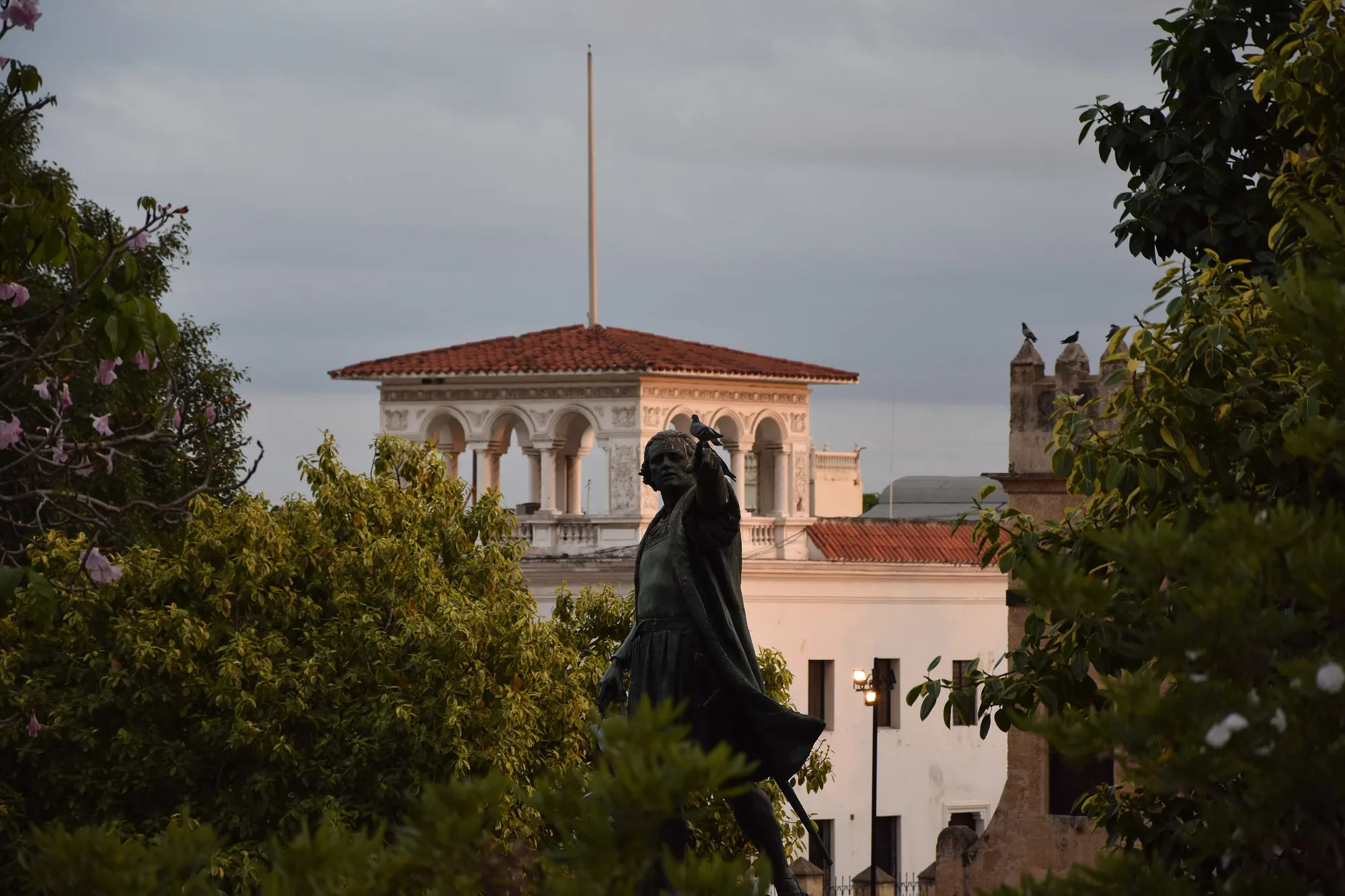
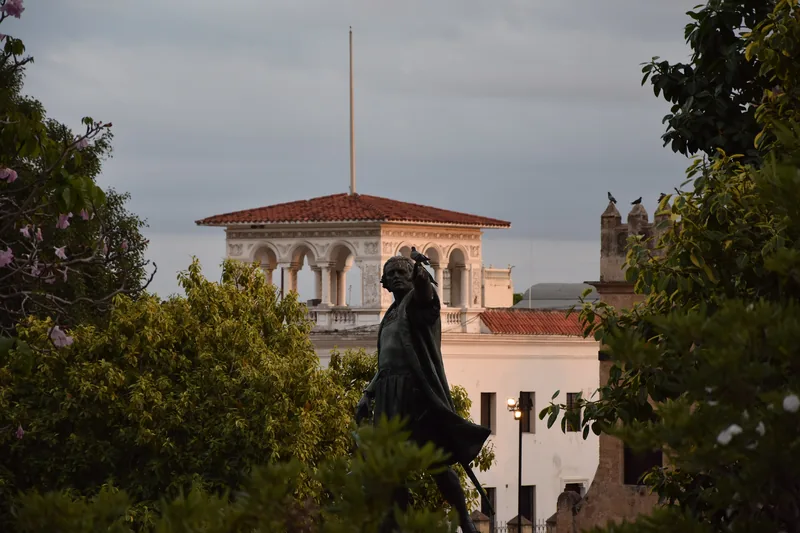
The Parque Colón is the living room of the old city, a square shaded by big trees with a bronze Columbus on a column at its center and the cathedral filling one whole side. Locals hold it down all day, shoeshine men and pigeons and old men arguing on the benches, and it is the best free people-watching in Santo Domingo. Grab a coffee from a nearby counter, take a bench, and let the district come to you before you march off to the next thing. In the evening the cafés around the edges put tables out and the square doubles as the neighborhood's front porch. Verdict: not a sight so much as the point of the whole district.
6. Calle El Conde
El Conde is the pedestrian spine that runs from Parque Colón to the old western gate, closed to cars for its whole length. It is worn at the edges, heavy on souvenir shops and phone stores, and it will not be the prettiest street you see. But it is where the city strolls in the early evening, buskers set up, and old men play dominoes at sidewalk tables, and the quieter side streets off it hide the better cafés and bars. Treat the avenue as a corridor between stops rather than a destination, duck off it whenever something looks better, and it does its job. Verdict: worth a slow walk, especially near dusk, with expectations managed.
Half-day 2: Deeper into the Colonial Zone
The second block goes past the postcard sights into the quieter half of the district, where the ruins are and where the neighborhood feels least staged. Still all on foot.
7. Museo de las Casas Reales
The Museo de las Casas Reales sits on Calle Las Damas in the old royal courthouse and governor's offices. Inside is the best single history collection in the Colonial Zone, colonial-era arms, sunken-treasure recoveries from Spanish wrecks, apothecary jars, and rooms that explain how the colony was actually run. Directly across the street stands the Reloj del Sol, a stone sundial a governor had built so he could read the time from his office window. It is the museum that makes the rest of the district legible, so time it as your second indoor stop and the ruins outside suddenly have context. Verdict: worth it, and the smart second stop after the Alcázar.
8. Panteón Nacional
Built as a Jesuit church in the eighteenth century and converted into the national mausoleum under the dictator Trujillo, who reportedly meant to be entombed here himself. It holds the tombs of Dominican heroes under a somber painted dome, and a soldier stands guard, still and formal, in a room kept deliberately austere. Entry is free but respectful dress is enforced, so no shorts or bare shoulders. Verdict: worth the ten minutes it takes, especially since it sits right on the way between other stops.
9. Ruinas del Hospital San Nicolás de Bari
The roofless stone arches here are what is left of the first hospital in the Americas, begun around 1503. You view it from the street through a fence rather than walking in, so it is a two-minute stop, but the scale of the ruin tells you how ambitious the early city was. Verdict: worth the short detour, free, no ticket needed.
10. Monasterio de San Francisco and the Sunday street party
The ruins of the first monastery in the Americas sit up the hill, dramatic and skeletal against the sky. By day it is a quiet ruin. On Sunday evenings it turns into one of the best nights in the city, when a veteran son and salsa group sets up and the whole neighborhood dances in the street for free. Verdict: skip by day if pressed, but do not miss the Sunday party, which is a genuine highlight.
11. Larimar and amber shops
Larimar is a pale blue stone found nowhere on earth but the Dominican Republic, and Dominican amber includes the rare blue variety. The so-called museums that sell both are, honestly, shops with a small free display upstairs. That is fine if you know it going in. The stone is beautiful and the free floor is a decent five-minute lesson before you decide whether to buy. Verdict: worth it only as a quick browse, not a ticketed attraction, and never feel pressured to buy.
12. Puerta del Conde and the Altar de la Patria
The western gate, the Puerta del Conde, is where Dominican independence was declared in 1844, and just behind it, in Parque Independencia, the Altar de la Patria holds the remains of the three founding fathers under an eternal flame, again with a formal guard. The kilometer-zero marker for the country's highways sits here too, so in a literal sense every road in the Dominican Republic is measured from this spot. This is the emotional center of the nation, and locals treat it that way, so keep the volume down and let the guards do their thing. Verdict: worth it, free, and a fitting place to close the colonial half of your trip.
Half-day 3: The wider city, museums and monuments
Now you cross the river and spread out. Everything in this block needs a car, and Uber is the easy answer. None of these are walkable from the Colonial Zone, and a couple sit fifteen to twenty-five minutes out.
13. Plaza de la Cultura museums
The Plaza de la Cultura, a ten-minute ride into the leafy Gazcue neighborhood, holds several of the national museums on one landscaped campus, along with the Teatro Nacional and the national library. The standout is the Museo del Hombre Dominicano, the anthropology museum, whose Taíno collection and its rooms on Carnival, sugar, and slavery explain the island's deep past better than anything else in the country. The Museo de Arte Moderno next door is worth an hour if modern painting is your thing, and there is a natural history museum for anyone traveling with curious kids. Because it is all under a roof, this is also your best rainy-morning plan. Verdict: the anthropology museum is worth it on its own, one of the best in the Caribbean, and the campus lets you pick and choose.
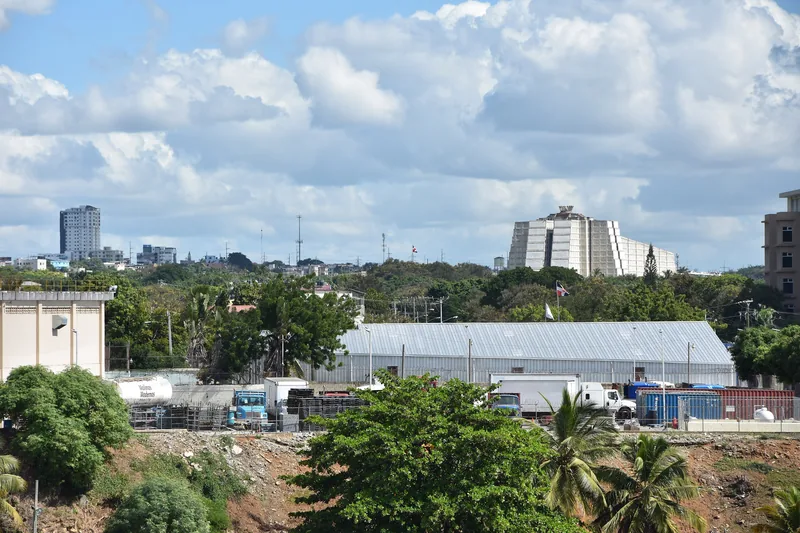
14. Faro a Colón
The Faro a Colón is a massive cross-shaped monument east of the river, a low concrete colossus laid out like a lying-down crucifix, holding what the Dominican Republic says are the remains of Christopher Columbus. It was inaugurated in 1992 for the 500th anniversary of the first voyage, and Pope John Paul II said Mass here when it opened. Be honest with yourself about it: the architecture is brutal and strange, whole neighborhoods were cleared to build it, the contents are thin, and the ownership of the bones is disputed with a cathedral in Seville that claims the same remains. On rare clear nights the building is designed to throw a cross of light into the sky, though the beam is usually left dark to spare a power grid that does not need the extra load. Verdict: worth it for the sheer scale and the story, not for a rich museum, and best paired with Los Tres Ojos nearby.
15. Los Tres Ojos
Los Tres Ojos is a set of open cave lakes in a sunken limestone garden east of the river, about fifteen to twenty minutes from the Colonial Zone. You walk down carved steps into a cool world of turquoise water, hanging roots, and stone, and a small hand-pulled raft carries you to a hidden fourth lagoon. It is quick, cheap, and genuinely beautiful, and it pairs neatly with the Faro since they are close together. Verdict: worth it, one of the best-value hours in the city. The full Los Tres Ojos guide covers timing and the raft.
16. Jardín Botánico Nacional
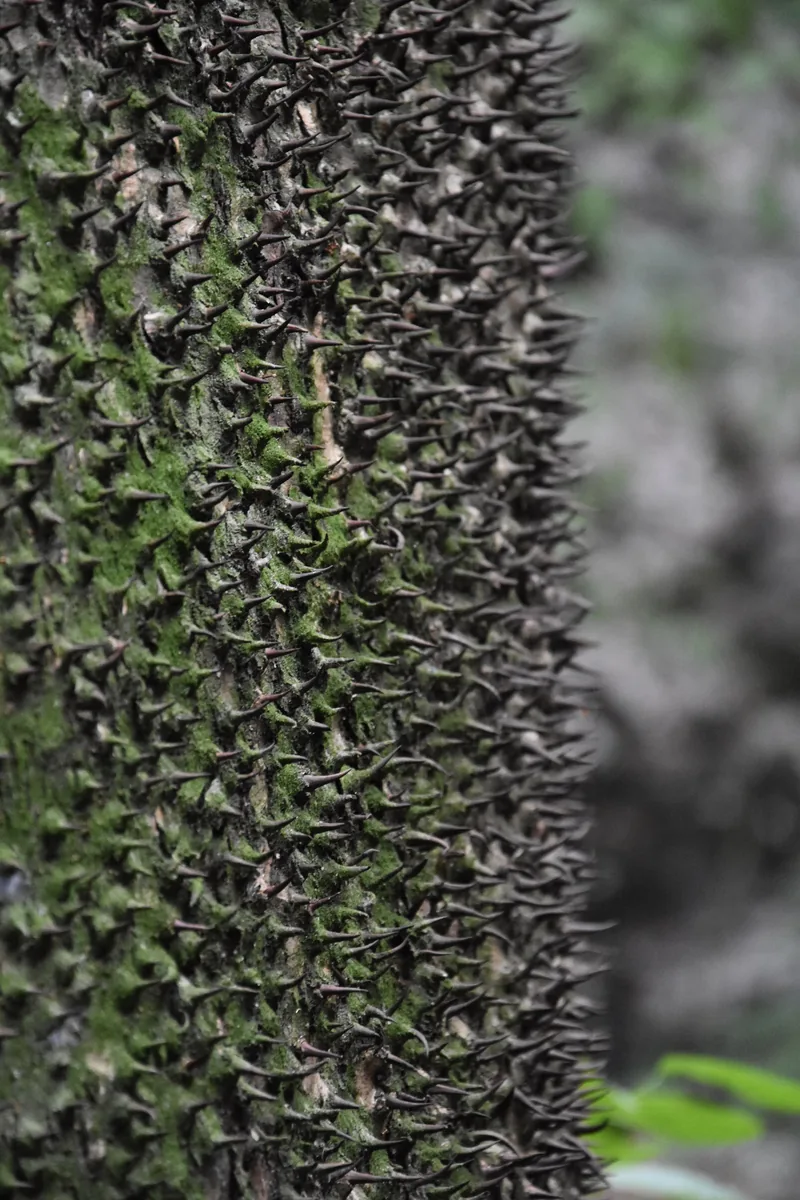
The national botanical garden sits in the green north of the city, twenty to twenty-five minutes out, and it is one of the largest in the Caribbean, big enough that a little open-air tram loops the grounds and saves your legs. There is a formal Japanese garden, an orchid house, a vast floral clock, and enough shade and birdsong to reset you after a run of stone monuments. It is a genuinely calm couple of hours and a good antidote to a monument-heavy morning. Verdict: worth it if you like gardens or are traveling with kids who need to run, easy to skip if you are short on time.
17. Acuario Nacional
The national aquarium sits out on the eastern coast, and its centerpiece is a clear tunnel you walk through while sharks and rays pass overhead. It is fine, and children love it, but it is a long way out for what it is. Verdict: skip unless you are traveling with kids, in which case it earns a morning.
18. Mercado Modelo
The Mercado Modelo, on the northern edge of the Colonial Zone and about a ten-minute walk from Parque Colón, is the old covered craft market, a warren of stalls selling larimar, amber, mamajuana, hand-rolled cigars, brightly painted canvases, and every grade of souvenir. The vendors are relentless, prices open high, and you are expected to haggle hard, so decide your number before you show interest and be ready to walk. Go for the experience and the color, not for bargains you will not have to fight for, and buy your cigars from a shop with a humidor if you actually care about them. Verdict: worth it once, with your guard up and your expectations set, easy to skip if hard selling wears you out.
Half-day 4: The Malecón and the evening sea
Save the waterfront for late afternoon, when the heat drops and the light goes gold over the water. This block is about the sea, not sights.
19. Walk the Malecón
The Malecón is the long seafront boulevard on the southern edge of the city, running for kilometers along the Caribbean. The stretch near the old city passes the tall bronze monument to Fray Antón de Montesinos, the friar who preached the first sermon against the enslavement of the Taíno, staring out at the water. Walk it in the cooler hours, watch the fishermen and the joggers, and feel the city exhale. Verdict: worth it, free, and the honest counterweight to all the stone.
20. Sunset drinks facing the Caribbean
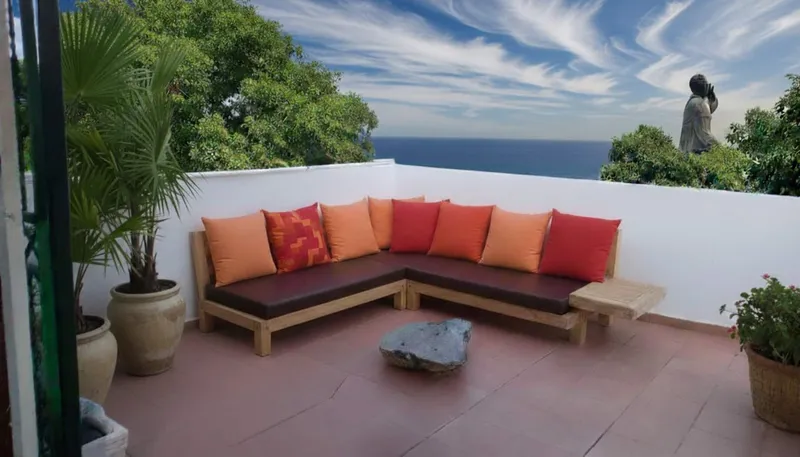
Find a terrace or a seawall spot along the Malecón and take the sunset with a cold Presidente or a rum. This is where locals unwind on weekends, and where the city trades its colonial face for a plainly Caribbean one. From the roof terrace of the right rental you get the same view without leaving home, the sea on one side and the monument lit up on the other. Verdict: worth it, the easiest good decision you will make all day.
Eat your way through the city
Food is not a separate outing here, it is threaded through every half-day. Four things belong on any honest list of what to do in Santo Domingo, because eating is doing.
21. La bandera at lunch
La bandera, "the flag," is the national plate: rice, stewed red beans, a piece of stewed or fried meat, and a little salad, eaten at midday and priced for working people. The comedores of the Colonial Zone each make their own, and the local way to choose is the busiest room. Lunch is the meal Dominicans eat out, which makes it the cheapest and most honest food of the day. Verdict: essential, and often the best few dollars you spend. Our neighborhood guide to eating and drinking in the Colonial City has the details.
22. A proper Dominican breakfast
Mangú is the breakfast that defines the country: green plantains boiled and mashed smooth, topped with pickled red onions softened in vinegar, and served with "los tres golpes," the three hits of fried cheese, fried salami, and eggs. It is heavy, savory, and exactly right before a morning of walking, and most casual spots and comedores serve it well into the morning rather than only at dawn. Wash it down with a strong local coffee and you will not need lunch until two. Verdict: worth it at least once, and cheap everywhere.
23. Mamajuana and a rum tasting
Mamajuana is the Dominican house infusion, rum and red wine steeped in a bottle packed with tree bark and herbs until it turns dark and spiced. Dominican rum itself is world-class and worth tasting properly, slowly, and neat rather than drowned in cola. Buy a bottle of mamajuana at the market and you have a souvenir you will actually finish long after you get home. Verdict: worth it, a genuine local ritual rather than a tourist gimmick.
24. A stop at the colmado
The colmado is the corner store that doubles as the neighborhood's social hub: cold beer, loud bachata, plastic chairs spilling onto the sidewalk, and whatever small thing you forgot to buy. There is one on nearly every block, and by evening the good ones turn into an impromptu party where the whole street pulls up a chair. Order a Presidente jumbo, share it the local way, and you have found the most Dominican room in the city without paying for a ticket. Verdict: worth it, free to enter, and the fastest way to feel like you live here.
After dark: merengue, bachata, and the Colonial Zone at night
The old city changes character after sunset. The plazas fill, the façades light up, and the music starts.
25. A night out in the Colonial Zone
Merengue and bachata are the country's twin soundtracks, one fast and brassy, the other slow and heartbroken, and both spill out of the bars around the plazas after dark. You do not need to know how to dance, you need to show up and let the room carry you. Start with a drink on the Plaza de España, follow the music down the side streets, and if it is a Sunday, end up at the San Francisco ruins for the street party. Verdict: essential, and the reason to stay in the old city rather than commute in for the day. For a fuller plan, see the Colonial Zone at night.
What to skip, and what everyone gets wrong
A short, blunt section, because a good list tells you what to cut.
- Do not over-invest in the Faro a Colón's interior. Go for the architecture and the story, keep the visit short, and pair it with Los Tres Ojos so the trip across the river earns itself.
- The larimar and amber "museums" are shops. Enjoy the free display, buy if you love the stone, but do not treat them as ticketed attractions.
- Skip the Acuario Nacional unless you have kids. It is a long ride for a modest aquarium.
- Do not rush the plazas to see one more church. The single most common mistake here is treating Santo Domingo as a checklist. The district's value is in the sitting, the lunches, and the evening light, and a schedule that skips those misses the actual city.
- Do not rent a car just to see the city. Parking in the Colonial Zone is a headache and Uber is cheaper than the aggravation. Save the car question for day trips, if at all.
Getting around without a rental car
You genuinely do not need to drive to do this list. Here is the honest breakdown.
Inside the Colonial Zone, walk. The whole colonial core is a compact grid, and the streets are half-closed to traffic anyway. This is the one part of the trip where a car is a liability rather than a help.
Across the wider city, use Uber. Rides to the Plaza de la Cultura, the Faro, Los Tres Ojos, or the botanical garden run a couple of US dollars each and take fifteen to twenty-five minutes. Order through the app so the fare is fixed and you skip the negotiation. For a full run-down of options, the guide to getting around the Dominican Republic covers guaguas, coaches, and airport transfers.
For beaches and day trips, you have three realistic choices without owning a car: an organized tour with hotel pickup, an air-conditioned intercity coach to the nearer beach towns, or an Uber for the short hops like Boca Chica. The cheap local guaguas, the shared minibuses, will also get you down the coast if you do not mind a tight seat and no schedule.
The city as a base for beaches and mountains
Here is the argument the resorts do not want you to hear. Santo Domingo is a better base than a beach compound, because from the capital the whole island is a day trip or a short hop, and you sleep in a real city instead of a buffet line.
The nearest sand, Boca Chica and Juan Dolio, is thirty to forty-five minutes east, close enough for a spontaneous swim day. Bigger trips take more planning but reward it. And this is where being honest matters: the packaged resort beaches at Punta Cana are pleasant but generic, groomed strips walled off behind hotels, and they are frankly less special than the wild, palm-backed curve of Playa Rincón near Las Galeras up on the Samaná Peninsula. If you only see resort beaches you will leave thinking Dominican beaches are nice. If you see Playa Rincón you will understand why people fall for this country. Our roundup of the best beaches in the Dominican Republic ranks them without the resort spin, and the day trips from Santo Domingo guide sorts the realistic ones from the four-hour slogs.
The point is not that you skip the sea. The point is that you do not have to trade the first city of the Americas to get to it.
When to go, and the heat to plan around
Santo Domingo is warm all year, and the difference between months is mostly humidity and rain, not temperature. The driest, most comfortable stretch runs from roughly December through April, which is also when the plazas are busiest and the evenings are gentlest. The summer and early autumn months are hotter and stickier, with short heavy downpours that usually pass in an hour, and they overlap with the Atlantic hurricane season, so watch the forecast if you travel then. Prices and crowds ease in the shoulder months, which many travelers prefer.
Whenever you come, plan around the midday heat rather than fighting it. Do the walking and the monuments before noon, retreat for a long lunch and a coffee in the worst of the afternoon, and come back out when the light softens. For a fuller breakdown of the seasons, see our take on the best time to visit Santo Domingo.
A quick, honest word on safety
The Colonial Zone is the part of Santo Domingo most set up for visitors, well lit around the plazas at night, and busy with locals and police. Normal city sense covers most of it: keep your phone in your pocket on quiet streets, do not flash cash at the market, use Uber rather than unmarked cars after dark, and agree nothing with the pushier street vendors you do not actually want. Petty theft and overcharging are the real risks, not the dramatic ones people imagine.
Staying inside the old city helps more than any single tip, because you walk to almost everything and never wait on a dark corner for a ride. For a fuller, unvarnished picture, read our guide to whether Santo Domingo is safe, neighborhood by neighborhood.
A rough sense of cost
No invented numbers, but rough ranges so you can budget. Confirm everything on the day, since prices move.
- Museum and site entries run from free to a few hundred pesos, roughly one to five US dollars each. Even the paid ones are cheap by international standards.
- A bandera lunch at a good comedor is a handful of dollars. A sit-down dinner on a plaza terrace costs more, but far less than a resort would charge for worse food.
- Uber rides inside the city are typically a couple of dollars, rarely more than five to cross town.
- A day trip by organized tour lands in the tens of dollars per person, more if it includes a boat, food, and a long drive.
Two or three careful days here cost a fraction of a week behind resort walls, and you eat better.
Putting it together
Do half-days one and two and you have the Colonial Zone. Add three and four and you have Santo Domingo. Thread the food and the music through all of it, and take at least one day trip to remember what the coast can really do. If you want the sights arranged into a set route, the three-day Santo Domingo itinerary turns this list into a day-by-day plan, and the landmarks guide goes deeper on the colonial monuments.
All of it works best from inside the old city, which is the whole reason we host where we do. The Residence is a three-suite penthouse on the top floor of a 1760s colonial townhouse, a short walk from Parque Colón, the cathedral, and the Plaza de España, with a covered gallery and a roof terrace facing the Caribbean and the Montesinos monument on the Malecón. You wake up inside the list, walk out the front door into half of it, and Uber to the rest. When you are ready, you can book it on Airbnb, where guests have left ninety-six reviews and a perfect score for location. Stay in the real colonial city, not the resort bubble, and Santo Domingo stops being a checklist and starts being a place you know.